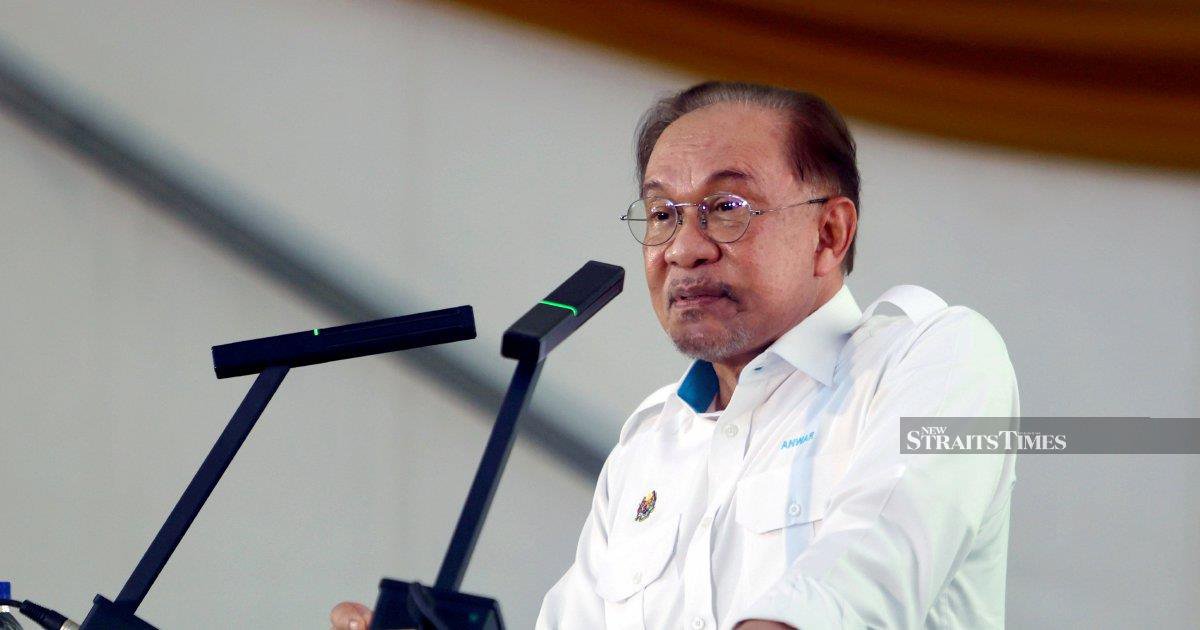
Malaysia's technology and semiconductor investment prospects face potential strain following remarks by Prime Minister Datuk Seri Anwar Ibrahim about Taiwan's political status, with the Taiwan Chamber of Commerce & Industry in Malaysia (TCCIM) now flagging deep concerns about the diplomatic implications for the sector.
The chamber's intervention signals growing unease among Taiwanese business interests operating in Malaysia, a country that has become increasingly important to regional supply chains and technology manufacturing. Taiwan's semiconductor industry, which commands roughly 63% of the global foundry market, has been actively seeking to diversify its manufacturing and investment presence across Southeast Asia, including Malaysia. The prime minister's characterisation of Taiwan as "part of China" therefore touches a nerve with foreign investors who require political stability and clear diplomatic frameworks to commit capital and long-term operations.
The TCCIM's formal expression of concern underscores a tension that few Southeast Asian nations have had to navigate publicly—balancing relations with Beijing while remaining attractive to Taiwanese and democratic-aligned technology companies looking to build regional hubs. Malaysia's position as an ethnically Chinese majority Muslim nation has historically allowed it more diplomatic flexibility than neighbours, yet this incident reveals the limits of that approach when multinational business decisions are at stake.
Taiwan's government and industry have been particularly sensitive to political messaging around the island's status since Beijing intensified military pressure and diplomatic isolation efforts. When senior officials in Malaysia—a nation with which Taiwan maintains robust trade and investment ties—make statements that align Taiwan with mainland claims, it signals potential risk to investors regarding the political environment. For semiconductor companies contemplating long-term capital commitments in Malaysia, such statements may suggest that the operating environment could become unpredictable or subject to shifting diplomatic winds.
The semiconductor sector carries outsized importance for Malaysia's economic strategy. The country hosts operations from major players including Intel, Penang-based assembly and test facilities, and increasingly attracts support services around chip design and manufacturing. Taiwan's manufacturers supply critical equipment, materials, and expertise to these operations, and Taiwanese engineers and managers form a significant expatriate community supporting these industries. Investment decisions worth hundreds of millions of dollars hinge partly on stability indicators, of which political rhetoric from leadership ranks prominently.
Anwar Ibrahim has sought to position Malaysia as a non-aligned player able to maintain bridges to both Beijing and Washington, particularly as tensions over technology competition and supply chain security have escalated globally. His government has navigated complex geopolitical waters—from hydrogen energy partnerships to electric vehicle manufacturing—while striving to avoid explicit positions that might alienate either superpower. However, statements perceived as endorsing Beijing's position on Taiwan complicate this balance, potentially signalling to democratic-aligned investors that Malaysia leans toward Beijing's interpretation of regional geopolitics.
The TCCIM's warning should be read as a business community alert rather than solely a political protest. Taiwanese investors in Malaysia face shareholders and government regulatory oversight back home; statements by host country leaders matter when they seek board approval or regulatory clearance for substantial investments. If Malaysia's prime minister is perceived as unsympathetic to Taiwan's distinct political status, it raises questions about whether Malaysian governance might someday align more closely with Beijing's preferences in ways that affect foreign investors' operations or legal protections.
This incident also reflects the reality that technology investment follows political predictability as much as it follows labour costs or infrastructure. Unlike manufacturing sectors that can relocate relatively easily, semiconductor facilities, research centres, and technology campuses represent immobile capital. Companies need confidence that their investments will not become political sacrificial lambs if diplomatic winds shift. The TCCIM's public intervention is a calculated pressure signal—warning the Malaysian government that loose political rhetoric carries real economic costs.
For Malaysia's broader tech ambitions, the timing is particularly sensitive. The government has outlined plans to position the country as a semiconductor hub and electronics manufacturing leader in Southeast Asia, targeting investment from multiple sources. Competition from Thailand, Vietnam, and Indonesia for similar investments is intensifying. If Malaysia develops a reputation as diplomatically uncertain territory for Taiwanese investors—perhaps hesitant about the political stance of host government leadership—alternative locations may suddenly appear more attractive despite potentially higher operational costs.
The dispute also intersects with Malaysia's domestic political economy. Anwar Ibrahim has been positioning himself as a leader with legitimacy across Malaysia's diverse communities and capable of managing relationships with multiple global actors. However, statements perceived as unnecessarily provocative toward Taiwan risk alienating significant investor constituencies without clear compensating gains. Unlike statements that might resonate with certain domestic political bases, technology investment decisions are made by rational capital allocators weighing risk—and risk just increased.
Looking forward, both sides likely have incentives toward de-escalation. Malaysia wants continued Taiwanese investment and expertise; Taiwan's business community recognises Malaysia's strategic importance and remains invested in the relationship despite political friction. The TCCIM's formal warning serves as both a message to Malaysian policymakers and a safety valve—allowing Taiwanese concerns to be voiced without escalating into formal diplomatic protest. Nevertheless, the incident underscores how technology geopolitics have become inseparable from strait-crossing politics, and how even a nation as diplomatically experienced as Malaysia can find its economic interests suddenly constrained by the political dimensions of its foreign relations.

