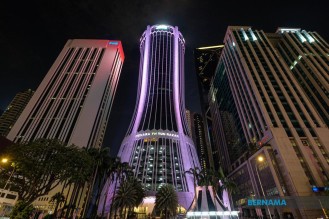
The entire approval chain for Lembaga Tabung Haji's acquisition of a 30 per cent stake in Putrajaya Perdana Bhd progressed during a period when the construction firm allegedly remained under the control of Low Taek Jho, better known as Jho Low, according to sworn testimony presented to Parliament on August 11. Finance Minister II Datuk Seri Amir Hamzah Azizan disclosed the details during debate on a Royal Commission of Inquiry report examining TH's management and investment practices, citing evidence heard in the SRC International criminal case. The minister outlined how SRC International, which prosecutors allege was secretly controlled by Jho Low through Utama Banking Group Bhd, funnelled RM170 million to a Putrajaya Perdana subsidiary in consecutive tranches between July and August 2014, precisely as TH's own approval processes were unfolding.
The chronology presented to Parliament reveals a compressed timeline of approvals that merit scrutiny. TH's Investment Panel signed off on the transaction on July 24, 2014, followed by board approval on August 25 and ministerial consent on August 27, with the formal sale and purchase agreement executed by December 3, 2014. Each of these milestones fell squarely within the period when Putrajaya Perdana remained under Jho Low's effective control through UBG, the company not changing hands until April 13, 2015. According to testimony from Putrajaya Perdana director Datuk Rosman Abdullah, the SRC International funds flowed to Putra Perdana Construction in three separate tranches, creating a financial linkage between the fugitive financier's network and the company TH was preparing to invest in. While Amir Hamzah cautiously noted that the court had made no formal finding regarding Jho Low's beneficial ownership status at the material time, he underscored that the circumstances as testified remained part of the official record before the nation's lawmakers.
The investment process itself demonstrated troubling departures from standard corporate governance protocols. TH's own Research Division had initially assessed the 30 per cent stake at between RM124 million and RM155 million, yet the final approved valuation reached RM193.5 million—a figure substantially above the internal estimate with no documented justification provided to decision-makers. The approved stake size also quietly expanded from the originally proposed 25 per cent to 30 per cent without clear explanation. Most remarkably, the Investment Panel had specifically requested on July 24, 2014 that TH management identify the ultimate shareholder of the selling entity, yet the assessment record contained no evidence that this critical question was ever satisfactorily answered before approvals proceeded. The transaction advanced despite this glaring information gap, raising fundamental questions about the diligence expected when deploying depositors' funds.
Further context emerges from TH's payment structure and the seller's acquisition history. The Investment Panel obtained approval with TH paying RM193.5 million to Cendana Destini Sdn Bhd, an investment vehicle owned by Datuk Rosman Abdullah, who had himself acquired majority control of Putrajaya Perdana from the Jho Low-linked business group in 2012. That earlier transaction valued the entire equity at RM260 million, implying a 30 per cent stake worth approximately RM78 million at 2012 prices. Two years later, TH was paying RM193.5 million for the same stake—nearly two and a half times the original valuation—based on two specific promises: that the company would be relisted within a year and would generate RM86 million in profit during 2015. Neither promise materialised, yet the investment proceeded regardless. Amir Hamzah emphasised that this sharp valuation increase, coupled with the seller's original acquisition cost, was never disclosed to the Investment Panel or board, depriving decision-makers of crucial information for assessing whether TH was paying a fair price.
The governance failures extended to the due diligence process itself. Comprehensive due diligence assessments were conducted only after all approvals had been granted and the sale and purchase agreement signed, meaning the Investment Panel and board never reviewed any due diligence findings before committing to the transaction. This inverted sequence inverts standard practice, where risk assessment normally precedes rather than follows approval decisions. A 2023 fact-finding examination commissioned to review TH's investment practices uncovered a troubling pattern: four separate investments within the portfolio had bypassed required due diligence procedures altogether, and recommendations from the Risk Management Department had been consistently underweighted or overlooked. The cumulative effect suggests systemic governance deficiencies rather than isolated lapses, with investment decisions being rubber-stamped by senior boards and ministerial authorities without adequate supporting analysis.
TH's subsequent efforts to exit the investment compound the picture of financial misadventure. When the promised commercial performance failed to materialise, TH exercised a put option in March 2018 requiring the seller to repurchase the stake at RM210.7 million. However, payment was never made, leaving TH holding an investment that by financial year 2024 had been written off entirely. The ministry has now initiated court proceedings to recover the funds, obtaining a Mareva injunction to freeze the seller's assets and scheduling court-directed mediation for early September, with trial set for June 2027. The timeline underscores how investment decisions taken in 2014 have consumed years of legal wrangling and depositors' money that might have been deployed in more productive vehicles.
For Malaysian and Southeast Asian observers, the Putrajaya Perdana transaction illuminates both the lingering tentacles of the 1MDB scandal and the fragility of governance safeguards in state-owned institutions managing public resources. The proximity between SRC International's suspicious fund flows and TH's approval timeline raises uncomfortable questions about whether the broader financial ecosystem adequately segregated legitimate transactions from those tainted by association with Jho Low's network. TH manages retirement and savings funds for hundreds of thousands of Malaysian pilgrims, making it a custodian of trust for a particularly vulnerable constituency. That such sums could be committed to an acquisition steeped in governance lapses and unresolved questions about ultimate beneficial ownership suggests that institutional memory from the 1MDB era may not have translated into sufficiently robust controls. Parliament's examination of the RCI report provides an opportunity to assess whether recommended reforms have been implemented or remain aspirational.

