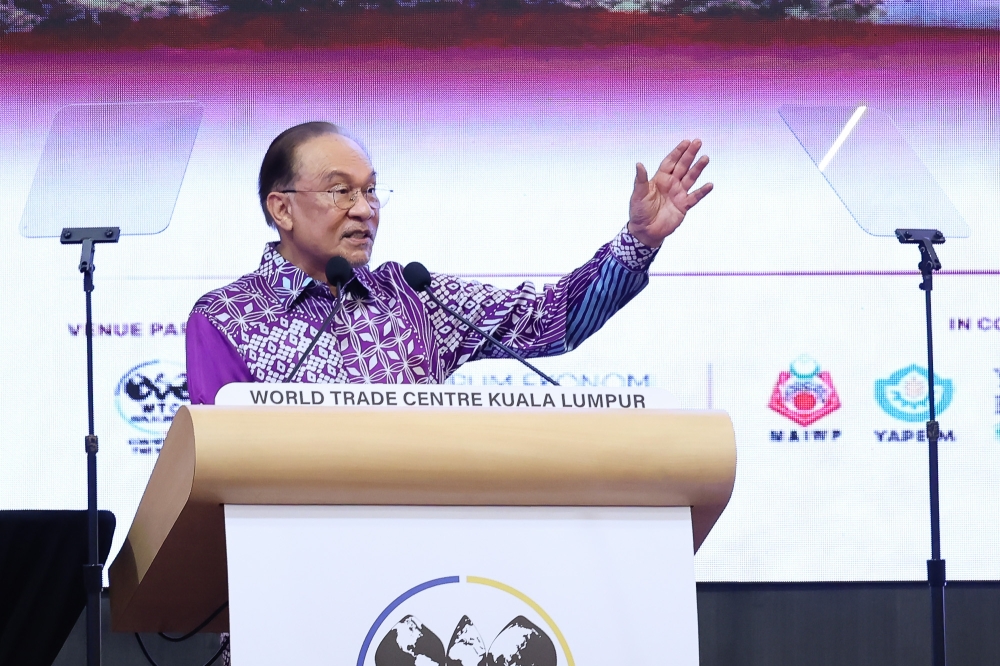
Prime Minister Datuk Seri Anwar Ibrahim delivered an upbeat assessment of Tabung Haji's financial position on Wednesday, asserting that the Islamic pilgrimage fund has substantially improved its operational standing through a series of strategic restructuring initiatives. Speaking in Kuala Lumpur, Anwar indicated that a major independent inquiry into the fund's administration would soon become public knowledge, signalling the government's intent to maintain transparency around one of Malaysia's most sensitive financial institutions.
Tabung Haji, which manages savings for Muslims planning to undertake the Hajj pilgrimage, has faced considerable scrutiny in recent years following financial irregularities and governance concerns that shook investor confidence. The fund's struggles reflected broader questions about how state-linked institutions manage public assets, particularly when serving religiously significant purposes that command deep community trust. For Malaysian Muslims, Tabung Haji represents far more than a conventional savings vehicle—it embodies spiritual preparation and financial prudence intertwined with religious obligation, making any misstep politically and socially consequential.
Anwar's comments suggest that the government has moved decisively to address the institutional weaknesses that contributed to previous problems. The reforms undertaken appear to have focused on restoring operational integrity and rebuilding the confidence of depositors who entrust their life savings to the fund. Such interventions typically involve restructured governance frameworks, enhanced oversight mechanisms, and measures to ensure that fund assets are deployed responsibly and transparently. For a fund managing billions of ringgit in deposits from hundreds of thousands of Malaysian families, such improvements are not merely technocratic adjustments but essential confidence-building exercises.
The forthcoming release of the royal commission inquiry report represents a crucial inflection point for Tabung Haji's rehabilitation narrative. Royal commissions carry considerable institutional weight in Malaysia's governance architecture, and their findings typically command respect across political and public spheres. By committing to publish the inquiry's conclusions, the government appears to be betting that transparent disclosure of past problems and recommended remedies will ultimately strengthen rather than undermine public faith in the institution. This approach contrasts sharply with previous administrations' tendency toward opacity in managing controversies involving state-linked entities.
The timing of Anwar's statement carries significance within Malaysia's broader economic context. The country has been navigating inflationary pressures and household financial stress, making the security of savings platforms particularly important to working and middle-class Malaysians. Tabung Haji serves a demographic with limited alternative sophisticated investment options, concentrating both responsibility and reputational risk on fund management. A stronger, better-governed Tabung Haji contributes to overall financial system stability and demonstrates government commitment to protecting ordinary Malaysians' accumulated wealth.
Geographically, Tabung Haji's importance extends beyond peninsular Malaysia into Sabah and Sarawak, where Muslim communities similarly depend on the fund to accumulate pilgrimage resources. The institution thus carries national binding significance, making its health an indicator of the government's competence in managing critical public entities. Successful reform of Tabung Haji could set a template for addressing problems in other state-linked institutions that have occasionally suffered from governance lapses or financial mismanagement.
The previous administration's apparent reluctance to fully expose and address Tabung Haji's difficulties likely compounded the institution's problems, allowing issues to fester and erode stakeholder confidence incrementally. By contrast, Anwar's willingness to foreground an independent inquiry report suggests a strategic choice to drain the institutional abscess through transparency rather than letting underlying tensions persist. This approach reflects lessons learned from corporate scandals worldwide, where delayed disclosure and defensive posturing typically amplify reputational damage far beyond what immediate acknowledgement and remediation would entail.
For Malaysian pilgrims, the implications of Tabung Haji's strengthening extend beyond financial security. A well-functioning fund enables smooth coordination with Saudi Arabian authorities, ensures timely processing of pilgrim documentation, and facilitates logistical arrangements that contribute to positive Hajj experiences. Financial instability at Tabung Haji cascades into pilgrim-level disruptions and frustrations, affecting the spiritual dimensions of one of Islam's five pillars. Thus, institutional health at Tabung Haji ultimately determines whether Malaysian Muslims can approach their pilgrimage obligations with focus and peace of mind rather than anxiety about their accumulated savings.
Regionally, Malaysia's commitment to rehabilitating Tabung Haji also signals competent governance in a sphere where several Southeast Asian neighbours have faced comparable challenges managing Islamic financial instruments and pilgrimage-related institutions. Demonstrating that serious institutional problems can be addressed through professional investigation and strategic reform enhances Malaysia's reputation as an emerging Islamic finance hub and a credible custodian of Muslim community assets. The success or failure of Tabung Haji's turnaround thus carries implications beyond Malaysian borders, influencing how international investors and institutions perceive the country's capacity for institutional governance.
The royal commission report's eventual release will provide detail about which specific practices required correction and what safeguards now prevent recurrence of historical problems. Stakeholders will scrutinize whether recommendations have been thoroughly implemented and whether governance structures now incorporate sufficient checks and balances. Anwar's advance indication that this report would be published appears calculated to establish credibility with the fund's depositors before specific findings become public, framing government action as responsive and transparent rather than reactive and defensive.

