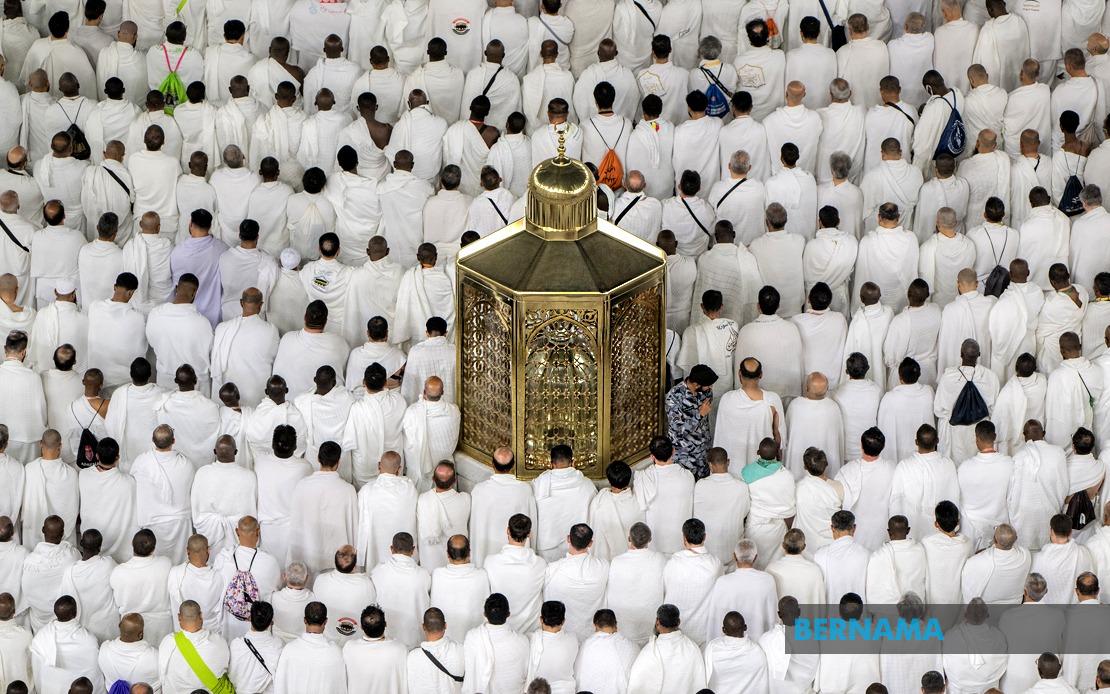
Malaysia's Tabung Haji has reaffirmed its commitment to a transparent, chronological allocation system for hajj pilgrimage opportunities, dismissing proposals to create expedited pathways for certain depositor groups. Deputy Minister in the Prime Minister's Department (Religious Affairs) Marhamah Rosli made the pronouncement during parliamentary proceedings, clarifying that the institution will not establish preferential categories that could circumvent the established queue system, which has governed hajj access for Malaysian Muslims for decades.
The statement came in response to a parliamentary question from Abdul Latiff Abdul Rahman, who had proposed introducing a special fast-track allocation for recently retired civil servants receiving lump-sum gratuity payments. The rationale behind the suggestion centred on the premise that these retirees possessed both the financial means to perform the pilgrimage immediately and faced the prospect of extended waiting periods stretching potentially across many years. However, the government determined that such an arrangement would fundamentally undermine the principles upon which Tabung Haji's management structure has been constructed.
Marhamah emphasised that permitting expedited access for any subset of depositors would necessarily disadvantage those who had already invested considerable time in the waiting queue, often experiencing delays of ten years or more before receiving their hajj invitation. She noted that the equitable distribution mechanism currently in place reflects deeply embedded principles of fairness, transparency, and proportional access that have become central to how Tabung Haji operates within Malaysian Islamic governance frameworks. The deputy minister framed the decision not as inflexibility but rather as a principled commitment to maintaining systematic integrity.
Under current arrangements, every Tabung Haji depositor receives advance notification of their anticipated hajj year, enabling them to prepare comprehensively across three critical dimensions: financial readiness, medical fitness, and spiritual knowledge acquisition. Beginning this year's hajj season, Tabung Haji introduced a minimum savings threshold of RM15,000 before issuing formal hajj offer letters, despite the actual cost of the pilgrimage standing at RM33,300. This requirement serves a dual purpose, ensuring that prospective pilgrims possess sufficient financial cushion while establishing a clear benchmark that applicants must satisfy prior to receiving their invitation.
The framework does retain a limited appeal mechanism through which depositors may petition for earlier consideration outside their regularly scheduled year. Such requests undergo individual evaluation according to pre-established criteria that the institution applies consistently across all cases. This approach acknowledges that genuinely exceptional circumstances may occasionally warrant deviation from the standard chronological queue, while maintaining safeguards against arbitrary or politically motivated exceptions that could erode public confidence in the system's neutrality.
Regarding Malaysia's absolute capacity to facilitate hajj pilgrimages, the constraints remain fundamentally structural rather than administrative. Saudi Arabia allocated 31,600 pilgrimage slots to Malaysia for the current hajj season, a quota determined exclusively by the Kingdom's government based on global Muslim populations and religious considerations. Although this allocation represents a substantial absolute number, the persistent demand from Malaysian Muslims seeking to fulfil this central Islamic obligation far exceeds available spaces. Tabung Haji continues submitting annual applications for supplementary quota allocations, though final approval authority resides entirely with Saudi authorities who balance competing claims from approximately 80 countries globally.
The persistent gap between supply and demand creates inevitable waiting periods that have become a defining characteristic of the Malaysian hajj experience. Some depositors wait more than a decade between enrolling with Tabung Haji and receiving their invitation, reflecting the mathematical reality that registered participants substantially outnumber annual allocation quotas. While this situation generates understandable frustration among those anticipating their pilgrimage, the government has determined that maintaining a rigorously fair, first-in-first-out system represents the most legitimate approach to managing this constrained resource.
Security and fraud prevention have emerged as increasingly important dimensions of hajj management, particularly given the substantial financial flows and vulnerability to unscrupulous actors. Marhamah reported that the Haj Fraud Task Force, comprising Tabung Haji, the Royal Malaysia Police, and the Ministry of Tourism, Arts and Culture, registered zero fraudulent hajj package cases during the recent 1447 Hijrah hajj season. Officials attribute this achievement to intensified enforcement operations and the demonstrable effectiveness of the "No Visa, No Haj" public awareness initiative, which reinforces the Saudi government's corresponding "No Haj Without Permit" policy designed to prevent unregulated pilgrimage attempts.
These fraud prevention mechanisms address both Malaysia's regulatory obligations and the practical reality that unauthorised pilgrims create substantial difficulties for both Malaysian and Saudi authorities. The coordinated task force approach reflects recognition that effective security requires coordination across multiple government agencies rather than Tabung Haji operating in isolation. The campaign messaging specifically targets potential pilgrims and their families, emphasising that legitimate hajj participation requires proper documentation, official approval, and registration through authorised channels.
For Malaysian Muslims contemplating their pilgrimage journey, the policy landscape presents both constraints and clear expectations. Those enrolled with Tabung Haji should anticipate receiving their invitation within a timeframe determinable from publicly available information regarding their registration cohort and prevailing annual quotas. The institution provides transparent communication regarding expected hajj years, enabling comprehensive personal preparation across financial, health, and educational dimensions. While special circumstances permit formal appeals for early consideration, the overwhelming majority of pilgrims will experience their hajj within the standard chronological framework.
The Malaysian government's resistance to creating preferential hajj categories reflects broader governance principles regarding equitable access to religious opportunities and public resources. In an increasingly pluralistic society where government policies affecting different demographic groups face heightened scrutiny, maintaining demonstrably impartial allocation mechanisms becomes particularly important for sustaining public trust. The first-registered, first-served approach provides a clear, objective standard that citizens can understand and evaluate, regardless of their own position within the waiting queue. This transparency carries value beyond merely managing hajj access, contributing to broader confidence in institutional fairness and predictability within Malaysia's Islamic governance systems.

