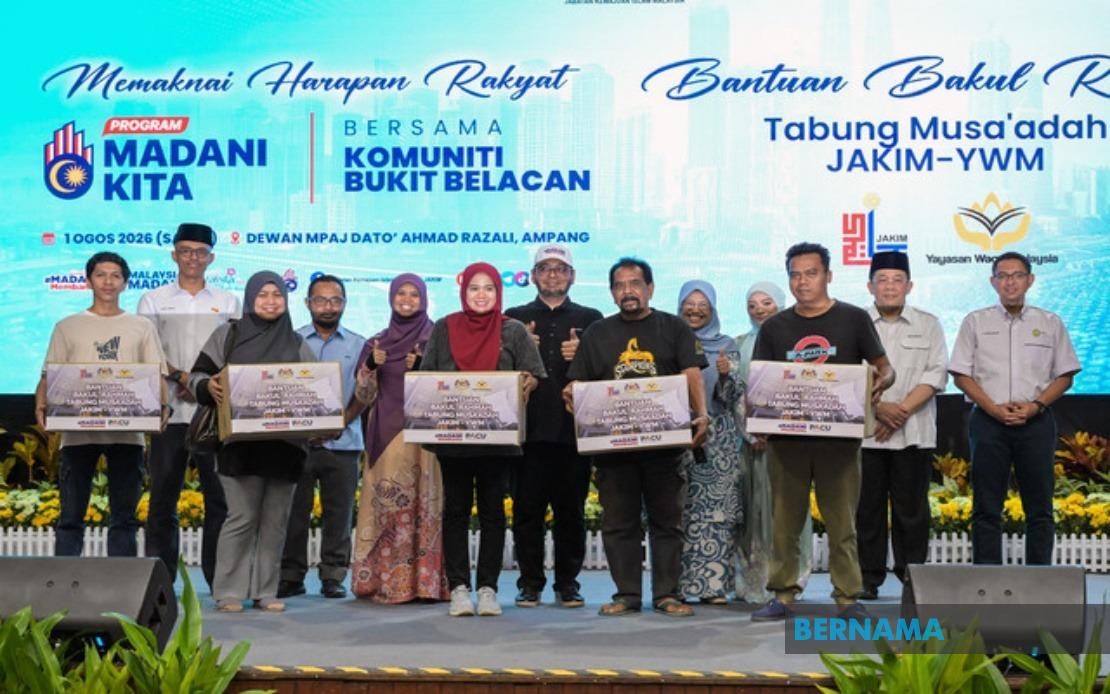
The government has commenced consultation sessions with various stakeholders to gather their views on proposed amendments to the Tabung Haji Act 1995 (Act 535), following recommendations from a Royal Commission of Inquiry established to assess the pilgrimage fund's operations. Minister in the Prime Minister's Department (Religious Affairs) Dr Zulkifli Hasan announced the initiative in Kuala Lumpur on August 1, emphasising that the legislative changes are intended to modernise the governance structure and operational framework of Lembaga Tabung Haji (TH), Malaysia's national hajj management body.
The engagement process represents a structured approach to legislative reform, whereby the government seeks to incorporate diverse perspectives from affected parties before finalising amendments to the 1995 Act. This consultative method reflects an acknowledgment that substantive changes to the institutional framework governing hajj management require broad-based support and input from those with direct stakes in the system's performance. The stakeholder groups being engaged likely include pilgrim associations, Islamic organisations, financial sector representatives, and governance specialists with expertise in public fund management.
The Royal Commission's inquiry, which made its findings public on Wednesday, had examined the management and operational practices of Tabung Haji, scrutinising how the institution handles the financial contributions of Malaysian Muslim pilgrims and administers hajj arrangements. The RCI's subsequent recommendation for legislative amendments suggests that existing provisions within the 1995 Act may not adequately address contemporary governance challenges or provide sufficient regulatory safeguards for the fund's assets and operations. Such comprehensive reviews typically identify gaps between current legal frameworks and best international practices in institutional oversight.
Dr Zulkifli stressed that the government remains committed to translating stakeholder feedback into concrete improvements to the fund's administration. He indicated that the consultation exercise is not merely procedural but is intended to ensure that proposed amendments genuinely reflect the concerns and insights of those familiar with Tabung Haji's operations. This reflects a recognition that legislative amendments require not only technical soundness but also practical feasibility and acceptance among the constituencies affected by regulatory changes.
In addressing the broader implementation of RCI recommendations, the minister highlighted that the majority of suggested reforms have already been executed. This suggests that the government has already moved beyond merely receiving the RCI report and has taken proactive steps to address systemic issues identified by the inquiry. The fact that several recommendations have been operationalised before the formal legislative amendment process indicates an urgent governmental response to governance concerns that required immediate attention.
The tangible benefits of these prior reforms have become evident in Tabung Haji's financial metrics. Dr Zulkifli pointed to substantial improvements in the fund's reserves, noting that reserve positions have strengthened considerably. Additionally, the dividend rates distributed to pilgrims have increased, directly benefiting those who save through the institution for their hajj expenses. These financial improvements demonstrate that governance reforms, when properly implemented, can yield measurable benefits for the institution's stakeholders—primarily Malaysian Muslims planning to undertake the pilgrimage.
Beyond financial metrics, governance improvements have also been realised across the institution's oversight structures and operational procedures. The minister emphasised that these reforms have resulted in more robust internal controls, clearer accountability mechanisms, and enhanced transparency in decision-making processes. Such institutional strengthening is particularly important for a body managing significant public assets, where trust and confidence among contributors are essential for maintaining the pilgrimage fund's social legitimacy and financial sustainability.
International recognition has validated these improvements, with Tabung Haji receiving acknowledgement as the world's premier hajj management institution. This accolade reflects not only the fund's financial performance but also its operational excellence in coordinating hajj logistics for hundreds of thousands of Malaysian pilgrims annually. The recognition underscores that institutional reform, when implemented comprehensively and thoughtfully, can result in world-class outcomes in highly specialised domains of public service delivery.
The proposed amendments to the Act 535 framework therefore represent the next phase in this broader institutional renewal. Rather than being reactive measures imposed in response to crisis, they appear positioned as evolutionary refinements building upon demonstrated successes. The amendments will likely codify reforms already in practice, close remaining regulatory gaps, and establish clearer protocols for governance going forward. For Malaysian pilgrims, improved legislation translating into enhanced institutional oversight offers greater assurance that their hajj savings remain secure and effectively managed.
For Southeast Asian observers, Tabung Haji's experience offers instructive lessons in how mature institutional reform requires sustained commitment across multiple phases—immediate executive action, stakeholder consultation, legislative enhancement, and continuous refinement. The government's transparent engagement of stakeholders in the amendment process also demonstrates an institutional approach that values input from diverse perspectives rather than imposing changes unilaterally. As discussions proceed through consultation channels, the specific provisions of proposed amendments may be adjusted to reflect stakeholder feedback, potentially strengthening the final legislative product.

