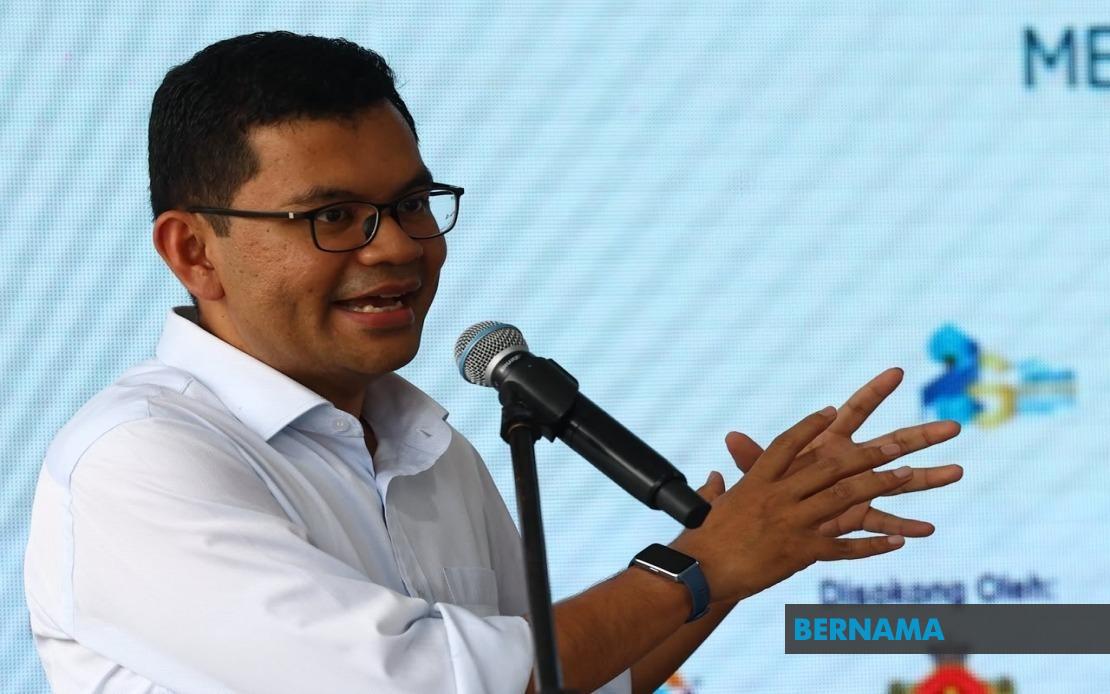
Malaysia's government project management remains beset by institutional complacency and inadequate oversight mechanisms that repeatedly allow public money to be frittered away, Economy Minister Akmal Nasrullah Mohd Nasir warned in Alor Setar on Wednesday. Despite the country achieving independence nearly seven decades ago and experiencing multiple transitions in government leadership, the same structural deficiencies persist in how state-funded developments are executed and monitored. This pattern suggests the problem lies not in individual administrations or temporary lapses but in deeply embedded attitudes that resist reform.
Akmal Nasrullah's remarks come in the context of mounting scrutiny over the water treatment plant project in Kedah, which the minister had flagged for various management shortcomings. He clarified that his public criticism was not motivated by a desire to assign blame to specific officials or past administrators, but rather to catalyse systemic improvements in how government stewards taxpayer resources. The distinction matters because it reframes the conversation from partisan finger-pointing to institutional necessity. For Malaysian citizens accustomed to seeing public works mired in delays, cost overruns, and quality issues, the minister's acknowledgment of structural problems rather than individual failings addresses a more fundamental governance challenge.
The Kedah LRA project represents a case study in how warnings can be issued but remain unacted upon until problems materialise into concrete financial and operational damage. Akmal Nasrullah disclosed that he had been closely tracking this initiative since its inception under the Energy Transition and Water Transformation Ministry, and subsequently when responsibility transferred to the Economy Ministry. Throughout this period, he observed recurring concerns about project execution that demanded urgent remedial attention. Yet despite flagging these issues multiple times, he found that the necessary corrective measures were not implemented with sufficient urgency or rigour, allowing predicted problems to eventually manifest.
The minister's position touches on a tension that frequently hampers effective governance in developing democracies: the relationship between ministerial responsibilities. Some observers have questioned whether it is appropriate for an economy minister to involve himself deeply in operational details of specific infrastructure projects, suggesting his remit should remain confined to high-level policy formulation. Akmal Nasrullah firmly rejected this demarcation, arguing that the distinction between policy and execution is not as clean as critics suggest. A minister, he contends, cannot simply set policy directions and then ignore implementation failures that directly impact the public interest and drain state resources. This stance reflects a growing view among reform-minded officials that accountability requires engagement at multiple levels of governance.
The broader issue Akmal Nasrullah identified transcends any single project or ministry. The pattern of taxpayer money being wasted through poor project management touches on something more fundamental about institutional culture. When governments repeatedly fail to learn from past mistakes, invest in proper supervision, and enforce timely corrective action, it suggests that the underlying problem is psychological and behavioural rather than merely procedural or technical. Complacency—a willingness to let things proceed without rigorous oversight, assuming problems will resolve themselves—appears to be the root cause. Coupled with unclear chains of accountability, this complacency creates an environment where no one individual feels fully responsible for outcomes, allowing failures to accumulate.
For Malaysian taxpayers and the broader regional context, these observations carry significant implications. Infrastructure investment is essential for economic development, and water treatment systems particularly are critical for public health and industrial productivity. When such projects are mismanaged, the costs extend beyond budgetary overruns to encompass delayed service delivery, compromised quality of essential services, and erosion of public confidence in government institutions. Southeast Asian nations competing for investment and regional influence cannot afford the economic drag created by inefficient public spending. The Kedah case, if emblematic of wider patterns, suggests that Malaysia's development capacity is being undermined not by lack of technical expertise or capital, but by governance failures.
Akmal Nasrullah's emphasis on changing attitudes and mindsets rather than simply adopting new policies offers a realistic diagnosis. Institutional reform in government procurement, project management, and oversight has been attempted repeatedly across administrations, yet problems persist. This suggests that procedural changes alone—new committees, revised approval processes, enhanced documentation requirements—are insufficient without corresponding shifts in how officials approach their responsibilities. The minister appears to be calling for a cultural transformation where accountability is not viewed as a burden or a mechanism for assigning blame, but as a professional norm that benefits all stakeholders by ensuring public resources are deployed effectively.
The fact that Akmal Nasrullah faced criticism for speaking publicly about project shortcomings reveals another dimension of the governance challenge. In institutional cultures where raising problems is perceived as disloyal or stepping outside one's prescribed role, issues remain hidden until they become crises. His willingness to tolerate being described as outspoken reflects a conviction that transparency about government performance serves the public interest more than protecting reputations or preserving institutional hierarchies. This mirrors emerging pressures for greater accountability across the region, where citizens increasingly demand to know why public projects underperform and who bears responsibility.
Moving forward, Akmal Nasrullah's intervention suggests that Malaysia needs mechanism that enable early detection and correction of project problems without requiring individual ministers to personally monitor every initiative. Systematic project auditing, independent oversight bodies with genuine enforcement power, and clear accountability frameworks that cannot be evaded through bureaucratic manoeuvres would distribute the burden of vigilance beyond isolated reformers. The Kedah water treatment plant case, whatever its eventual resolution, has already provided a valuable diagnostic indicator that the nation's project management systems remain inadequate to the task of stewarding public resources efficiently. Whether political will exists to implement deeper institutional reforms remains an open question.

