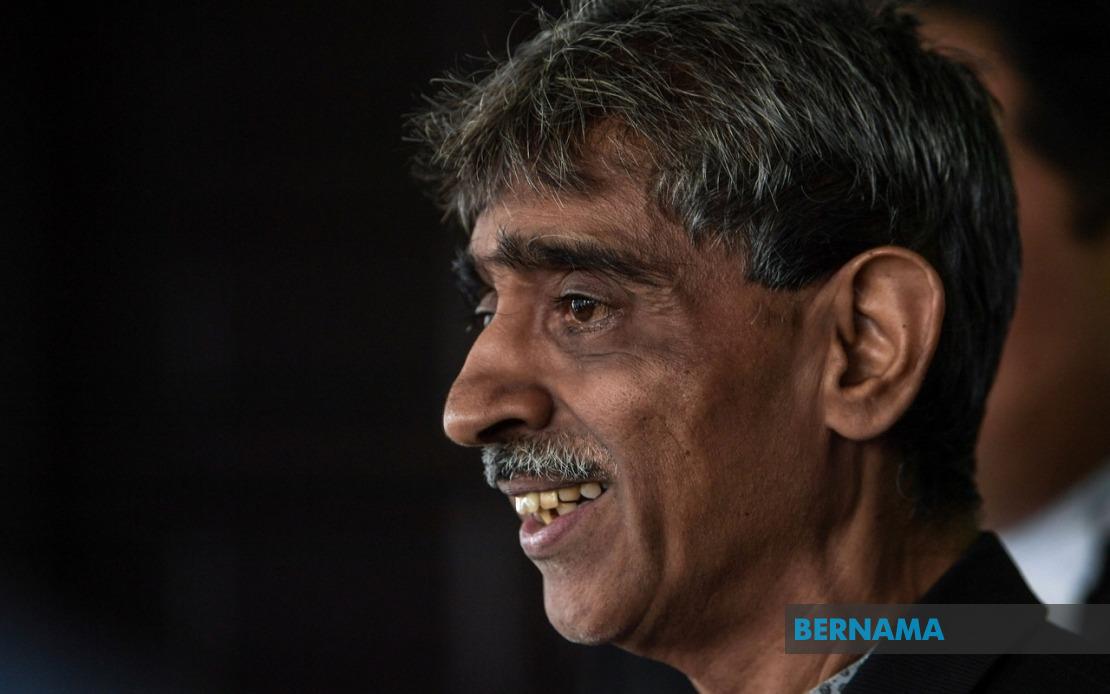
Authorities must act decisively and without delay to prosecute individuals implicated in Tabung Haji irregularities once investigations produce sufficient evidence, legal practitioners said this week, as pressure mounts to translate the Royal Commission of Inquiry findings into concrete legal action. Mohamed Haniff Khatri Abdulla, a lawyer who participated in the RCI proceedings, stressed that public confidence in Malaysia's premier Islamic pilgrimage fund depends on seeing wrongdoers held accountable regardless of their rank or connections. His remarks signal growing concern that the high-profile inquiry risks losing momentum unless prosecutors move promptly on completed investigation files.
The transformation of RCI recommendations into actual courtroom cases represents a critical test of institutional credibility. Mohamed Haniff emphasized that the moment enforcement agencies conclude their investigations and prosecutors determine they possess admissible evidence, criminal charges must follow immediately. Delays, he warned, risk fuelling public skepticism about whether the government intends genuine accountability or merely performative gestures. This urgency resonates particularly among Tabung Haji depositors who saw their savings endangered by the fund's troubled governance and investment practices, and who expect visible consequences for those responsible.
Yet the lawyer also sounded a note of caution about managing public expectations during what promises to be a protracted process. He drew a distinction between prosecuting cases with solid evidence already in hand and the broader investigation still unfolding across multiple aspects of Tabung Haji's operations. Authorities must communicate clearly that bringing individuals to court reflects completed investigation phases rather than signalling the entire inquiry has concluded. Without such transparency, Mohamed Haniff warned, public perception could deteriorate if prosecutions appear sporadic or politically motivated, particularly as Malaysia enters a period where government transitions may invite such suspicions.
The Royal Malaysia Police and Malaysian Anti-Corruption Commission have already summoned nearly two hundred individuals to provide statements, indicating the scale and complexity of the investigation. These parallel inquiries by two separate law enforcement agencies with different procedural frameworks mean the coordination challenge alone could stretch timelines significantly. Mohamed Haniff projected that thorough investigation across governance lapses, questionable investment decisions, and potential breaches of law would likely require another three to six months minimum. This extended timeline, while frustrating for depositors seeking closure, reflects the genuine difficulty of assembling prosecution-grade evidence from institutional misconduct spanning multiple years and numerous transactions.
Former Court of Appeal judge Datuk Yaacob Md Sam provided crucial legal context often overlooked in public discourse about RCI findings. He explained that under the Commissions of Inquiry Act 1950, an RCI report carries no binding legal force and its conclusions cannot themselves constitute evidence in criminal or civil proceedings. The RCI serves an investigative and recommendatory function, but enforcement agencies must conduct independent inquiries to gather testimony and evidence meeting court evidentiary standards. This distinction matters enormously: while the RCI may have identified problematic conduct, prosecutors cannot simply reference the commission's findings in court. They must rebuild the case independently through their own investigations.
Yaacob, drawing on experience as a conducting officer in multiple RCIs including the inquiry into the Butterworth ferry terminal collapse, emphasized that law enforcement agencies face the labour-intensive task of re-examining all relevant aspects identified by the commission. They must determine whether conduct the RCI flagged actually constitutes prosecutable criminal offences under Malaysian law. Some conduct might breach administrative rules or governance standards without reaching the threshold for criminal liability. Other matters might require sophisticated financial expertise to prove in court. This gapping between RCI findings and prosecutable offences explains why momentum can stall between the commission's public report and actual charging decisions.
Mohamed Haniff proposed an institutional innovation to accelerate this transition from investigation to prosecution: establishing a dedicated unit within the Attorney General's Chambers specifically tasked with evaluating all Tabung Haji RCI-related investigation papers from PDRM and MACC. This unit, he suggested, should comprise three Deputy Public Prosecutors with specialized expertise in both Anti-Corruption Commission cases and conventional criminal law. Such a structure would ensure integrated evaluation of evidence rather than the current approach where the two law enforcement bodies operate independently. Given the interconnected nature of institutional failures at Tabung Haji—where governance breakdowns enabled investment misadventures—this coordinated prosecutorial oversight could identify patterns and dependencies that siloed agency handling might miss.
The proposal reflects sophisticated thinking about institutional bottlenecks in Malaysia's enforcement architecture. When multiple agencies investigate overlapping conduct, prosecutors typically receive separate investigation files they must laboriously reconcile. A dedicated prosecutorial team maintaining continuous engagement throughout the investigation phase could flag gaps proactively, request specific follow-up inquiries, and ensure evidence collection meets evidentiary standards before investigation officially concludes. This approach has proven effective in complex financial crime investigations internationally, where coordination failures often result in abandoned prosecutions or failed courtroom convictions despite substantial underlying misconduct.
For Malaysian readers and Southeast Asian observers, the Tabung Haji case illuminates broader challenges facing the region's regulatory and prosecutorial systems when confronting institutional corruption. The fund's difficulties emerged from governance failures that festered for years before investigation, suggesting inadequate internal oversight and board accountability mechanisms. The subsequent RCI represented a valuable fact-finding exercise but has now revealed the substantial gap between identifying misconduct and obtaining convictions. This two-stage process—RCI investigation followed by prosecutorial investigation—creates opportunities for momentum to dissipate and public attention to fade, particularly in a region where media cycles move quickly.
The legal complexities extend to political dimensions that Mohamed Haniff and Yaacob diplomatically referenced. Malaysia's history includes instances where prosecutions of officials appeared selective or politically timed, undermining public faith in the impartiality of enforcement. The Tabung Haji prosecutions will be scrutinized through this lens, with critics potentially arguing that whoever faces charges reflects political calculations rather than evidence strength. This context makes Mohamed Haniff's emphasis on staged, transparent communication particularly astute. Clear explanations of which aspects have concluded investigation and why charges follow specific evidence, rather than sweeping announcements, may help insulate prosecutions from partisan attack.
The timeline also matters for depositors whose funds remain affected. Tabung Haji has undertaken restructuring efforts, but these occur amid uncertainty about ultimate accountability. Will prosecutions result in asset recovery benefiting the fund? How will the institution rebuild governance? These questions remain unanswered while investigations proceed. Swift and transparent prosecution, once evidence permits, would provide closure enabling focus on institutional reform and depositor confidence restoration. Conversely, protracted investigation followed by apparent inaction would deepen the damage already inflicted on public trust in Islamic financial institutions.
The involvement of two enforcement agencies also raises coordination challenges specific to Malaysia's institutional structure. MACC brings specialized expertise in corruption and misconduct involving public officials and institutions, while PDRM represents general criminal investigative capacity. At an institution like Tabung Haji, which occupies a quasi-governmental role managing religious pilgrimage funds, determining which agency holds primary investigative responsibility requires careful jurisdictional analysis. Both agencies investigating in parallel, as currently occurring, ensures comprehensive coverage but risks duplication and inconsistency. Mohamed Haniff's proposed prosecutorial coordination mechanism would address this structural tension by ensuring whoever ultimately prosecutes benefits from insights generated across both investigations.
Moving forward, Malaysian authorities face a test of institutional credibility. The RCI itself represented a significant step, publicly examining Tabung Haji's failures and recommending prosecutions. Whether those recommendations translate into actual charges reflects whether Malaysia's enforcement institutions can bridge the substantial gap between investigation and prosecution. The lawyers' counsel—swift prosecution once evidence suffices, transparent communication with the public about ongoing investigations, and structural mechanisms to coordinate multi-agency inquiries—offers practical guidance. Implementation will require political will to prioritize thorough investigation over rapid announcement, and institutional maturity to resist pressure for premature charges that might crumble under courtroom scrutiny. For Tabung Haji depositors and the broader Malaysian public, the coming months will reveal whether institutional accountability remains aspirational or has become actual.

