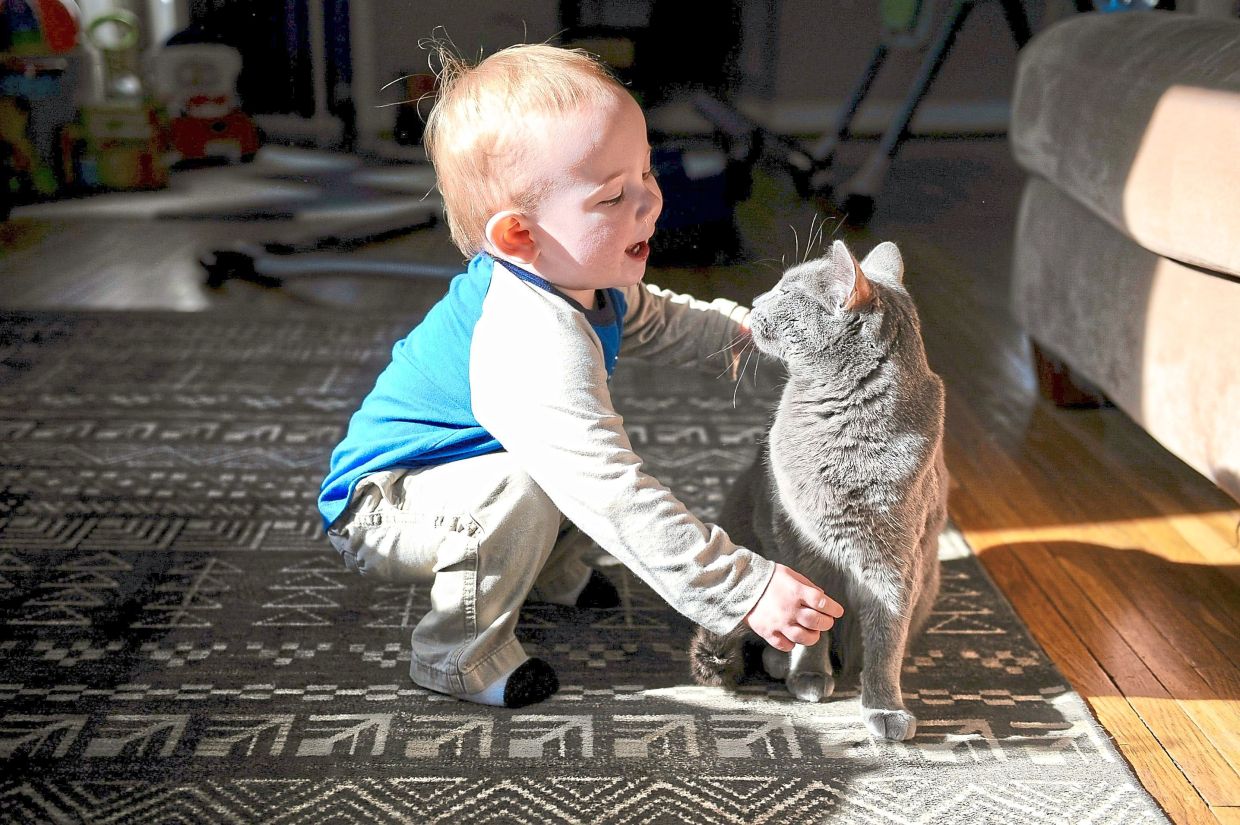
Medical thinking about household pets and childhood asthma may need revision. Researchers from Sweden's Karolinska Institutet have published findings that challenge the widespread assumption that cats trigger or worsen asthma in children, a claim that has persisted in clinical guidance for decades despite limited rigorous evidence.
Asthma remains the most prevalent chronic illness affecting children globally and a leading cause of hospital admissions in paediatric populations. The Global Asthma Network estimates that roughly nine percent of children and eleven percent of adolescents live with asthma, though these figures fluctuate considerably depending on geography, climate and socioeconomic factors. In Malaysia and the broader Southeast Asian region, where pollution levels and viral infections present major health challenges, understanding the true triggers of childhood asthma carries significant public health implications.
For years, patients and families have reported that exposure to cat dander appears to provoke asthma attacks, leading many physicians to recommend pet removal as a preventive measure. Yet this clinical consensus rests on surprisingly weak empirical foundations. Previous research on the relationship between cats and asthma has been contradictory and methodologically limited, typically involving small, non-representative groups rather than large population samples that could definitively settle the question.
The Swedish investigation, led by Dr Resthie R Putri, provides the most substantial evidence to date that cat exposure does not meaningfully affect asthma outcomes in children. The team examined 30,277 children aged between four and seventeen years who had been diagnosed with asthma or airway allergies. These children were born between 2006 and 2020 and were tracked over a two-year period from 2023 to 2024, allowing researchers to monitor how their condition evolved over time.
The study leveraged Sweden's comprehensive medical infrastructure, drawing detailed information from the Swedish National Patient Register, the Prescribed Drug Register and the National Airway Register. This approach meant researchers had access to precise clinical data including diagnoses, emergency department visits, medication prescriptions, asthma control assessments and spirometry tests measuring lung function. Cat ownership status was determined through the National Cat Register, which has been compulsory for all cats born after 2008, though this relative newness of the registry introduces a potential limitation.
Among the 30,277 children studied, approximately 9.4 percent lived in households with at least one registered cat. When researchers compared asthma outcomes between cat-exposed and non-exposed children, they found virtually no differences. Moderate to severe asthma, typically indicated by the type and intensity of prescribed medications, affected 9.6 percent of children living with cats compared to 10.1 percent of those without cats. Asthma exacerbations or acute attacks occurred in 3.3 percent of the cat-exposed group versus 3.5 percent among unexposed children—figures so similar they suggest cat ownership bears no causal relationship to disease severity.
Among a subset of 1,428 children for whom detailed lung function testing was available, the pattern remained consistent. No meaningful differences emerged in standard spirometry measures between those exposed to household cats and those who were not. The researchers found no evidence that the number of cats in a home, the cat's sex or the cat's age influenced asthma outcomes, suggesting that even intensive feline exposure does not translate into measurable harm for asthmatic children.
One intriguing explanation for these surprising results centres on the ubiquity of cat allergen exposure. Dr Putri noted that cat dander is remarkably pervasive in shared environments such as schools, public transportation and community spaces, meaning that children without cats at home still encounter significant allergen exposure through these settings. This environmental saturation could explain why researchers detected no protective benefit to avoiding household cats—the exposure difference between cat-owning and non-cat-owning homes may be too minimal to produce measurable clinical differences.
The implications of these findings could reshape clinical guidance in Southeast Asia and beyond. Allergists and paediatricians who routinely advise families to rehome cats as an asthma management strategy may need to reconsider this recommendation, particularly given the emotional and psychological value many children derive from pet ownership. For Malaysian families, where space constraints and housing considerations often make major household changes burdensome, learning that cat ownership need not be sacrificed for asthma control represents genuinely useful clinical information.
However, researchers appropriately noted methodological limitations that warrant caution in interpreting results. The study lacked detailed data on which specific allergens individual children were sensitised to, meaning the findings apply broadly but may not capture effects in the subset of children with pronounced cat allergies. Additionally, because Sweden's cat registration requirement is recent, some children living with unregistered cats may have been incorrectly classified as unexposed, potentially obscuring associations that might exist in that subgroup.
These caveats notwithstanding, the Swedish data represent the most robust evidence yet that cat ownership can be considered safe for asthmatic children. Healthcare providers should consider these findings when counselling families about pet ownership and asthma management. Rather than reflexively recommending pet removal, clinicians might focus on other evidence-based interventions such as air quality improvement, smoking cessation, and allergy testing to identify genuine individual triggers that justify lifestyle modifications.

