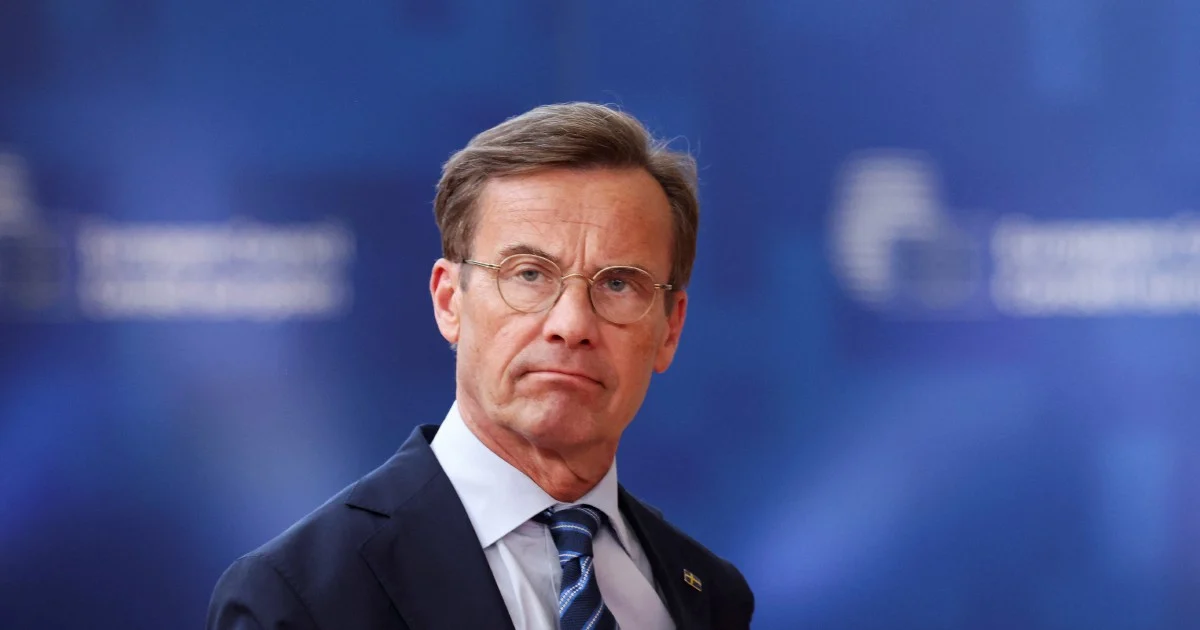
Swedish Prime Minister Ulf Kristersson appears to possess an unusual capacity to deflect controversy. Throughout his tenure leading the government, he has faced a succession of scandals that might have derailed less resilient political figures, yet each time he has managed to distance himself from lasting damage. Now, as the country prepares for legislative elections in roughly three months, fresh allegations of corruption have surfaced—a timing that could prove significant for his political future and for the broader narrative surrounding his leadership.
The pattern of Kristersson's political survival raises important questions about the nature of accountability in Swedish governance and the public's appetite for scrutiny of high-ranking officials. Unlike many Western democracies where scandalous revelations can rapidly erode public confidence, the Swedish Prime Minister has demonstrated a remarkable ability to absorb criticism and press attention without seeing substantial consequences at the polls or within his coalition government. This phenomenon has prompted observers and political analysts to examine both the specific circumstances of each incident and the broader cultural and institutional factors that might explain his continued political viability.
The new corruption allegations arriving at this critical juncture in the election cycle present a different challenge than previous controversies. Election campaigns typically amplify existing grievances and provide opposition parties with a concentrated platform to revisit past failings. The timing of these accusations means they will likely feature prominently in campaign discourse over the coming months, potentially shaping voter perceptions in ways that earlier scandals did not.
For Malaysian and Southeast Asian observers, Kristersson's case offers a fascinating study in comparative political resilience. Sweden's reputation as a model of transparent, accountable governance stands in contrast to the apparent difficulty in holding even its most senior leaders strictly accountable through conventional political mechanisms. This apparent disconnect between institutional expectations and practical outcomes mirrors challenges faced by democratic systems across the region, where formal accountability structures sometimes produce outcomes that surprise both domestic and international observers.
The Swedish Prime Minister's trajectory also illustrates the protective effect of political coalition dynamics. Kristersson leads a centre-right coalition government that includes multiple parties with shared interests in maintaining governmental stability. Coalition partners may be reluctant to escalate criticism of their leader to the point of forcing his resignation, as doing so could trigger government collapse and early elections—an outcome potentially disadvantageous to all coalition members. This structural incentive to preserve governmental continuity can insulate senior leaders from pressures that might operate more forcefully in single-party-majority systems.
The cumulative weight of multiple scandals, even if individually surmountable, creates a background narrative that shapes political discourse. Each new revelation arrives not in isolation but against the backdrop of previous controversies, potentially contributing to a broader public perception about governance standards regardless of legal or procedural outcomes in any specific case. The Swedish electorate will ultimately judge whether this pattern of repeated allegations, combined with the apparent ease of political survival, reflects acceptable standards for national leadership.
Swedish political tradition emphasizes consensus and measured discourse, cultural characteristics that may differ substantially from the more combative political environments of some other democracies. This tradition might provide additional insulation for prominent figures, as aggressive calls for resignation or prosecution can be perceived as excessive by standards of Swedish political culture. However, election campaigns typically represent moments when such cultural norms become temporarily more flexible, and opponents feel emboldened to press attacks that might seem disproportionate during normal legislative periods.
The implications for Swedish governance extend beyond the personality of one individual. If voters return Kristersson's government to power despite the scandals and allegations, it sends a signal about the level of accountability the Swedish public expects from its leaders—a signal that will reverberate throughout the political system and potentially influence the behaviour of other officials. Conversely, if the accumulated weight of these controversies shifts voting patterns significantly, it would demonstrate that accumulating scandals do eventually carry political costs, albeit perhaps only when concentrated near election periods.
For the broader Nordic region, Kristersson's political durability raises questions about the resilience of Northern European democratic systems when confronted with sustained challenges to elite accountability. These countries have long served as reference points for institutional quality and transparency standards globally. The spectacle of a sitting prime minister navigating multiple scandals with apparent ease may prompt reconsideration of assumptions about the relative strength of Northern European governance compared to other developed democracies.
The election now looming offers both voters and international observers a moment to assess whether the pattern of scandal followed by political survival represents a sustainable equilibrium or a temporary phenomenon. The decision Swedish voters make will carry significance not merely for domestic politics but for broader questions about the relationship between institutional design, political culture, and actual accountability mechanisms in mature democracies. As campaigning intensifies over the coming weeks, the central question will be whether new corruption allegations finally break through the apparent immunity Kristersson has enjoyed, or whether he once again demonstrates an uncanny capacity to emerge relatively unscathed from political controversy.