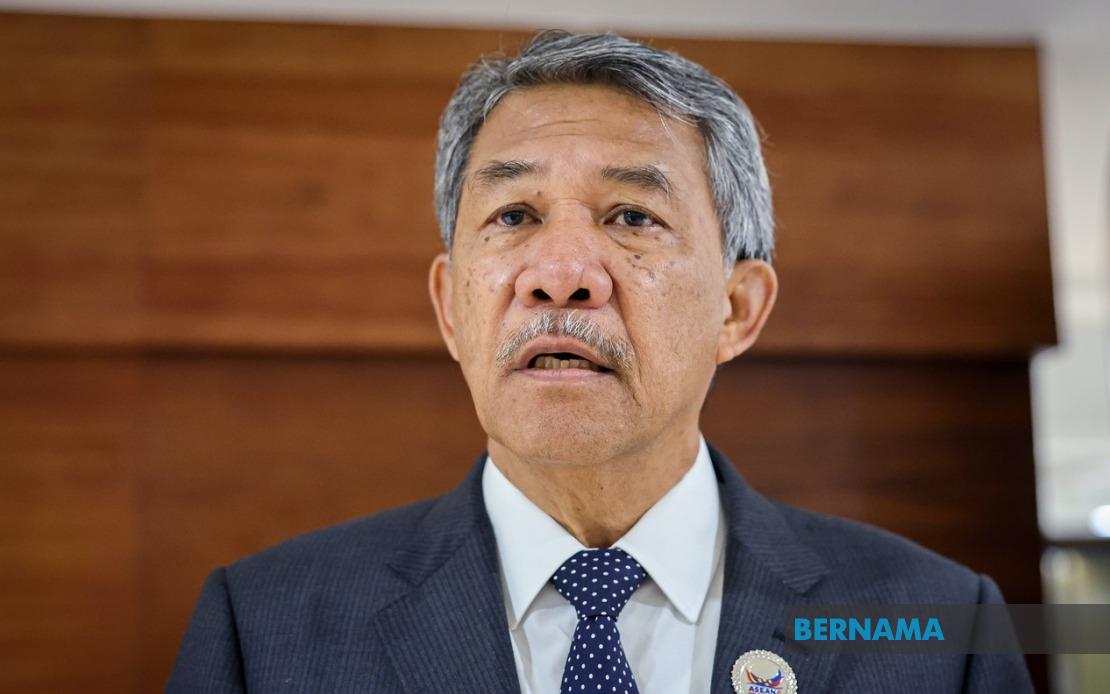
Sweden, Poland, Romania and Lithuania have secured membership in the Treaty of Amity and Cooperation in Southeast Asia (TAC), marking a significant expansion of the regional bloc's international partnerships. The acceptance of these four nations underscores the international community's confidence in ASEAN's model of peaceful coexistence and collaborative governance. Foreign Minister Datuk Seri Mohamad Hasan announced the decision following the 59th ASEAN Foreign Ministers' Meeting held in Manila, noting that the nations will formally execute their instruments of accession during a Friday ceremony coinciding with TAC's golden jubilee celebrations.
The accession of Sweden, Poland, Romania and Lithuania represents a deliberate broadening of ASEAN's diplomatic reach beyond its traditional Asia-Pacific sphere. The four European countries bring distinct geopolitical perspectives and economic interests to the treaty framework, potentially enriching the dialogue between Southeast Asia and Europe at a time of shifting global alignments. Their acceptance signals that ASEAN's foundational principles—rooted in peaceful settlement of disputes, mutual respect for sovereignty and non-interference in internal affairs—resonate with nations facing their own complex regional security challenges.
Established nearly five decades ago in 1976, the TAC functioned initially as a bilateral agreement among Southeast Asian states seeking to institutionalise peaceful coexistence following the region's turbulent post-independence years. The treaty's evolution into a multilateral framework attracting countries from every inhabited continent demonstrates the enduring relevance of its core tenets. By gradually opening membership to distant nations, ASEAN has transformed TAC from a regional mechanism into a genuinely global instrument for promoting confidence-building and cooperation among diverse state actors.
The current membership roster now encompasses 58 High Contracting Parties distributed across multiple continents. Beyond the ten ASEAN member states plus Timor-Leste, the treaty binds together major powers including China, India, Japan and the United States alongside middle powers and smaller nations. This geographic and political diversity creates a complex web of mutual commitments, where countries with competing interests nonetheless pledge adherence to the same principles of peaceful dispute resolution. The inclusion of countries as geographically distant and politically varied as Brazil, Peru, Saudi Arabia, Iran, Egypt and Morocco illustrates the treaty's universal aspirations.
Forward momentum continues, with Malaysian Foreign Minister Mohamad revealing that the ASEAN Secretariat in Jakarta is processing applications from additional countries seeking accession. This pipeline suggests that TAC membership will likely expand further in coming years, potentially approaching membership figures comparable to established international organisations. The secretary's office has begun consolidating these applications for formal submission to ASEAN member states, initiating a process that could add another cohort of nations to the treaty framework within months.
The timing of these admissions carries particular significance given the Philippine presidency of ASEAN this year. The theme chosen for the 59th Foreign Ministers' Meeting—"Navigating Our Future, Together"—encapsulates the diplomatic message ASEAN seeks to convey regarding regional partnerships and shared challenges. Adding four European nations to TAC during this period reinforces Manila's commitment to deepening ASEAN's engagement with like-minded democracies pursuing regional stability through multilateral cooperation rather than unilateral action.
For Malaysia and other Southeast Asian states, the expansion of TAC membership presents both opportunities and considerations. The entry of European nations, particularly those affiliated with the European Union and NATO, creates additional frameworks through which ASEAN might coordinate on issues ranging from maritime security to counterterrorism and economic partnership. However, the influx of nations with strategic interests in regions beyond Southeast Asia also introduces external perspectives into ASEAN's consensus-based decision-making structures, potentially complicating the bloc's traditionally cautious approach to controversial matters.
The accession of Poland, Romania and the Baltic perspectives they represent adds voices from Europe's eastern frontier, regions acutely conscious of sovereignty concerns and non-interference principles given their recent history. Sweden's membership brings Scandinavian perspectives on peace, neutrality and progressive governance to the treaty framework. These European contributions enrich ASEAN's deliberations with alternative models of regional cooperation and conflict prevention, even as they highlight the philosophical differences between European integration approaches and ASEAN's looser, consensus-driven framework.
The treaty's core principles—mutual respect for sovereignty, peaceful settlement of disputes, non-interference in internal affairs and enhanced cooperation—have proven sufficiently flexible to accommodate signatories with vastly different political systems, economic models and strategic alignments. This flexibility explains TAC's longevity and expanding appeal. Countries join not because they agree on everything but because they commit to managing disagreements without coercion, a modest yet valuable proposition in an increasingly multipolar world.

