Sustainable finance is shedding its niche status across Southeast Asia as financial institutions increasingly integrate green and transition lending into their core operations. The shift reflects a fundamental recalibration in how banks view environmental and social investments—no longer as specialist sidelines but as integral components of mainstream business strategy. This transformation, driven by surging consumer appetite for electric vehicles, renewable energy systems, and low-carbon housing, is reshaping the lending landscape from Jakarta to Kuala Lumpur and beyond.
The momentum is particularly pronounced in the region's electric vehicle market, where adoption trajectories are reshaping both transport and financing sectors. Malaysia witnessed a doubling of electric car sales in 2025, while Indonesia's market expanded even more dramatically with sales more than doubling year-on-year, according to data from the International Energy Agency. These growth patterns signal that consumer behaviour is shifting decisively toward lower-carbon transport options, and crucially, that households and businesses are actively seeking financing solutions to make these transitions economically feasible. The appetite for such products has outpaced many institutions' initial expectations, validating the strategic case for expanded sustainable finance operations.
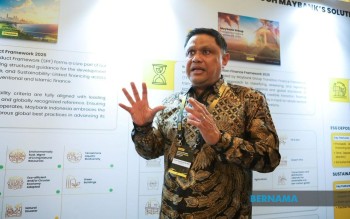
Malaysia's largest banking group is positioning itself at the forefront of this transition. Maybank Group has committed to mobilising RM300 billion in sustainable finance across ASEAN economies between 2026 and 2030, according to Datuk Shahril Azuar Jimin, the group's chief sustainability officer. Speaking at the inaugural Maybank Indonesia Sustainable Finance Forum 2026 in Jakarta, Shahril emphasised that the implementation is proceeding ahead of schedule, with momentum building within months of the programme's launch. This aggressive timeline underscores institutional confidence that demand for sustainable financing will continue accelerating throughout the decade.
The confidence underpinning this commitment stems partly from Maybank's experience under its previous five-year cycle. Between 2021 and 2025, the group mobilised RM176 billion in sustainable finance—substantially exceeding the RM80 billion target announced when the programme began. This trajectory demonstrates that perceived constraints on sustainable finance, particularly assumptions about limited liquidity and constrained demand, have proven unfounded. Shahril dismissed earlier concerns about inadequate capital availability for green investments, noting instead that financial institutions possess more than sufficient appetite to support sustainability initiatives when properly structured and communicated.
Beyond headline lending volumes, the nature of sustainable finance offerings has expanded considerably, reflecting diversifying client needs across the region. Maybank's Sustainable Product Framework now encompasses transition finance for carbon-intensive industries, dedicated electric vehicle financing, green mortgages for energy-efficient housing, social finance supporting community development, and green bond issuances. This broadened scope acknowledges that the sustainability transition is not monolithic—it encompasses gradual sectoral transformations alongside rapid shifts in consumer preferences, and financial institutions must offer correspondingly varied solutions. The evolution from narrowly defined green financing to comprehensive transition frameworks represents a maturation of the sustainable finance industry.
Indonesia provides instructive examples of how sustainable finance is reaching everyday consumers beyond large-scale industrial projects. Maybank Indonesia mobilised approximately Rp17 trillion under its 2021-2025 commitment, with transportation emerging as a particularly robust segment as electric vehicle adoption accelerates. Yet the group's sustainable portfolio extends to more granular consumer needs, including affordable housing finance and subsidised electric two-wheeler programmes targeting lower-income communities. This democratisation of sustainable finance—making green investments accessible to middle and lower-income households rather than reserving them for affluent consumers or large corporations—represents a critical policy achievement and signals how transition financing can support equitable development objectives.
The institutional shifts required to scale sustainable finance extend beyond product development into the fundamental skillsets of frontline banking professionals. Relationship managers operating in this expanded landscape must evolve from transactional loan arrangers into advisors capable of guiding clients through complex climate and sustainability considerations. This transformation demands that banking professionals communicate effectively regarding climate change impacts, explain the social implications of transition projects, and present financing solutions that align with clients' evolving sustainability objectives. Maybank has invested substantially in capacity-building programmes and sustainability certifications for relationship managers, institutionalising this knowledge transfer across the group.
Policy frameworks supporting renewable energy infrastructure have catalysed demand across the residential sector. Malaysia's Net Energy Metering Rakyat programme, overseen by the Energy Transition and Water Transformation Ministry, expanded its residential allocation by 100 megawatts in May 2025 after initial quotas became fully subscribed. This rapid uptake demonstrates strong household appetite for rooftop solar photovoltaic installations, with financing demand following accordingly. Such policy-driven expansion of clean energy capacity creates direct demand for bank financing, creating virtuous cycles where regulatory support, consumer interest, and financial product development reinforce one another.
Indonesia's sustainable finance ecosystem is simultaneously expanding in tandem with Malaysia's, though through distinct pathways reflecting local market conditions. Maybank Indonesia's head of sustainability, Maria Triffany Fransiska, noted that the transportation sector is emerging as the strongest sustainable financing segment within Indonesia's market, reflecting the nation's rapid EV adoption trajectory. Simultaneously, the bank is pioneering environmental, social, and governance deposit products—a banking innovation allowing retail depositors to align their savings with sustainability principles while earning competitive returns. Indonesia's status as the first Maybank market to introduce ESG deposits suggests that Malaysia and other regional markets will follow, extending the sustainable finance paradigm beyond lending into deposit mobilisation.
Looking ahead, green bond issuance represents another frontier for sustainable finance expansion. Maybank Indonesia is developing green bond initiatives as part of the group's broader sustainable finance architecture, enabling institutional investors throughout the region to allocate capital toward certified green projects. Green bonds provide financing mechanisms for large infrastructure projects while offering investors increasingly sophisticated tools for sustainable portfolio construction. As institutional demand for ESG-compliant assets strengthens and issuance volumes expand, bond markets will likely become vehicles channelling increasingly substantial capital flows toward regional transition initiatives.
The mainstream integration of sustainable finance carries implications extending beyond individual bank balance sheets to broader economic and development trajectories. As financial institutions across Southeast Asia align their operations with sustainability principles, capital allocation mechanisms increasingly reflect climate and social imperatives rather than purely short-term profit maximisation. This reorientation may facilitate faster transitions toward renewable energy infrastructure, more equitable development patterns, and resilience against climate-related financial risks. The region's experience also offers lessons for other emerging markets navigating the intersection of development aspirations and sustainability imperatives, demonstrating that inclusive sustainable finance need not compromise growth objectives when properly designed and implemented.

