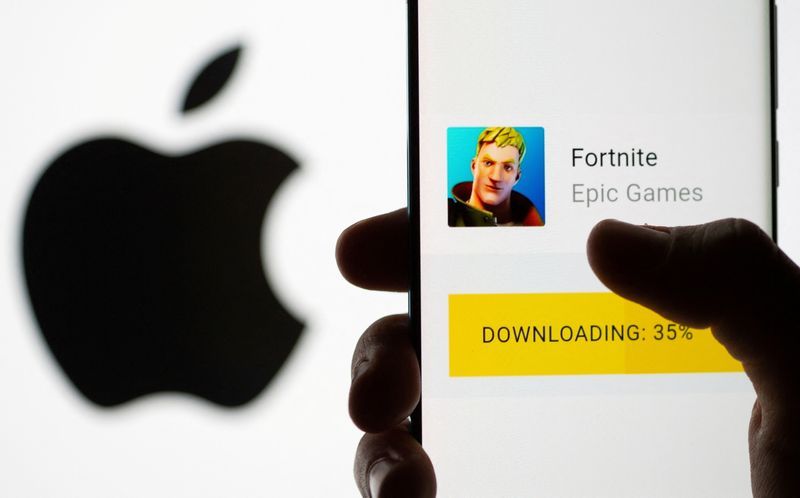
The United States Supreme Court has agreed to take up Apple's appeal challenging a lower court's finding that the tech giant violated a judicial order in its protracted antitrust dispute with Epic Games, the maker of the widely popular Fortnite video game. The decision, announced on Tuesday, escalates one of the most consequential technology regulation cases in recent years and signals the nation's highest court will weigh in on Apple's control over its App Store ecosystem. The court is expected to hear arguments during its upcoming term beginning in October.
At the heart of the dispute lies a fundamental question about digital marketplaces and consumer choice. Epic Games filed its original lawsuit in 2020, challenging Apple's stranglehold over how applications distribute to iPhone and iPad users and the fees the company imposes on in-app purchases. The case has become emblematic of growing concerns about whether dominant tech platforms unfairly leverage their control to extract excessive commissions and stifle competition. For Malaysian consumers and Southeast Asian markets, the outcome carries significant weight, as Apple's App Store practices directly affect pricing and availability of digital services throughout the region.
U.S. District Judge Yvonne Gonzalez Rogers, based in Oakland, California, largely sided with Apple in the original litigation but imposed substantial restrictions through a 2021 injunction. That order required Apple to permit developers to include links within their applications directing users toward alternative payment methods outside the App Store ecosystem. This represented a modest crack in Apple's walled garden, yet the company's response demonstrated the continuing tension between regulatory compliance and business interests. Rather than embrace transparent payment alternatives, Apple constructed a new set of restrictions that many observers argue contradicted the spirit of the court's mandate.
The central controversy involves Apple's revised commission structure. Whereas the company charges a standard 30 percent cut of all App Store purchases, it imposed a 27 percent commission on transactions made through alternative payment systems if the user clicked an external link within seven days. Epic Games argued this new rate deliberately undermined the injunction, effectively maintaining Apple's pricing dominance by making outside payment methods only marginally cheaper. In 2025, Judge Rogers agreed, finding Apple in civil contempt for violating the earlier court order. This finding raised stakes considerably, moving beyond questions of market fairness into the realm of judicial authority and corporate compliance.
The San Francisco-based 9th U.S. Circuit Court of Appeals upheld Rogers' contempt determination in December, affirming that Apple had not adequately followed the injunction's requirements. However, the appellate court offered Apple a path forward by permitting the company to present new arguments about what commission rate should be permissible for digital goods purchased through third-party payment systems. That process has not yet commenced in the Oakland district court, leaving the precise contours of Apple's obligations uncertain pending the Supreme Court's intervention.
Apple's petition to the Supreme Court frames the case in expansive terms, arguing that the lower court's injunction should not apply broadly to millions of developers beyond Epic Games itself. This distinction matters enormously. If the Supreme Court agrees, Apple could potentially limit the scope of payment system alternatives to Epic alone, while maintaining current practices for the broader developer community. Conversely, if the court upholds the injunction's general applicability, Apple would face pressure to fundamentally restructure how it monetizes the App Store across its entire platform.
In filings with the Supreme Court, Apple emphasized that regulators worldwide are scrutinizing the case to determine what commission rates the company may lawfully charge on covered purchases in major international markets outside the United States. This global dimension underscores why the case matters beyond American borders. The European Union, South Korea, and other jurisdictions have already enacted or proposed legislation aimed at opening digital platforms to alternative payment methods. An Apple victory could embolden the company to resist international regulatory pressure, while a defeat would likely accelerate global efforts to mandate interoperability and fair pricing standards.
The contempt question itself represents a stark judgment on corporate behaviour before the law. When a company receives a clear injunction, deliberate attempts to circumvent it—even through technically compliant yet practically evasive measures—strike many observers as disrespectful of judicial authority. Yet Apple contends it acted in good faith, merely implementing the requirements as it understood them. The Supreme Court must now resolve whether Apple's conduct demonstrated willful defiance or reasonable interpretation of an ambiguous directive.
For Southeast Asian readers, this case carries practical implications. Apple's App Store pricing directly affects the cost of subscriptions, games, and productivity tools across Malaysia, Singapore, Indonesia, and neighbouring countries. If the Supreme Court forces Apple to accept lower commissions or mandates cheaper alternative payment options, consumers in the region could benefit from reduced prices. Conversely, if Apple prevails, the company retains flexibility to maintain current pricing structures. Additionally, the ruling will influence how other technology giants operate their digital marketplaces, potentially affecting services provided by Google, Meta, and other platforms with significant regional presence.
The Supreme Court's decision to hear this case also reflects broader institutional recognition that technology regulation demands top judicial attention. The justices are not simply adjudicating a business dispute between two corporations; they are grappling with fundamental questions about market competition, regulatory authority, and the proper balance between corporate innovation and consumer protection. How the court navigates these competing concerns will reverberate through the technology sector and inform regulatory approaches globally.
The coming Supreme Court term promises to be consequential for technology law. Apple's contempt appeal joins other pending cases involving digital platforms, data privacy, and algorithmic accountability. Collectively, these matters suggest the court recognises that technology companies now wield such concentrated power that judicial oversight extends beyond traditional antitrust frameworks. The Apple-Epic dispute exemplifies how market-dominant platforms can exploit their position in ways that formal antitrust law sometimes struggles to address directly.
Observers anticipate the Supreme Court will likely narrow rather than dramatically expand the injunction's scope, given the justices' historical preference for limiting lower court orders. Yet even a modest ruling upholding the contempt finding would validate ongoing efforts to democratise app store access and payment systems. For now, Apple and Epic Games will prepare for what promises to be one of the most closely watched Supreme Court arguments in technology law, with implications reaching far beyond Silicon Valley into markets and boardrooms throughout Southeast Asia and beyond.

