Sudden cardiac arrest remains a silent killer in Malaysia, striking without warning and claiming lives within minutes if immediate help is not available. The nation's survival rates for out-of-hospital cardiac arrest remain alarmingly low, ranging from just 0.5 per cent to 8.5 per cent—a stark reminder of how time, access, and readiness determine life and death in these critical moments. To address this public health challenge, Sunway Medical Centre Velocity has launched an ambitious initiative to position Automated External Defibrillators at high-traffic locations across Kuala Lumpur while simultaneously training the public in basic life support techniques.
The hospital's efforts are rooted in a sobering medical reality: without immediate cardiopulmonary resuscitation, survival odds plummet dramatically after eight to ten minutes. This window of opportunity is painfully short, yet studies show that many cardiac emergencies prove fatal not because help was unavailable but because critical delays prevented access to life-saving equipment and trained responders. The initiative, anchored in the hospital's corporate social responsibility programme, builds upon an earlier campaign titled "Save A Number, Save A Life" and represents a comprehensive strategy combining infrastructure expansion, public education, and hands-on training.
According to Dr Wee Tong Ming, Medical Director and Consultant Emergency Physician at Sunway Medical Centre Velocity, the distinction between survival and tragedy often hinges on response speed. He emphasised that emergencies do not fail because assistance is absent; rather, delays in recognising the problem and accessing appropriate equipment create the fatal gap. This perspective underscores a shift in thinking about cardiac emergency response—moving from a purely clinical framework to a community-centred one where ordinary people in public spaces become first responders.
The hospital has identified strategically significant locations for AED installations, focusing on areas where foot traffic is heaviest and cardiac events are more likely to occur. Selected MRT stations including Tun Razak Exchange, Bukit Bintang, Ampang Park, and Muzium Negara will now house these devices, alongside commercial landmarks such as Aquaria KLCC, Menara Public Bank, and Menara Public Bank 2. The National Heritage Building within Stadium Merdeka's Merdeka 118 Precinct and the Public Bank-ITTC facility have also been selected, ensuring coverage across transport nodes and corporate hubs where Kuala Lumpur's working population congregates.
Beyond mere equipment placement, each AED unit comes with a specially designed standee that enhances visibility and ease of use. Clear signage ensures that bystanders—many of whom may never have encountered a defibrillator—can locate and utilise the device without hesitation during a crisis. The hospital has added QR code stickers linking to its emergency response guidance webpage, bridging the gap between having access to equipment and knowing how to use it. These QR codes appear not only on the AED standees but also in general practitioner clinics throughout the city, creating multiple touchpoints for public awareness.
Susan Cheow, Chief Executive Officer of Sunway Medical Centre Velocity, articulated the deeper purpose behind the initiative: empowering ordinary citizens to respond confidently in medical emergencies. Her statement reflects a recognition that modern public health requires not just better hospitals but more resilient communities. By strengthening both physical infrastructure and public knowledge, the hospital aims to dissolve the sense of helplessness that often paralyses bystanders when facing a cardiac emergency. The initiative acknowledges that vulnerability in medical crises is partly determined by geography and circumstance—proximity to equipment and presence of trained responders can mean the difference between going home and going to a funeral.
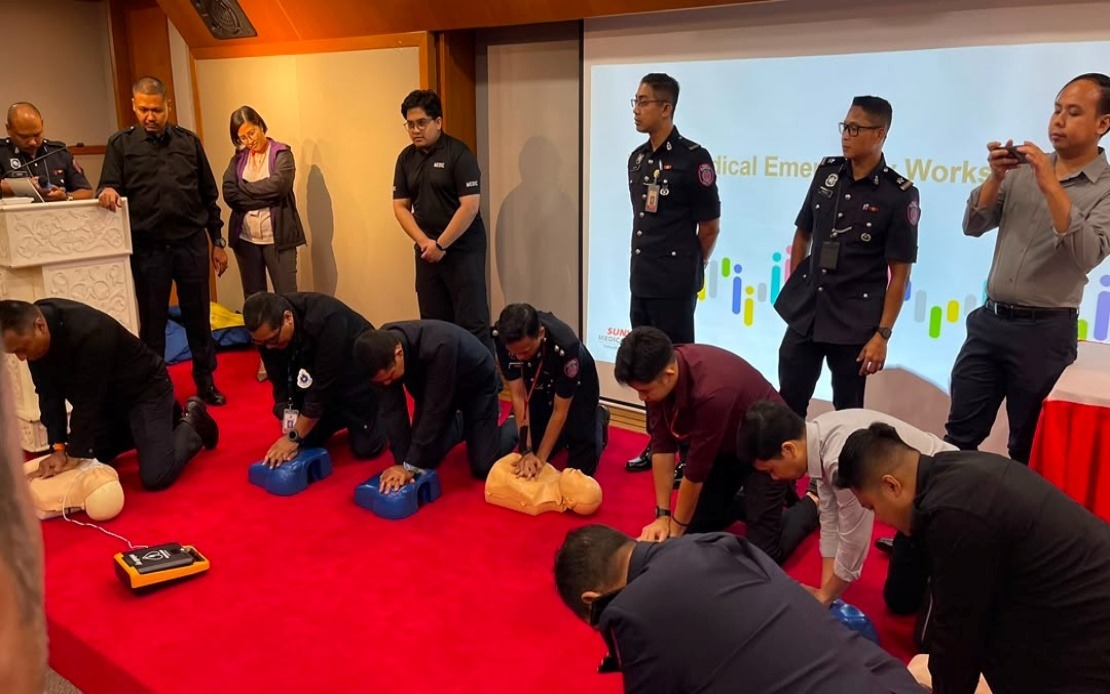
Training forms the cornerstone of this multifaceted approach. The hospital has conducted on-site sessions and accident and emergency awareness talks at various locations, ensuring that members of the public acquire competency in recognising cardiac arrest symptoms, performing chest compressions, and safely operating an AED. Dr Wee stressed that installing equipment alone solves only half the equation; without corresponding knowledge and confidence, the devices risk becoming inert objects that nobody dares to use. This understanding reflects international best practice in emergency response systems, where survival rates correlate strongly with public awareness and willingness to intervene.
The timing and scale of this expansion speak to a broader public health conversation happening across Southeast Asia. Nations in the region increasingly recognise that improvements in cardiac care require both top-down policy changes and bottom-up community engagement. Malaysia's survival rates, though historically low, can improve through sustained effort in access and training. Other countries with superior outcomes have invested heavily in exactly these areas: widespread AED distribution combined with mandatory CPR training in schools and public institutions. Sunway Medical Centre Velocity's approach mirrors these proven strategies adapted for Malaysia's urban context.
The initiative also reflects a changing philosophy about medical preparedness in shared spaces. Susan Cheow noted that medical emergencies test not only healthcare systems but also whether our public infrastructure is ready for crisis moments. This framing elevates cardiac readiness from a niche medical concern to a broader question about urban planning and civic responsibility. Shopping malls, transport networks, and office complexes now have a stake in emergency response, and their preparedness becomes part of their social responsibility. Stadium Merdeka, Aquaria KLCC, and the MRT network are no longer just commercial or recreational venues but potential sites where a life might be saved by someone who happened to know CPR and had access to an AED.
The QR code linking strategy deserves particular attention, as it demonstrates how Sunway Medical Centre Velocity is leveraging technology to bridge knowledge gaps. A bystander who has encountered AED awareness but forgotten specific steps can immediately access guidance through their smartphone, turning a moment of uncertainty into an actionable intervention. This approach recognises that in 2024, public health messaging must be multimodal and accessible at the point of need.
For Malaysian business owners, facility managers, and corporate leaders, this initiative sets an implicit standard. The hospitals' partner locations—major MRT stations, commercial buildings, and public institutions—are now equipped and visible exemplars of emergency readiness. Other organisations in Kuala Lumpur and beyond may face growing pressure, both from public expectation and from good conscience, to follow suit. This creates a virtuous cycle where normalising AED presence gradually shifts from novelty to expectation.
The implications extend beyond Kuala Lumpur. While this phase targets the capital, the model itself is transferable to other Malaysian cities grappling with sudden cardiac arrest mortality. Penang, Johor Bahru, and other urban centres could adapt Sunway Medical Centre Velocity's framework—strategic placement, clear signage, QR-linked guidance, and community training—to their own geographies and population densities. A nationwide network of accessible defibrillators, supported by trained responders, could eventually shift Malaysia's survival statistics closer to global best practice.
Ultimately, this initiative represents an investment in human dignity and community resilience. Every second counts in cardiac emergencies, and Sunway Medical Centre Velocity is working to ensure that those seconds are spent not searching for help but using it effectively. By dismantling barriers to equipment access and knowledge, the hospital is acknowledging that survival from sudden cardiac arrest should not be a matter of luck or geography but a realistic outcome that any Malaysian community is prepared to deliver.

