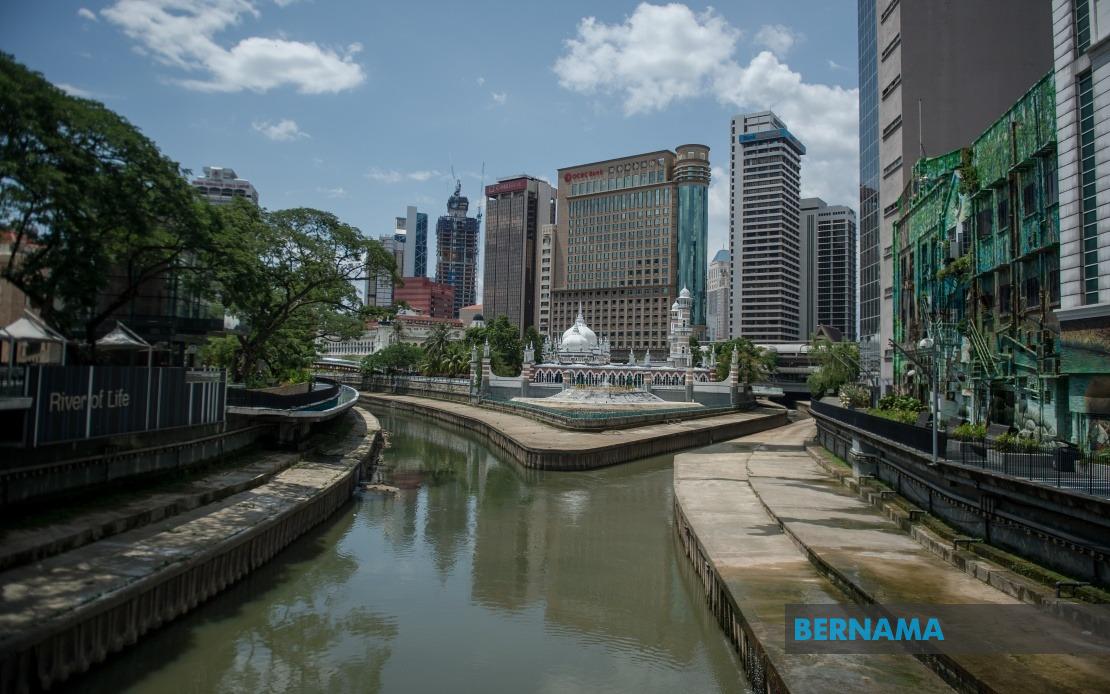
Selangor's Sungai Klang has undergone a dramatic improvement in its ability to manage water flow, with capacity expanding to 22 per cent from a critically low baseline of less than five per cent, according to project authorities. The achievement reflects the success of a substantial intervention aimed at mitigating one of the state's most persistent natural hazards, with implications extending across the Klang Valley's densely populated regions.
The transformation stems from a 56-kilometre river widening and deepening initiative currently standing at 68 per cent completion. Syaiful Azmen Nordin, managing director of Landasan Lumayan Sdn Bhd, which oversees the project, outlined the scale of work undertaken during a media briefing at the Sultan Salahuddin Abdul Aziz Shah Building in Shah Alam. The intervention targets multiple vulnerable zones including areas like Taman Sri Muda, where water overflow poses recurring threats to residential neighbourhoods and commercial infrastructure.
Since the project commenced in 2017, contractors have extracted approximately 1.2 million cubic metres of accumulated sediment and riverbed material. This dredging work fundamentally reshapes the river's cross-sectional profile, allowing it to accommodate substantially more water before reaching overflow thresholds. The removal of these accumulated deposits addresses a core vulnerability that had persisted for decades, essentially restoring sections of the river to more optimal flow characteristics while simultaneously increasing total water capacity.
Beyond the purely structural improvements, project managers have pursued an integrated approach combining physical infrastructure enhancement with environmental restoration. Since 2017, the continuous river-cleaning campaign has extracted more than 98,000 tonnes of accumulated rubbish and waste material, representing a direct investment of RM19.6 million. This cleanup operation addresses a secondary but significant factor contributing to reduced water flow and increased flood vulnerability—the accumulation of discarded items, construction debris, and other obstacles that obstruct natural water movement.
The water quality implications merit particular attention for Malaysian environmental and public health considerations. The sustained cleaning efforts have facilitated an improvement in the river's quality classification, advancing from Class 5 designation (the lowest category) to Class 3 and 4 status. This progression reflects not only the removal of visible rubbish but also reduced pollution loads and improved ecological conditions. Concurrently, waste entering the river system annually has contracted from 16,000 tonnes to a significantly lower range of 5,000 to 6,000 tonnes, suggesting that public awareness campaigns accompanying the physical works have yielded behavioural changes among communities along the riverbank.
Projection scenarios suggest further capacity improvements lie ahead. The current dredging works are targeted for completion by the end of 2025, at which point Sungai Klang is anticipated to achieve a 40 per cent water-carrying capacity—representing substantial progress from both the original baseline and the current 22 per cent achieved milestone. This incremental improvement trajectory indicates that the project team maintains realistic expectations about flood resilience gains, acknowledging that even post-completion, the river will operate within manageable parameters rather than representing complete flood immunity.
A critical clarification emerged regarding recent flooding events in Selangor. Syaiful Azmen specifically noted that recent inundation episodes were not attributable to Sungai Klang overflowing, but rather stemmed from internal drainage failures within urban stormwater systems. This distinction carries importance for understanding Selangor's multi-faceted flood challenge: while the major river represents one vulnerability, the state's urban drainage infrastructure—including smaller tributaries, storm drains, and internal water management systems—presents separate, sometimes more immediate risks during heavy precipitation events.
The geographical scope of planned interventions extends beyond the current dredging zones. The Federal government has committed to undertaking complementary works on the Sungai Klang stretch between Shah Alam and Mid Valley, ensuring that improvements are not confined to specific sections but rather propagate along the river's entire critical corridor. This coordinated, multi-agency approach reflects recognition that flood management requires comprehensive intervention across interconnected systems rather than isolated projects.
For Malaysian stakeholders, particularly those in Selangor's flood-prone regions, these developments represent tangible progress on a historically intractable problem. The 2021 flooding events that devastated numerous communities underscored the urgency of such interventions and justified the sustained investment commitment spanning multiple years. However, the distinction between flood vulnerability reduction and complete flood prevention warrants emphasis—even with the projected 40 per cent capacity increase, Sungai Klang will remain subject to overflow during extreme precipitation events, necessitating continued investment in complementary flood mitigation strategies including enhanced drainage systems, improved early warning mechanisms, and community preparedness programmes.
The public awareness dimension of the initiative extends beyond technical engineering considerations. The documented reduction in annual waste entering the river system—from 16,000 to 5,000-6,000 tonnes—demonstrates that community education and enforcement measures generate measurable behavioural modification. Sustaining these improvements requires ongoing engagement with riverside communities and businesses, reinforcing the principle that individual actions collectively determine flood risk profiles.
Looking forward, the completion of current Sungai Klang works represents one component within a broader Selangor flood management architecture. The river's enhanced capacity, combined with concurrent improvements in water quality and reduced pollution loads, positions the state's environmental management in a more sustainable trajectory. However, climate change pressures and continued urbanization in the Klang Valley suggest that complacency would be premature—future precipitation patterns may exceed even the enhanced 40 per cent capacity target, necessitating forward-looking investment in additional resilience measures and adaptive management strategies.

