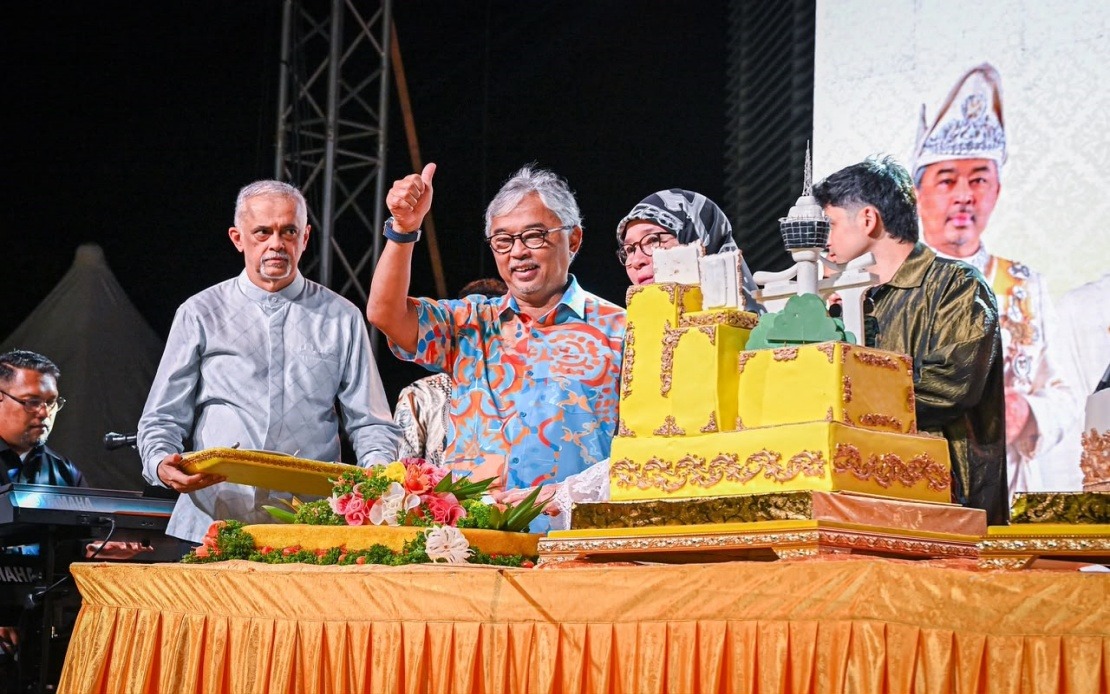
The Sultan of Pahang, Al-Sultan Abdullah Ri'ayatuddin Al-Mustafa Billah Shah, presided over the opening of the Kuantan 188 Festival on Thursday evening, marking the commencement of celebrations centred around the royal family's significant occasions. His arrival at the Kuantan 188 tower grounds at 9 pm drew a substantial crowd eager to witness the ceremonial proceedings that would define the evening's festivities.
Accompanying the Sultan were two other members of the royal household whose presence underscored the importance of the occasion. Tengku Ampuan of Pahang, Tunku Azizah Aminah Maimunah Iskandariah, stood beside the Sultan throughout the evening, while Tengku Mahkota Tengku Hassanal Ibrahim Alam Shah, the Regent of Pahang, completed the trio of royal dignitaries gracing the event. Their collective attendance demonstrated the monarchy's commitment to engaging with the broader Pahang community during this significant celebration.
The festival itself functions as a dual celebration, honouring the birthdays of both Al-Sultan Abdullah and Tunku Azizah. This intertwining of royal occasions within a single public festival reflects contemporary approaches to royal commemoration in Malaysia, where personal milestones become opportunities for broader community engagement and shared cultural expression. The event's scale and scope indicate its established status within Pahang's annual calendar of significant public gatherings.
Ceremony dominated the formal proceedings, with the royal party participating in a cake-cutting ritual that symbolically inaugurated the festival's full programming. This traditional element, familiar to Malaysian audiences through countless state and national celebrations, provided a ceremonial anchor for the evening's activities and created photographic moments suitable for public record and media documentation.
The entertainment dimension brought considerable star power to the Kuantan gathering. Performances from Datuk M Nasir, Hazama, Hael Husaini, and Nadeera showcased established figures within Malaysia's entertainment landscape, delivering musical performances that appealed to the diverse demographic present. The selection of these particular artistes suggests organisers sought broad appeal across multiple age groups and musical preferences, from traditional to contemporary styles.
Beyond mere ceremonial obligation, the Sultan articulated a vision for the festival's broader significance within Pahang's development framework. In his remarks, Al-Sultan Abdullah expressed appreciation for the organising bodies while simultaneously outlining how such events transcend simple entertainment value. His statement that the festival strengthens tourism infrastructure, stimulates local economic activity, and reinforces cultural preservation reflects sophisticated understanding of how royal patronage can catalyse comprehensive regional development.
The Sultan's emphasis on the relationship between royal institution and populace carries particular resonance in Malaysia's constitutional monarchy context. By framing the festival as a platform for closer ties between palace and people, the monarch reinforced the traditional role of Malay-Muslim royalty in maintaining social cohesion and demonstrating accessibility. This positioning distinguishes the occasion from purely private celebration, transforming it into an instrument of state legitimacy and public welfare.
The three-day format of the Kuantan 188 Festival ensures sustained engagement beyond the opening night's formal ceremonies. Running consecutively from its commencement, the event incorporates multiple attractions designed to accommodate varying interests and participation levels. This extended timeframe allows the festival to function as genuine community gathering rather than ephemeral ceremony, with families and individuals able to attend multiple components across several days.
The Royal Pahang Dragon Boat Regatta represents a particularly significant element within the broader festival programming. This aquatic competition taps into Malaysia's multicultural sporting heritage, drawing participants and spectators across ethnic and social lines. Dragon boat racing, with its roots in various Asian traditions, has become increasingly popular across Southeast Asia as both competitive sport and tourist attraction, positioning Kuantan as a regional centre for this growing activity.
Complementing water-based activities, the Kuantan 188 Hot Air Balloon event introduces an aerial dimension to the festival experience. Ballooning events have gained traction throughout Malaysia as spectacular public draws, combining aesthetic appeal with genuine sporting competition. The inclusion of this element demonstrates festival organisers' sophistication in curating diverse attractions that appeal simultaneously to casual observers and serious enthusiasts.
For Pahang and the broader Southeast Asian region, the Kuantan 188 Festival exemplifies how traditional royal ceremonies integrate with contemporary entertainment and tourism frameworks. Rather than remaining insular palace affairs, modern celebrations of this nature explicitly acknowledge economic dimensions and community benefit. This evolution reflects changing expectations regarding how state institutions engage with citizens and contribute to regional prosperity.
The festival's continued annual iteration signals its entrenchment within Pahang's civic culture. Repetition builds tradition and public anticipation, transforming initial events into established institutions that communities plan around and businesses depend upon. For Kuantan specifically, the festival represents significant opportunity to profile the capital city, attract visitors, and demonstrate the vibrancy of Pahang's urban centre.
The simultaneous celebration of the Sultan's and Tengku Ampuan's birthdays within unified festival programming reflects modern Malaysian practice of maximising ceremonial efficiency while maintaining individual recognition. This approach accommodates multiple occasions within single organisational framework, reducing logistical burden while amplifying overall impact. The strategy proves particularly effective for royal families managing extensive ceremonial calendars throughout the year.

