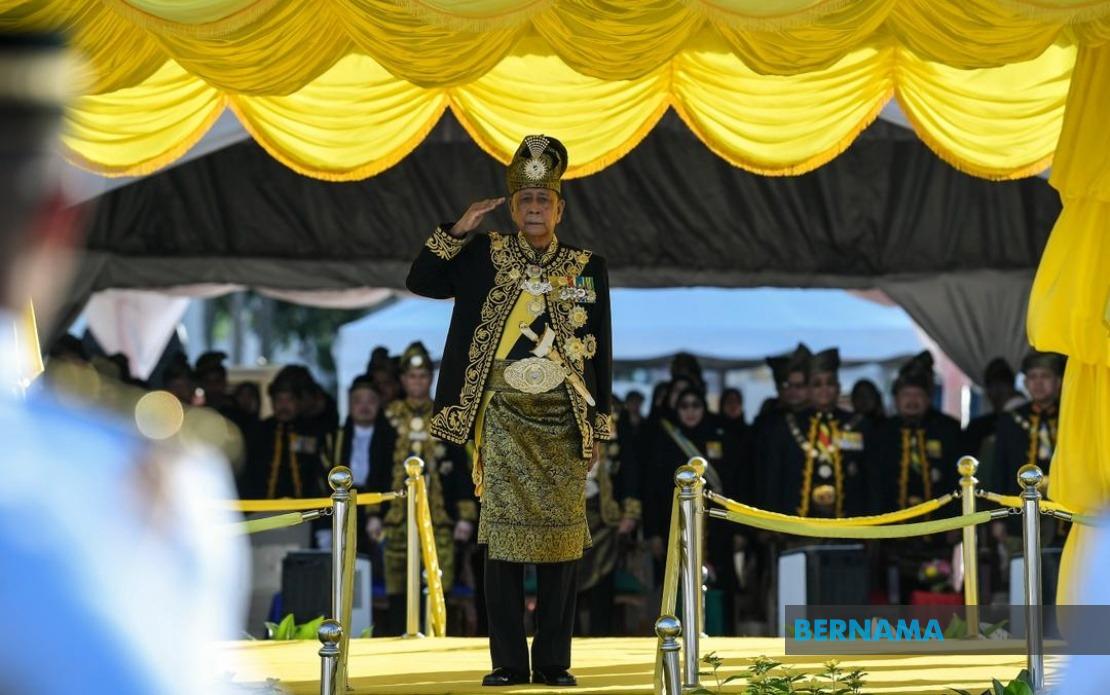
The Sultan of Kedah, Al Aminul Karim Sultan Sallehuddin Sultan Badlishah, marked another year with full ceremonial fanfare on July 5 as Alor Setar played host to a grand guard of honour parade organised in recognition of His Royal Highness' 84th birthday. The event took place at Dataran Medan Bandar, drawing together the state's highest-ranking officials and military representatives to pay their respects to the long-reigning monarch who has been a stabilising figure in Kedah's governance for decades.
The royal celebration brought together the key figures in Kedah's power structure, with the Raja Muda of Kedah, Tengku Sarafudin Badlishah Sultan Sallehuddin, standing prominently alongside his father. The state's political leadership also turned out in force, with Menteri Besar Datuk Seri Muhammad Sanusi Md Nor and State Secretary Datuk Seri Norizan Khazali present to underscore the government's commitment to honouring the institution of the monarchy. The presence of members from the State Executive Council further emphasised the significance of the occasion within Kedah's administrative hierarchy.
The military contingent formed the centrepiece of the day's festivities, with 103 personnel and three officers from the 6th Battalion of the Royal Malay Regiment mustering for the parade. Led by Major Muhammad Nasrullah Abdullah, the soldiers presented a striking show of discipline and precision. The ceremonial arrangements reflected the protocols typically observed for royal occasions in Malaysia, where the positioning of colour bearers and regiment standard bearers carries symbolic weight. Lieutenant Mohamad Aiman Hanif Samsudin carried the colours while Warrant Officer 1 Mohd Fairuz Ramli bore the regiment standard, both roles entrusted to experienced personnel.
Musical accompaniment proved essential to the pageantry, with the RAMD Central Band under Captain Muhamad Fauzee Japar's direction providing the ceremonial soundscape for the proceedings. Sergeant Mohd Shahrilaizad Bakhtiar assisted in leading the band, ensuring that the musical element of the parade met the exacting standards demanded by protocol. Such musical components are integral to Malaysian military ceremonies, lending gravitas and formality to occasions involving the royal institution.
The event gained an additional dimension through a spectacular airborne element that captured public attention and demonstrated the resources available for state-level celebrations. Two EC120B helicopters from the Flying Training Institute (INSPEN) 2 participated in a ceremonial flypast, while three PC-7 MK II training aircraft from INSPEN 1 added to the aerial display. Such coordinated flying demonstrations require significant planning and coordination between military aviation units, reflecting the importance placed on showcasing the country's defence capabilities during royal events.
The artillery component of the celebration proved equally impressive, with the 41st Battery of the Royal Artillery Regiment (Ceremonial) executing a 21-gun salute in the Sultan's honour. This unit, based at Sungai Buloh Camp in Selangor, deployed to Kedah specifically for this ceremonial duty. Major Hafizan Md Ghani led the artillery personnel through the precision firing sequence, a practice steeped in centuries of military tradition. The 21-gun salute remains one of the most potent symbols of respect accorded to high-ranking dignitaries in the Commonwealth tradition that Malaysia continues to observe.
At 84 years old, Sultan Sallehuddin stands as one of Malaysia's longest-serving sultans, having ascended to the throne in 1959. His reign has witnessed transformative periods in Malaysian history, and his role in Kedah's development has been substantial. Birthday celebrations for senior members of the royal family serve not merely as personal occasions but as public affirmations of the institution's continuity and the people's respect for their rulers. The formal military parade conducted in Alor Setar represented one such affirmation, broadcast through the attendance of civilian and military leaders.
The coordination required to execute such ceremonies underscores the structured nature of Malaysian state occasions and the deference with which the monarchy is treated across government and military institutions. Each element of the parade—from the positioning of officers to the timing of the salute and the aerial display—follows established protocols designed to convey respect and solemnity. The involvement of multiple military units from different branches demonstrates how ceremonial occasions serve as opportunities for cross-service coordination and display.
For Kedah specifically, the celebration represented an affirmation of the state's administrative cohesion and the shared commitment of both political and military establishments to honouring the institution that underpins the constitutional monarchy. The Raja Muda's attendance carried particular significance, symbolising the continuity of succession and the generational transition within the state's royal household. Such moments, while ceremonial in nature, carry deeper implications for Malaysia's broader constitutional framework, where the sultans of the individual states play defined but significant roles in both governance and cultural identity.
The military pageantry displayed in Alor Setar exemplified how Malaysia's armed forces continue to dedicate resources to ceremonial functions that reinforce the social and political importance of the monarchy. Rather than viewing such occasions as ancillary to military missions, the Malaysian defence establishment integrates them as central to civil-military relations and to the broader project of national and state identity maintenance. Birthday parades for royal personages thus transcend mere celebration, functioning as public demonstrations of institutional respect and constitutional order.

