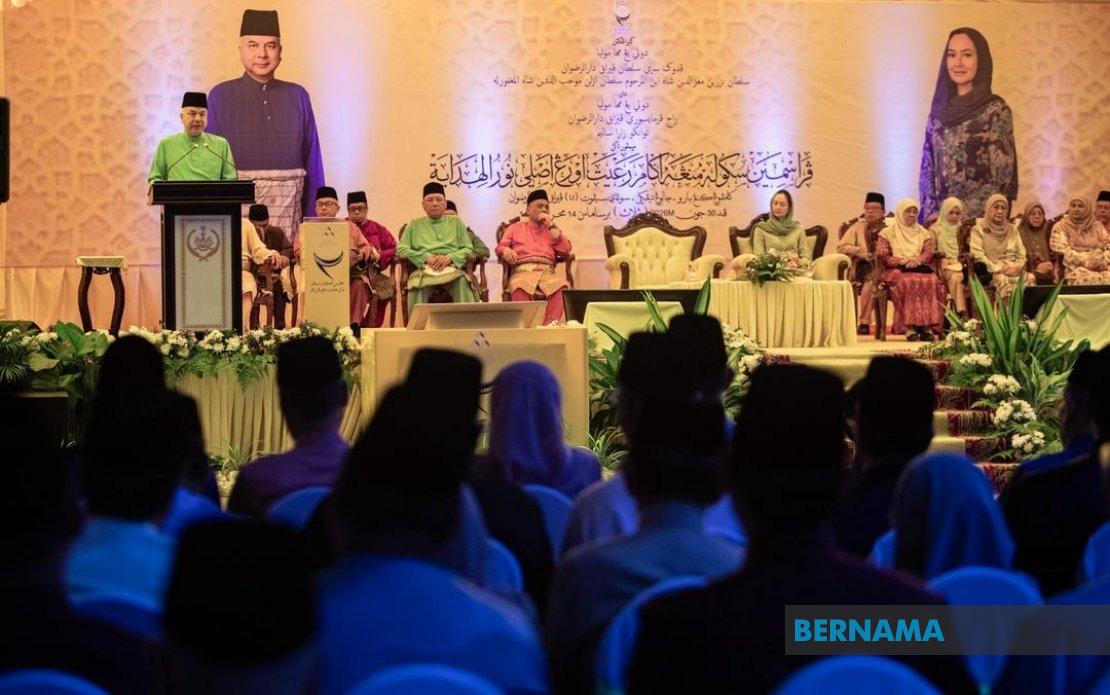
Sultan Nazrin Shah, the Ruler of Perak, has officially inaugurated Sekolah Menengah Agama Rakyat (SMAR) Orang Asli Nurul Hidayah in Kampung Kenang, Sungai Siput Utara, cementing a watershed moment in Malaysia's efforts to strengthen educational access and human development capabilities within the indigenous Orang Asli population. The ceremony, attended by senior royal figures including the Raja Muda of Perak Raja Jaafar Raja Muda Musa and Raja Di Hilir Perak Raja Iskandar Dzurkarnain Sultan Idris Shah, underscored the institutional importance attached to this initiative by Perak's leadership and the wider Malaysian establishment.
The opening of SMAR Nurul Hidayah represents a distinctly Malaysian approach to bridging longstanding educational disparities affecting marginalised communities. Perak Menteri Besar Datuk Seri Saarani Mohamad, alongside officials from the Perak Islamic Religious and Malay Customs Council (MAIPk) and the Perak Islamic Religious Department (JAIPk), joined the Sultan in recognising the institution's significance. As Malaysia's inaugural secondary school designed specifically to serve Orang Asli learners through an integrated Islamic and academic curriculum, the establishment marks a departure from conventional approaches to indigenous education in the region.
The school's origins reveal a considered, grassroots-to-institutional trajectory. What began as a dakwah and fundamental Islamic learning centre subsequently evolved into a comprehensive educational establishment offering parallel religious and academic instruction. This progression over more than three decades demonstrates how community-driven initiatives, when supported through formal institutional channels, can achieve structural transformation. For Malaysia's Orang Asli population—historically underserved by mainstream education infrastructure—such dedicated facilities address both practical access barriers and cultural-linguistic dimensions that conventional schooling often overlooks.
Sultan Nazrin articulated a vision of education that transcends narrow academic measurement, positioning schooling as foundational infrastructure for broader societal progress. He characterised the investment in SMAR Nurul Hidayah not merely as physical infrastructure development, but as a strategic commitment to securing intergenerational advancement for Orang Asli youth. This framing carries significance beyond Perak's boundaries, as Malaysia continues grappling with how federal and state-level educational policy can effectively serve geographically dispersed and demographically distinct populations while maintaining coherent national standards.
The institution's demonstrated track record provides empirical grounding for the Sultan's optimism. Student outcomes at SMAR Nurul Hidayah have reportedly exceeded expectations, with alumni subsequently returning to their communities in educative and development capacities. This pattern of graduates reinvesting in community advancement addresses a critical gap in Malaysia's indigenous development narrative—the tendency for educational mobility to result in outmigration rather than localised capacity building. When former students become educators and community advocates within their own populations, the multiplier effects extend beyond individual achievement into collective institutional strengthening.
The school's integrated pedagogical framework merits particular attention within Southeast Asia's educational landscape. By simultaneously emphasising Islamic religious instruction, moral character development, and conventional academic curricula, SMAR Nurul Hidayah reflects Malaysia's distinctive approach to faith-based public education. For the Orang Asli community of Kampung Kenang and surrounding areas, this integration acknowledges that educational relevance requires alignment with both community values and national citizenship expectations. The model potentially offers instructive lessons for other Malaysian states with substantial indigenous populations navigating similar tensions between culturally-grounded learning and standardised national frameworks.
Sultan Nazrin's extended remarks on educational philosophy provided context for understanding why this specific institution warranted viceregal inauguration. He characterised authentic education as a comprehensive developmental process encompassing intellectual, spiritual, emotional, and physical dimensions—a conceptualisation that moves beyond the instrumental skills-based rhetoric dominating many contemporary education policy discussions globally. For Malaysia's policymakers, this articulation of education's multifaceted purpose carries implications for how curriculum design, teacher training, and institutional assessment frameworks are subsequently structured across the public system.
The political commitment demonstrated through this high-level inauguration ceremony reflects broader recognition of indigenous education's strategic importance within Malaysia's nation-building project. With Orang Asli communities comprising Malaysia's most economically marginalised demographic groups, educational advancement constitutes a primary policy lever for reducing structural inequalities. Perak's decision to champion SMAR Nurul Hidayah at the highest institutional levels signals that indigenous development is understood as consequential to state-level governance priorities, not merely peripheral social welfare concerns.
The ceremony's timing and composition also carry significance within Malaysia's federal-state dynamics. Perak's proactive establishment of specialist indigenous educational infrastructure reflects state-level initiative in a policy domain where federal frameworks theoretically predominate. This institutional entrepreneurship suggests that gaps between centralised education policy and ground-level community needs can motivate regional governments toward independent solution-development. For other Malaysian states contemplating comparable interventions among their indigenous populations, Perak's demonstrated commitment and measured outcomes provide a template and proof-of-concept.
Looking forward, SMAR Nurul Hidayah's expansion of physical infrastructure, as noted during the inauguration, presents opportunity for deepening educational impact. Enhanced facilities typically correlate with improved teaching capacity and student retention, particularly in rural settings where infrastructure limitations historically constrain educational quality. The Sultan's expression of hope that improved facilities would inspire educator excellence reflects understanding that physical and human resource investments function interdependently in educational development.
The alumni trajectory—where graduates return as educators and community leaders—deserves strategic attention as the school develops. Formalising mentorship programmes, alumni networks, and community engagement structures could systematise the positive externalities currently emerging organically. Such approaches would convert individual success stories into scalable institutional practices, multiplying the school's developmental footprint across Orang Asli communities throughout Perak.
Beyond Perak's boundaries, SMAR Nurul Hidayah's success carries implications for how Malaysia addresses indigenous educational deficits more systematically. The school demonstrates that dedicated, culturally-responsive institutions can achieve strong outcomes when leadership commitment and adequate resourcing align. As Malaysia continues developing its inclusive education agenda, replicating this model's key success factors—integration of religious and academic learning, community leadership involvement, returnee alumni contribution, and sustained institutional investment—could meaningfully advance educational equity across multiple indigenous populations throughout the nation.

