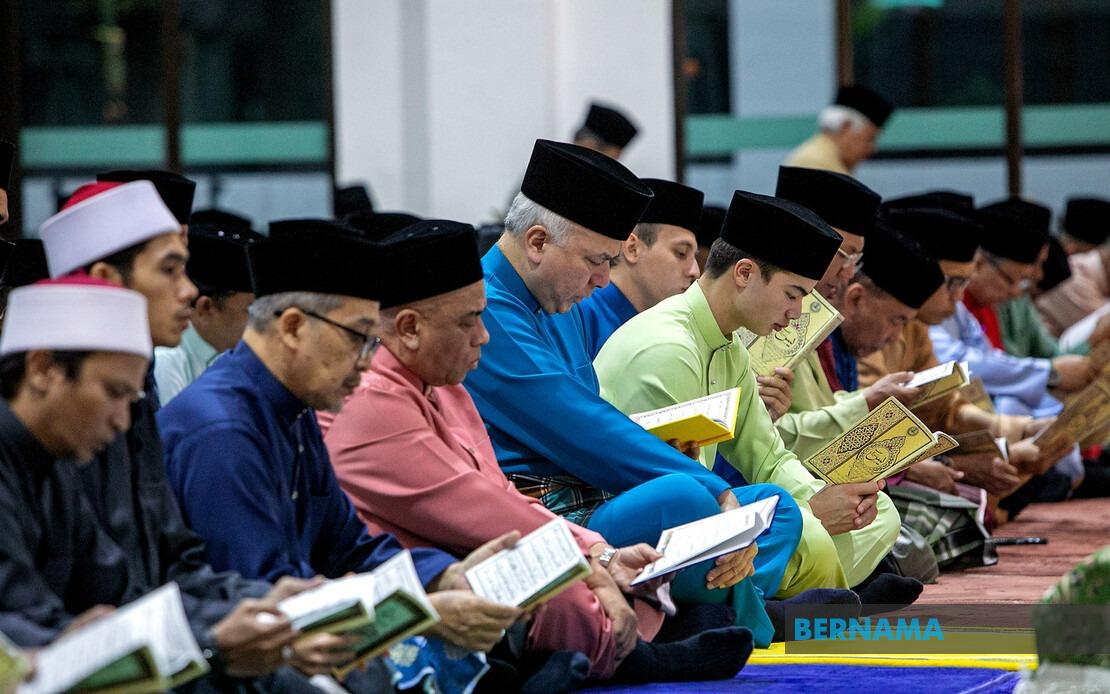
Sultan Nazrin Shah, the Sultan of Perak, marked the nation's National Day celebration with a significant spiritual gathering at Masjid Imam As Syafie in Ipoh on Friday night, participating in religious observances that highlighted the role of faith in the national narrative. The mosque inauguration and subsequent prayers represented a blend of state ceremonial duty and personal religious commitment, underscoring how Malaysia's constitutional monarchs continue to intertwine their official roles with Islamic leadership responsibilities. The event drew substantial attendance, with approximately 1,000 worshippers joining the Sultan, creating a meaningful gathering that reflected the importance attributed to this annual observance in Perak.
The newly completed mosque, which opens its doors to worshippers for the first time under official state patronage, represents a significant infrastructure investment in the state's religious landscape. Constructed at a cost of RM8.7 million, Masjid Imam As Syafie showcases modern Islamic architectural standards while serving a practical purpose for the Muslim community in the Ipoh area. The facility's capacity to accommodate approximately 1,600 worshippers simultaneously indicates a substantial commitment to expanding prayer space in the region, addressing growing congregational needs. The completion of such a facility, typically a multi-year project, reflects the ongoing development of religious infrastructure across Malaysian states, where state governments have prioritised building and upgrading mosques as part of their administrative portfolios.
Sultan Nazrin's personal participation in the ceremonial aspects of the mosque inauguration followed traditional protocols observed in such formal religious occasions. Rather than merely presiding over proceedings, the Sultan actively engaged in the spiritual elements of the evening, undertaking the symbolic task of unveiling the inaugural plaque as a mark of official acceptance and blessing of the facility. His subsequent participation in the congregational prayers, including the Isyak prayer performed in the early evening, demonstrated a hands-on approach to his role as the head of Islam in the state, a constitutional responsibility that extends beyond ceremonial representation.
Menteri Besar Datuk Seri Saarani Mohamad's presence at the event highlighted the alignment between state executive leadership and the Sultan's religious and ceremonial functions. In Malaysia's constitutional framework, the Menteri Besar serves as the head of the state government while the Sultan retains paramount position in matters of Islam within the state jurisdiction. This collaborative appearance reinforced the message that both secular and religious governance structures are working in concert to serve the people of Perak. Tan Sri Mohd Annuar Zaini, representing the Perak Islamic Religious and Malay Customs Council, brought the perspective of the state's dedicated Islamic affairs apparatus, whose day-to-day work involves managing religious administration, community engagement, and the promotion of Islamic values.
The choice to integrate National Day celebrations with religious observances reflects a consistent Malaysian approach to national symbolism, where patriotic occasions frequently incorporate Islamic elements that resonate with the Muslim-majority population. The Yasin recitation and tahlil, both traditional Islamic practices often performed during significant gatherings or commemorative moments, provided a spiritual dimension to the National Day message. This integration suggests that national identity and religious identity are presented as complementary rather than competing forces, a perspective that has long characterised Malaysia's approach to multicultural governance.
For Perak specifically, this event carried additional significance as it marked the opening of a major new religious facility following completion. The state, positioned in the central region of Peninsular Malaysia, has seen steady demographic shifts that often necessitate expanded prayer facilities. The mosque's capacity and modern amenities position it as a potential community hub beyond its primary religious function, as such facilities increasingly serve as venues for social programmes, educational activities, and community engagement initiatives. The investment in such infrastructure sends a signal about state priorities regarding Islamic institution-building.
The timing of the National Day ceremony at this newly opened facility created a symbolic narrative around renewal and national progress. Rather than holding the event at an established historical mosque, the decision to inaugurate and celebrate at a brand-new facility suggested looking forward while honouring religious traditions. This approach allowed the state leadership to demonstrate tangible achievements in religious infrastructure while maintaining continuity with Malaysia's established customs of integrating Islamic observance with national celebrations.
From a broader Southeast Asian perspective, Malaysia's integration of monarchical authority with Islamic leadership continues to represent a unique constitutional model. Unlike many of the region's other Muslim-majority nations, Malaysia's sultans retain constitutionally mandated roles as heads of Islam in their respective states, blending traditional Islamic authority with modern constitutional monarchy. This arrangement, tested periodically during states' religious controversies, remains fundamentally intact as demonstrated through such public observances. The Sultan's active engagement in the mosque inauguration illustrates how these formal structures continue to function and adapt to contemporary circumstances.
The ceremonial dimensions of the evening also underscored the continued relevance of formal state rituals in maintaining public confidence in institutions. While some observers debate the extent to which such ceremonies serve primarily symbolic versus substantive purposes, their persistence and popularity suggest that Malaysians continue to value the ceremonial affirmation of religious and national identity that such events provide. The attendance of approximately 1,000 worshippers, while significant, also reflects the typical scale of state-level religious observances that supplement rather than replace the routine religious activities of ordinary Muslim Malaysians throughout the year.

