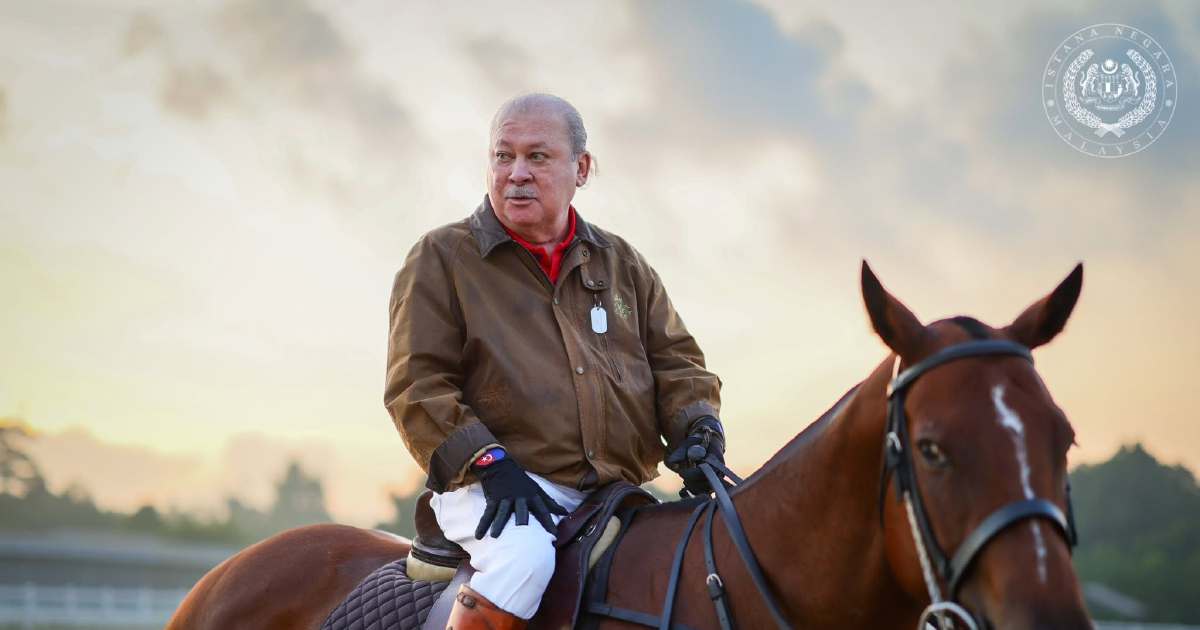
His Majesty Sultan Ibrahim, King of Malaysia, sustained his customary morning fitness schedule at the Royal Johor Polo Club located at Istana Pasir Pelangi here, demonstrating his continued commitment to maintaining physical wellbeing through equestrian activity.
The sovereign pursued his routine in a composed and deliberate manner, reflecting both the discipline required for proper horsemanship and the controlled approach he takes toward his personal wellness programme. The Royal Johor Polo Club serves as a significant venue not only for recreational sporting pursuits but also as a facility where members of the royal household engage in regular physical training.
Horse riding has long constituted an integral component of royal protocols and cultural traditions across Malaysian monarchy. The practice extends beyond mere recreation, representing an important aspect of the sovereign's daily life that balances the considerable demands of state functions with necessary attention to personal fitness and mental wellbeing. For a reigning monarch, maintaining such routines underscores the importance placed on health management amid demanding administrative responsibilities.
The choice of venue—Istana Pasir Pelangi, the royal residence in Johor Baru—carries particular significance as it reflects the King's continued engagement with his home state. Johor has historically served as the principal seat of the Johor sultanate before the establishment of Malaysia as a federation, and the maintenance of such activities within this setting demonstrates continuity with longstanding royal traditions centred in the state.
Regular physical exercise at the kind of intensity demonstrated through polo and dressage activities provides considerable health advantages, particularly for individuals in senior positions. Equestrian pursuits require sustained coordination, balance, and core strength while simultaneously offering cardiovascular benefits and mental respite from formal duties. For public figures managing the weight of state responsibilities, such consistent engagement with physical discipline often serves therapeutic purposes beyond the purely physiological.
The Royal Johor Polo Club itself represents a focal point for sporting heritage in Malaysia. As one of the region's established equestrian venues, it has hosted numerous international and domestic polo matches, contributing significantly to Malaysia's standing in the global sporting community. The club's facilities reflect world-class standards befitting both recreational and competitive play, making it an appropriate setting for the sovereign's personal fitness activities.
Sultan Ibrahim's visible commitment to maintaining regular exercise routines carries symbolic value for the broader Malaysian public. Leadership figures who demonstrate dedication to personal health and disciplined routines often inspire similar commitments among their constituents, contributing to broader conversations about wellness and preventive health practices. The transparency of such activities—conducted at established venues where their occurrence can be noted—reflects modern approaches to monarchy that balance privacy with appropriate public acknowledgment of the sovereign's activities.
The equestrian tradition within the Malaysian royal household extends across multiple sultanates and represents a cultural touchstone connecting contemporary practice with historical precedent. Polo, in particular, emerged from Central Asian traditions and became associated with elite horsemanship throughout South Asia, including Malaysia. The continued participation in these activities by the reigning monarch thus maintains important cultural threads linking the modern state with its multicultural heritage.
For citizens and observers tracking the health and activities of the nation's leadership, such routine disclosures provide reassurance regarding the sovereign's fitness to discharge the considerable duties attendant to the position. The Malaysian monarchy, as a constitutional institution, derives legitimacy partly from the demonstrated capacity of the reigning monarch to fulfil ceremonial, diplomatic, and administrative functions. Regular engagement in sustained physical activity contributes meaningfully to the public perception of the King's capability to meet these extensive obligations.
The continuation of such fitness regimens also reflects broader themes of consistency and stability within the institution of monarchy itself. In an era of rapid social and political change across Southeast Asia, the maintenance of established routines by senior statesmen and women communicates constancy and predictability, qualities valued by both domestic populations and international observers assessing political stability.
Moving forward, the King's sustained engagement with equestrian pursuits at the Royal Johor Polo Club will likely remain a regular feature of his schedule, provided health and state demands permit. Such activities exemplify how contemporary leadership can integrate personal wellness with institutional responsibility, offering a model for others in positions of significant public trust to balance the competing demands of their roles with necessary attention to personal health and wellbeing.