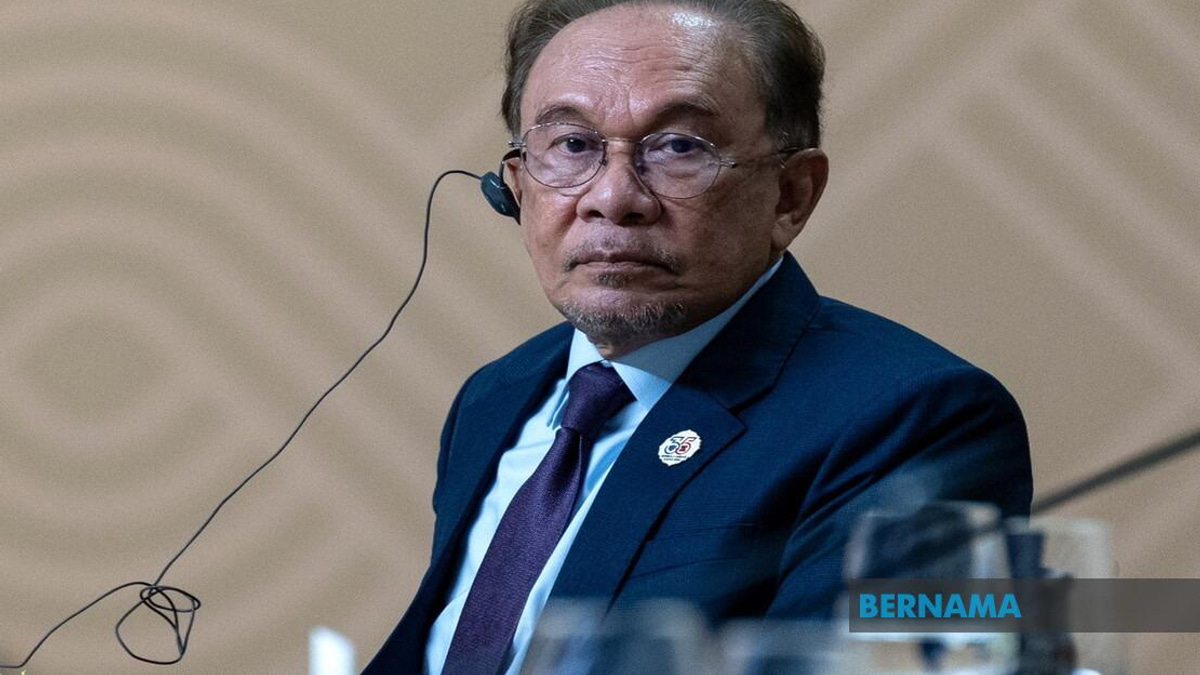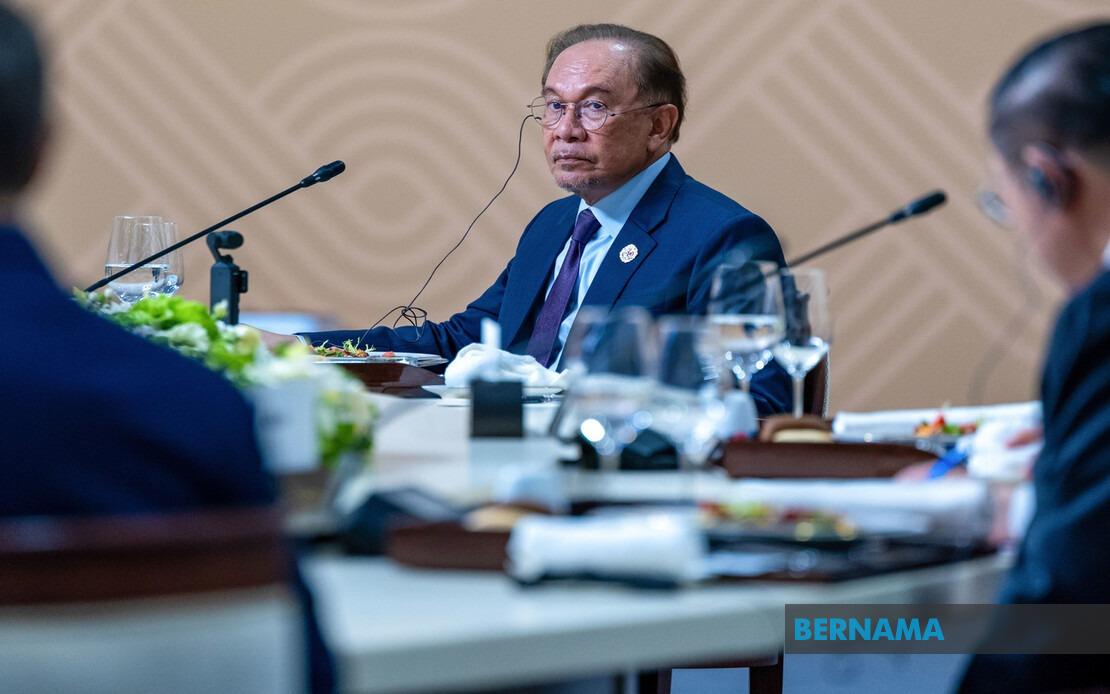
Prime Minister Datuk Seri Anwar Ibrahim has called for the Association of Southeast Asian Nations and the Shanghai Cooperation Organisation to merge their capabilities in tackling transnational crime and fortifying energy security, emphasising that these challenges demand unified regional strategies to succeed. Speaking during an ASEAN-Russia working lunch in Kazan on June 18, the Malaysian leader stressed that both organisations possess sufficient institutional mechanisms to deepen collaboration in areas where concrete results can be delivered within realistic timelines.
The two regional groupings have maintained a cooperative arrangement since 2005, when they signed a memorandum of understanding covering counter-terrorism initiatives, drug enforcement, financial crime prevention, and crucially, energy cooperation including hydroelectric projects and biofuel development. Anwar highlighted that despite this established legal foundation, the organisations have not fully mobilised their combined strength to address emerging transnational threats with the urgency they demand. He suggested that a targeted approach focusing on specific, measurable objectives would unlock the potential of the existing agreement and demonstrate tangible progress to their populations and international partners.
The Prime Minister painted a stark picture of modern criminal networks that exploit the porous nature of cross-border movements. Online fraud schemes, illicit money flows, and human trafficking operations now traverse national boundaries at speeds that outpace government responses, he observed. This reality creates a compelling case for regional intelligence sharing and capacity building between ASEAN and SCO member states. By pooling expertise and establishing joint protocols, the organisations could significantly enhance their ability to detect, investigate, and prosecute offenders operating across multiple jurisdictions simultaneously. For Malaysia and other Southeast Asian nations, cooperation with SCO members like China and Russia brings access to advanced technological capabilities and investigative experience that individually financed law enforcement agencies cannot develop alone.
On the energy front, Anwar—who simultaneously holds the Finance portfolio—identified the SCO as a powerful platform given its concentration of major energy producers and technological innovators. The bloc unites significant oil and gas exporters, hydroelectric authorities, and nations advancing renewable energy infrastructure. This composition creates opportunities for practical collaboration extending beyond traditional fuel commerce to encompass the broader energy transition occurring across Asia. He outlined multiple dimensions where cooperation could flourish: efficiency standards for industrial and residential consumption, grid modernisation and reliability, expanded liquefied natural gas trade flows, the integration of renewable generation into existing power networks, and systematic knowledge exchange on infrastructure safety and system resilience during crises.
Malaysia's position as an energy-consuming nation with growing renewable ambitions aligns closely with these objectives. The country has committed to increasing renewable energy capacity and transitioning away from coal dependence, challenges that require access to best practices and technology partnerships available within the SCO framework. By formalising energy cooperation channels, ASEAN nations could negotiate better terms for LNG imports, learn from SCO members' experience deploying large-scale solar and wind projects, and build domestic expertise in grid management for high-penetration renewable systems. Such collaboration also addresses energy security concerns in Southeast Asia, where reliance on volatile global markets and vulnerable maritime supply routes poses strategic risks that collective regional action can mitigate.
Beyond ASEAN-SCO ties, Anwar extended his vision to encompass the Eurasian Economic Union, the Russia-led trade bloc comprising Belarus, Kazakhstan, Kyrgyzstan, and other post-Soviet states. He contended that ASEAN and the EAEU possess adequate contractual frameworks to deepen commercial integration but have allowed these tools to remain underutilised. Activating these arrangements through concrete private sector engagement could unlock significant trade and investment potential, particularly as global supply chains realign away from Western-dominated networks. For Southeast Asian exporters and investors, the EAEU represents a gateway to Central Asian and Russian markets increasingly seeking alternatives to traditional Western suppliers.
Anwar identified three priority areas for revitalising ASEAN-EAEU economic cooperation. First, business councils and trade associations from both regions should meet with greater frequency and participate actively in major economic forums hosted by the partner region. Events such as the Eastern Economic Forum and the St Petersburg International Economic Forum currently attract limited ASEAN private sector attendance, a gap that represents foregone commercial opportunities. Enhanced participation would build networks between companies, facilitate deal-making, and generate awareness of market conditions and regulatory requirements on both sides.
Second, the Prime Minister stressed that small and medium-sized enterprises require targeted support to operate competitively across the broader ASEAN-EAEU economic space. Many Asian companies, particularly those from developing ASEAN members, lack knowledge of EAEU market entry procedures, face barriers in accessing technology, or struggle to acquire relevant certifications and skills training. Establishing mentorship programmes, facilitating technology transfer partnerships, and harmonising standards would lower barriers for entrepreneurial firms to expand into Eurasian markets. This democratisation of access to larger regional markets carries particularly importance for Malaysian SMEs, which form the backbone of the national economy and generate significant employment.
Third, emerging domains where ASEAN and EAEU interests converge—the digital economy, artificial intelligence applications, cybersecurity, and food security—warrant joint development strategies. These sectors transcend traditional economic cooperation and touch on national security, technological sovereignty, and social stability. Regional powers like China and India that inhabit both ASEAN and broader Asian geopolitical space increasingly shape standards and technologies in these areas. ASEAN-EAEU collaboration on digital infrastructure standards, AI governance frameworks, and cyber defence capabilities could strengthen the region's autonomy in shaping technological futures rather than passively adopting solutions imposed by external powers. Food security, particularly relevant to Southeast Asia's densely populated low-lying regions vulnerable to climate disruption, benefits from EAEU expertise in agriculture and from joint resilience-building strategies.
Anwar's visit to Kazan, the capital of Russia's Tatarstan republic, occurred as part of a two-day working visit attending the ASEAN-Russia Commemorative Summit. His emphasis on practical, results-oriented cooperation over symbolic gestures reflects Malaysia's diplomatic approach under his leadership: moving beyond rhetorical commitment to measurable outcomes. The specific issues he highlighted—online fraud, human trafficking, energy security—resonate strongly with Malaysian public concerns and align with the government's development priorities. By framing Southeast Asian engagement with Russia and Central Asia through these concrete lenses, he positions ASEAN as a strategic actor capable of negotiating partnerships on equal terms, not merely as a consumer of external powers' strategic preferences.
The Shanghai Cooperation Organisation itself, established in 2001, has evolved from a security-focused body managing border issues among former Soviet republics and China into a quasi-global forum encompassing ten full members and two observer states. This expansion—including India and Pakistan's accession and Iran's recent membership—reflects SCO's ambitions to become a genuine multipolarity counterweight in international affairs. ASEAN's engagement with the SCO provides Southeast Asian nations a mechanism for advancing their interests within a non-Western-dominated framework without requiring alignment with any single major power. Malaysia and other regional members must recognise that deeper SCO cooperation serves their strategic autonomy while diversifying diplomatic and economic partnerships away from traditional Western centres.