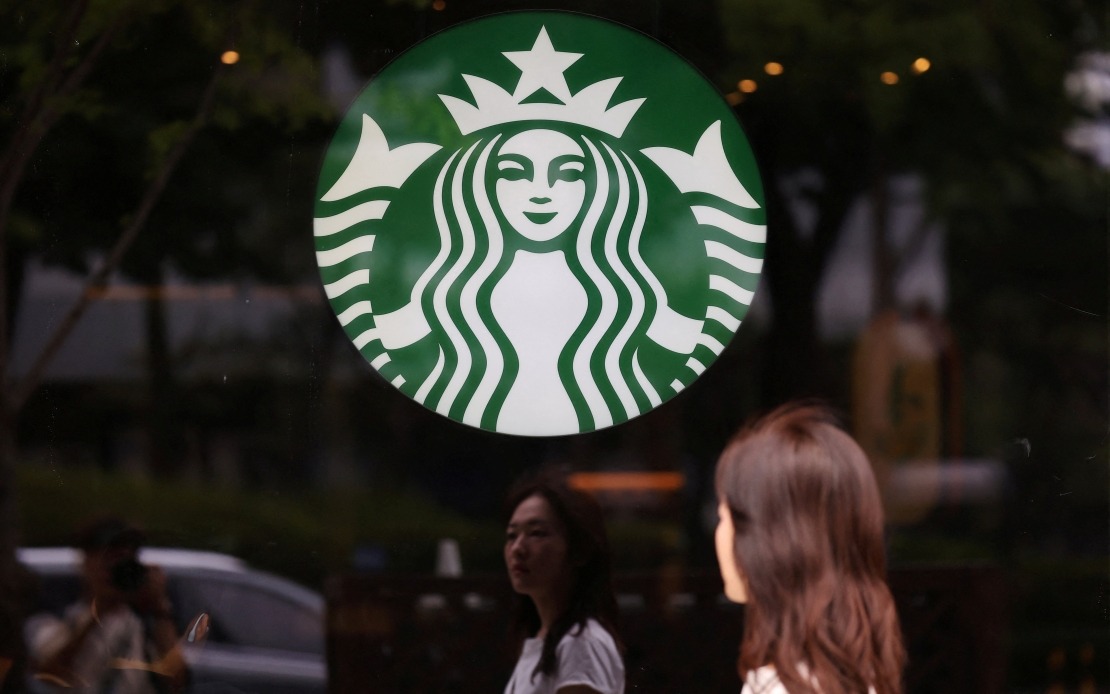
Starbucks brought its entire South Korean operations to a standstill on Monday afternoon, shuttering more than 2,000 coffee outlets nationwide to facilitate a mandatory educational session for staff members. The coordinated closure represented an extraordinary corporate response to a public relations crisis that had engulfed the coffee giant's local franchise partner, Shinsegae, following an advertising campaign that triggered widespread outrage and calls for boycotts across the nation.
The controversy centred on a product launch by Shinsegae, the Korean conglomerate holding the licence to operate Starbucks in the country, which had promoted a stainless steel thermos cup branded as the "SS Tank." More provocatively, the company designated May 18 as "Tank Day" in celebration of the product's market introduction. This seemingly straightforward commercial initiative, however, carried devastating historical connotations that immediately became apparent to the South Korean public and sparked fierce condemnation.
May 18 holds profound significance in South Korean national memory as the date marking one of the country's darkest chapters. In 1980, the ruling military government deployed armed forces and tanks to brutally suppress a pro-democracy uprising centred in the city of Gwangju. The crackdown proved catastrophic, with hundreds of civilians losing their lives in what became known as the Gwangju Uprising or the May 18 Democratic Uprising. For South Koreans, this date represents a moment of national trauma and sacrifice by those who fought for democratic freedoms that the nation now enjoys.
The campaign's implicit messaging was immediately seized upon by outraged citizens, who viewed the connection between "Tank Day" and the tanks deployed during the Gwangju crackdown as either deeply insensitive or deliberately offensive. Social media erupted with expressions of anger, and civil society groups began mobilizing boycott campaigns against the brand. The backlash proved so severe and immediate that Shinsegae made the decision to terminate the promotional campaign within mere hours of its launch, attempting to contain the damage through rapid withdrawal.
Shinsegae subsequently issued a formal apology, acknowledging the pain caused by the campaign and insisting that no intention to defile the memory of democracy movement victims had motivated the promotion. The company conducted an internal investigation and dismissed the executive deemed responsible for the marketing decision. These corrective actions, while significant, were insufficient to fully quell public sentiment, indicating the depth of emotional connection South Koreans maintain with the historical events of May 18.
Notably, a secondary dimension of the controversy involved the "SS" abbreviation used in the product name. While Shinsegae maintained that the initials referred solely to "stainless steel," observers noted that the same abbreviation historically denoted Hitler's Schutzstaffel, the notorious Nazi paramilitary organization. Though this dimension appeared to play a subordinate role in the primary wave of criticism, it added another layer of concern to the overall incident and reflected the heightened sensitivities surrounding any symbolic associations with fascism or authoritarianism.
Political leaders responded with sharp condemnation. President Lee Jae Myung issued a pointed statement through his X social media account, declaring himself "furious at the inhumane behaviour of such businesspeople." The presidential rebuke underscored how the incident had transcended ordinary consumer dissatisfaction to become a matter of national concern and political importance, touching upon core values regarding respect for historical memory and democratic sacrifice.
Law enforcement authorities also initiated formal proceedings into the matter. Seoul police announced they were conducting an investigation into the circumstances and motivations underlying the campaign, suggesting that the case might involve potential legal dimensions beyond corporate public relations mismanagement. This official scrutiny added additional pressure on Shinsegae to demonstrate accountability and understanding of the gravity of its misstep.
Starbucks' decision to close all Korean outlets for the mandatory staff training session represented an attempt to demonstrate corporate responsibility and commit to historical education across its Korean workforce. The training initiative signalled that the company viewed the incident not merely as a local crisis requiring damage control, but as an opportunity to ensure that employees throughout its operations possessed sufficient historical knowledge to prevent similar oversights in future commercial initiatives. For multinational corporations operating in markets with significant historical sensitivities, such proactive educational measures have become increasingly important components of risk management and stakeholder relations.
The incident carries implications extending beyond the immediate parties involved, serving as a cautionary tale for international brands operating in South Korea and broader East Asia. Companies entering these markets must navigate complex historical landscapes where certain dates, symbols, and commemorations carry profound emotional and political weight. What might appear as innocuous marketing wordplay in one cultural context can become a serious affront in another, particularly when touching upon experiences of national trauma, democratic struggle, or military authoritarianism.
For Malaysian and Southeast Asian readers, the South Korean situation offers relevant lessons regarding corporate cultural sensitivity and historical awareness. The region has experienced its own turbulent political histories, including struggles for independence, democratic transitions, and military interventions. Multinational corporations operating across diverse Southeast Asian markets must similarly invest in understanding local historical contexts and sensitivities to avoid inadvertent offence or reputational damage. The Starbucks incident underscores how inadequate cultural and historical due diligence can trigger rapid, severe backlash in an age of instant digital communication and mobilized civil society.
The response by Starbucks and Shinsegae also reflects evolving corporate accountability standards in contemporary Asian markets. Rather than attempting to defend or minimize the controversy, both entities moved swiftly toward acknowledgment, corrective action, and educational initiatives. This approach has increasingly become the expected standard for corporate conduct following such incidents, particularly where historical sensitivities are involved. South Korean consumers and civil society have demonstrated their capacity to hold large corporations accountable and their willingness to organize collective action when corporate behaviour violates shared cultural and historical values.