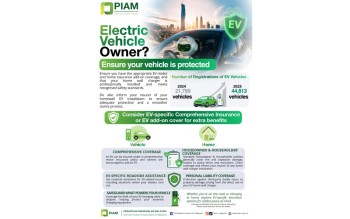
Following a recent fire incident in Cheras linked to an electric vehicle home charger that caused substantial property damage, Malaysia's insurance sector has moved to clarify coverage provisions and responsibilities for EV owners. The General Insurance Association of Malaysia (PIAM) has issued guidance addressing widespread uncertainty about whether conventional household and fire insurance policies extend to damage arising from EV charging equipment and associated electrical faults.
According to PIAM's chief executive officer Chua Kim Soon, the answer is affirmative—standard house owner and fire insurance policies in Malaysia do indeed cover fire-related damage regardless of what sparked the blaze. However, this protection operates within specified parameters. Coverage is contingent upon the policy's stated terms, conditions, and exclusions, and critically, only where no fraud, deliberate action, or material breach of policy obligations has occurred. This clarification addresses a significant gap in public understanding at a moment when EV adoption across Malaysia is accelerating rapidly and households are increasingly installing charging infrastructure at home.
The categorisation of EV charging equipment under insurance policies depends substantially on the type of charger involved. Permanently affixed, hard-wired chargers that form part of the home's electrical infrastructure typically qualify as fixtures and fittings within the 'buildings' section of a standard home insurance policy. Conversely, portable or detachable charging cables and mobile charging units generally fall outside standard coverage and require either specialised electric vehicle motor insurance add-ons or dedicated extended coverage packages that individual insurers have begun offering as the EV market matures. This distinction is crucial for homeowners to understand, as it determines whether existing policies provide automatic protection or whether separate arrangements must be secured.
Chua emphasised that insurance companies impose obligations on policyholders to exercise reasonable care and uphold electrical safety standards throughout their properties. When claims involving fire or electrical damage are submitted, insurers conduct detailed assessments drawing on official investigation reports—particularly those prepared by fire department authorities—to establish the incident's root cause. These investigations serve to eliminate scenarios involving deliberate conduct such as arson, fraudulent claims, or violations of regulatory requirements including unlicensed electrical work or installation of non-certified equipment. The insurer's investigative process thus protects legitimate policyholders while preventing compensation of claims stemming from the policyholder's own negligence or misconduct.
A critical oversight that has left many Malaysian homeowners exposed involves their failure to formally notify insurers when installing permanent EV charging equipment. PIAM has stressed that homeowners must inform their insurance provider immediately upon adding a hard-wired charger to their residence. This notification serves multiple purposes: it ensures that the property's sum insured—the maximum amount the insurer will pay for total loss—reflects the increased rebuilding costs that the charger and associated electrical upgrades represent. Additionally, proper declaration creates a clear documentary record that protects the homeowner during claims assessment, eliminating any subsequent dispute about whether the modification was disclosed and properly accounted for in the policy's risk profile.
Beyond sum insured considerations, property owners should conduct a comprehensive audit of their coverage limits to verify they remain adequate for current circumstances. Home modifications, the addition of new electrical equipment, and installation of modern fixtures all increase the true replacement value of a property should catastrophic loss occur. Many homeowners discovered during the pandemic that their existing coverage limits no longer matched contemporary rebuilding costs, particularly given inflation in construction materials and labour. EV charger installations represent another factor warranting a fresh assessment.
Public liability exposure represents an additional dimension that EV-owning homeowners must carefully evaluate, particularly those in multi-unit residential settings. Should a fire originating from an EV charger spread to neighbouring properties—a genuine risk in terrace house configurations or high-rise apartment blocks—the property owner could face substantial third-party liability claims. Standard household insurance policies typically provide public liability limits of RM50,000, a figure that may prove insufficient to cover property damage sustained by neighbours, injury to other residents, or temporary displacement costs. PIAM advises homeowners to consider purchasing optional extensions that increase their public liability limit to RM500,000 or higher, depending on the residential setting and perceived risk profile.
The guidance underscores a broader need for Malaysian EV owners to undertake comprehensive policy reviews spanning both motor and home insurance instruments. As EV ownership transitions from a niche consumer choice to a mainstream transportation option, the insurance industry remains in the process of fully adapting its standard offerings. Many policyholders currently operate under insurance arrangements designed for conventional vehicles and traditional home circumstances, neither of which anticipated the presence of dedicated charging infrastructure. Gaps in coverage for the vehicle itself, the charging equipment, the home's electrical systems, and liability stemming from EV-related incidents remain disturbingly common.
The Cheras incident has served as a cautionary reminder that EV charging infrastructure, while generally safe when properly installed and maintained, nonetheless introduces new electrical risks into residential environments. As vehicle electrification accelerates across Southeast Asia—driven by government incentives, improving battery technology, and expanding charging networks—insurance frameworks must evolve in tandem. Malaysian homeowners considering EV purchases should engage with insurers proactively before installation, seeking clarity on coverage, negotiating appropriate limits, and ensuring all modifications are properly documented. For those already operating EVs at home, a policy review has shifted from prudent planning to urgent necessity, ensuring that both property and liability protection align with the new electrical landscape of their residences.

