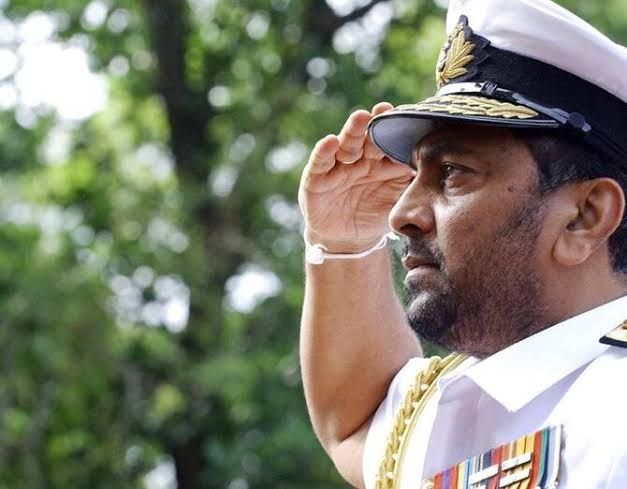
Sri Lanka's Bribery Commission has arrested a retired naval officer in what represents the latest escalation of the country's crackdown on the Rajapaksa political dynasty. Admiral of the Fleet Wasantha Karannagoda, aged 73, was taken into custody following allegations that he improperly enabled the military recruitment and subsequent overseas training of Yoshitha Rajapaksa in 2006, circumventing standard qualification requirements. The arrest underscores the shifting political landscape in Colombo since the election of President Anura Kumara Dissanayake in September 2024, who campaigned explicitly on a platform of prosecuting corruption and investigating long-dormant cases of political impropriety.
The specific charge against Karannagoda centres on his role as naval commander when he facilitated Yoshitha Rajapaksa's enlistment despite the younger Rajapaksa lacking the necessary credentials for such a position. What began as an internal military irregularity has now evolved into a criminal matter, with investigators treating it as a calculated manipulation of recruitment procedures to benefit a member of the then-ruling family. The case exemplifies how systems of patronage and institutional capture operated during Mahinda Rajapaksa's presidency from 2005 to 2015, when military hierarchies and political networks became extensively intertwined.
Karannagoda's career trajectory illustrates his centrality to the Rajapaksa administration's military strategy. He served as navy commander during the final stages of Sri Lanka's 26-year conflict with Tamil separatist forces, which concluded in 2009 with a military victory that came under intense international scrutiny for alleged war crimes and human rights violations. His elevation to admiral of the fleet in 2019, during Gotabaya Rajapaksa's presidency, reflected his standing within the family's inner circles, though he has held no active naval position in recent years.
The recruitment of Yoshitha Rajapaksa proved merely the initial chapter in a larger narrative of institutional abuse. Following his military enlistment, he underwent expensive specialist training at Britannia Royal Naval College in Dartmouth, Britain, with the costs allegedly covered by public funds rather than legitimate military budgets. This overseas training programme, far from standard for someone of Yoshitha's actual qualifications, represented a significant expenditure of state resources directed towards private family advancement. His arrest last month on charges related to this training scheme has placed him on bail whilst the investigation proceeds.
The broader pattern of alleged misconduct within the Rajapaksa family has intensified dramatically since Dissanayake's administration assumed office. The new government has resurrected investigations that had been shelved or deprioritised during periods of Rajapaksa family rule, signalling a fundamental recalibration of prosecutorial priorities. Multiple family members and close associates now face an array of criminal charges spanning several years, many of which had languished in the judicial system or been strategically abandoned during sympathetic administrations.
Beyond the recruitment irregularities, Karannagoda confronts additional serious allegations that predate the current investigation by nearly two decades. He faces accusations of war crimes, a characterisation that gained official international weight when Britain imposed targeted sanctions against him in March 2025, citing his alleged involvement in extrajudicial killings and grave human rights violations. Most significantly, conspiracy to murder charges relating to the deaths of eleven young men between 2008 and 2009 have been revived against him, charges that were controversially dismissed in October 2021 when Gotabaya Rajapaksa held the presidency.
The resurrection of these dormant conspiracy charges demonstrates how the Dissanayake administration has weaponised prosecutorial discretion to revisit cases that benefit from new political conditions. These killings, which occurred during Sri Lanka's post-war period, have long symbolised the extrajudicial violence that characterised military operations and governance during and immediately after the conflict. By resurrecting these charges, the current government signals its willingness to confront the security establishment's historical abuses, a position that contrasts sharply with the protective posture adopted by previous Rajapaksa-aligned administrations.
Yoshitha Rajapaksa himself remains ensnared in separate but interconnected legal proceedings that paint a picture of systematic financial misappropriation. Beyond the training expenses, he faces prosecution over the inability to justify the source of funds used to purchase residential property whilst his father wielded presidential power. His explanation that he had sold gemstones gifted by his grandaunt—a woman who herself could not account for how she had acquired these valuable stones—has failed to satisfy investigators, suggesting either willful opacity or a cover story for illicitly obtained wealth.
The broader implications of this enforcement wave extend beyond individual prosecutions. For regional observers, particularly in Southeast Asia, the Rajapaksa cases exemplify the challenges facing countries attempting to address systemic corruption after authoritarian-leaning regimes. Sri Lanka's experience demonstrates how institutional capture during concentrated executive power creates residual vulnerabilities that persist even after political transitions. The military's complicity in facilitating political patronage, as evidenced by Karannagoda's alleged role, reveals how security institutions become co-opted into networks of privilege.
The British sanctions against Karannagoda in March 2025 signal international engagement with Sri Lankan accountability efforts, though questions persist about the adequacy of such measures. Designation and travel bans represent relatively modest consequences compared to the severity of the underlying allegations. For Malaysia and other Southeast Asian nations grappling with similar legacies of military-political entanglement, the Sri Lankan trajectory offers both cautionary lessons and potential models for how successor governments might pursue accountability without descending into selective persecution or institutional collapse.
Gotabaya Rajapaksa, Mahinda's younger brother and former president, now faces a travel ban due to alleged connections to the 2019 Easter Sunday bombings that claimed 279 lives. This interconnection between different categories of alleged wrongdoing—corruption, war crimes, and terrorism-related offences—suggests that the Dissanayake administration is pursuing a comprehensive accounting of the Rajapaksa era rather than narrowly targeting specific individuals. The cumulative legal pressure on the family reflects a deliberate strategy to signal that no figure, regardless of rank or historical significance, remains insulated from investigation.
The Karannagoda arrest represents a pivotal moment in Sri Lanka's post-transitional justice trajectory. It demonstrates that even figures of considerable institutional stature and military distinction face prosecution when political circumstances shift. For other regional militaries and political establishments that have engaged in similar patterns of institutional capture and patronage networks, the message is unambiguous: whilst such arrangements may be sustainable during periods of political dominance, they create lasting vulnerabilities that successor governments may exploit. The case ultimately reflects not merely individual wrongdoing but systemic dysfunction embedded within Sri Lanka's post-war governance structures.

