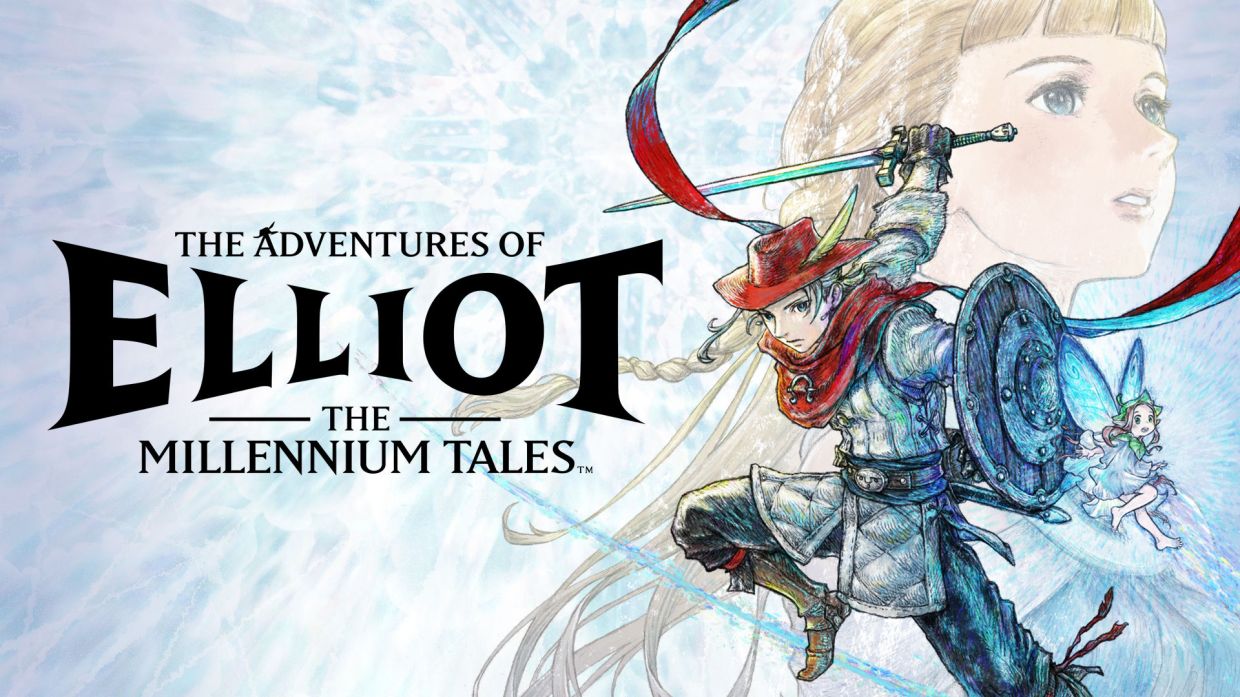
The video game industry's capacity to blend nostalgic sensibilities with contemporary production values continues to prove remarkably appealing to players across Southeast Asia and beyond. Square Enix's latest collaboration with Claytechworks, released in June 2026, exemplifies this trend by marrying time-travel gameplay with a narrative structure rooted in the golden age of Japanese role-playing games, delivering an experience that feels both refreshingly familiar and technologically sophisticated.
The game follows Elliot, a likeable and straightforward protagonist whose journey spans multiple temporal eras. Players navigate through the Age of Safekeeping, where humanity survives within magically fortified walls of the Kingdom of Huther, before progressing to the more prosperous Age of Magic and eventually confronting the stark realities of the post-apocalyptic Age of Reconstruction. This temporal scaffolding provides the framework for a traditional narrative arc—good versus evil, with clear heroes, well-intentioned rulers, and obviously malevolent antagonists. While such straightforward moral clarity might appear simplistic by contemporary standards, the developers leverage decades of accumulated JRPG knowledge to execute these themes with remarkable polish and emotional resonance.
Visually, the title employs Square Enix's increasingly signature HD-2D aesthetic, combining two-dimensional sprite work with three-dimensional environmental rendering. The painted artwork, detailed character portraits, and professional voice acting elevate the presentation considerably, transforming what could have been a derivative homage into something visually distinctive. For Malaysian and regional players accustomed to the increasingly photorealistic standards dominating mainstream gaming, this artistic choice represents a deliberate and refreshing divergence—one that prioritises artistic identity over raw graphical prowess.
The gameplay mechanics, however, present a more complex picture. The title markets itself as an action-adventure title, yet the action component operates within relatively constrained parameters. Combat revolves heavily around melee and ranged options—specifically sword and bow combinations—with minimal incentive for tactical variation. Upgrades centre primarily on damage augmentation rather than strategic diversification. The game rarely forces players into situations where conventional approaches fail, where monster resistances demand alternative tactics, or where carefully considered equipment choices prove essential. Effective combat often reduces to straightforward approaches rather than nuanced tactical decision-making.
The second pillar of the action-adventure formula—the adventure component—manifests primarily through long-term strategic considerations woven into the narrative structure rather than moment-to-moment gameplay challenges. This hybrid approach, while reasonably competent, lacks the distinctive flair that time-travel mechanics potentially offer. Other titles, even within Square Enix's broader catalogue, have explored temporal gameplay concepts with considerably greater inventiveness and mechanical complexity. The time-travel premise here functions more as thematic scaffolding than as a gameplay system that demands player ingenuity or forces creative problem-solving around temporal paradoxes and causality constraints.
Yet this apparent mechanical limitation obscures what emerges as the title's genuine strength: its commitment to character-driven storytelling and emotional authenticity. Elliot possesses a fundamental likability rooted in straightforward heroism and genuine concern for others. The supporting cast—from the wise and just monarch to the suspiciously amiable princess to the obviously treacherous court advisor—functions as an ensemble cast executing archetypal roles with competence and charm. Even Faie, the exposition-delivering fairy whose repetitive dialogue about bombable walls and hidden passages clearly irritates some players, has developed an unlikely appeal through sheer exuberance and chatty companionability.
This realisation runs counter to prevailing industry discourse surrounding gameplay innovation and mechanical complexity. Gaming criticism frequently emphasises systems design, genre hybridisation, and mechanical novelty as primary determinants of quality. Yet the most enduring and beloved entries within the JRPG pantheon—games that continue to resonate with players decades after release—rarely derive their appeal from unprecedented mechanical complexity or genre-defying system interactions. Rather, they succeed through the mastery of storytelling fundamentals: compelling character arcs, thematic coherence, emotional stakes that players genuinely invest in, and narrative pacing that maintains engagement across extended playtime.
For Malaysian and Southeast Asian audiences increasingly embracing gaming as a primary entertainment medium, this particular title offers meaningful validation for players who prioritise narrative experience over mechanical depth. The region has produced countless stories emphasising human connection, moral clarity, and the triumph of virtue—cultural narratives deeply embedded in regional folklore and contemporary popular culture. This JRPG's straightforward good-versus-evil structure, while potentially dismissible as simplistic, actually aligns with storytelling traditions resonating across the region's diverse populations.
The presentation standards Square Enix has maintained throughout development deserve particular emphasis. The illustrated character portraits, the voice acting performances, and the artistic direction collectively transform what amounts to a conceptually familiar narrative into something that feels fresh and engaging. For players fatigued by photorealistic aesthetics and noir-inflected storytelling dominating AAA releases, the deliberate aesthetic choices here provide relief and genuine visual pleasure.
Ultimately, the game's appeal demonstrates a principle frequently overlooked in contemporary game design discourse: mechanical innovation, while valuable, remains secondary to fundamental storytelling competence. The most sophisticated combat systems and genre-bending mechanics cannot compensate for weak narrative execution, unconvincing character development, or thematic incoherence. Conversely, straightforward mechanics executed within a compelling narrative framework create experiences that transcend their component parts, delivering genuine entertainment value that players continue recommending months after completion.
The broader implication for game developers—particularly those crafting titles for Asian markets—involves recognising that Western preferences for mechanical complexity and narrative deconstruction do not represent universal gaming values. Southeast Asian audiences, drawing on distinct cultural traditions and storytelling priorities, often respond powerfully to games that embrace clarity of purpose, emotional authenticity, and character-driven narratives. Square Enix's latest effort, despite its mechanically unremarkable action systems and relatively conservative time-travel implementation, succeeds precisely because it executes these foundational elements with professional competence and artistic commitment.

