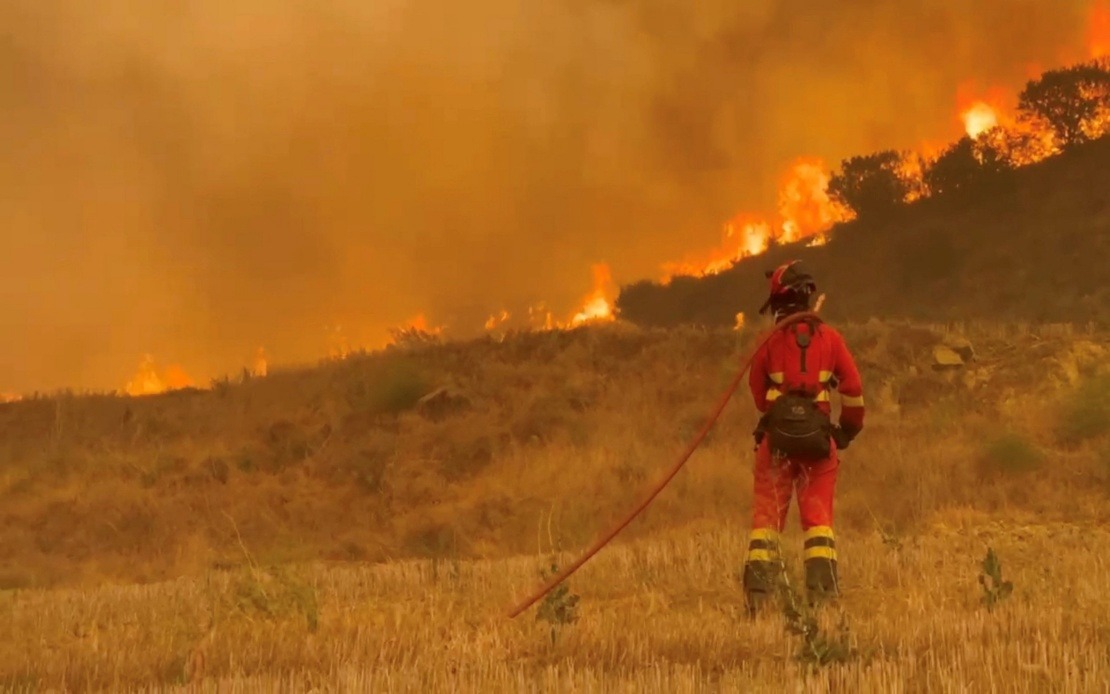
Spain's firefighting forces are in the midst of a critical struggle against the nation's most extensive wildfire this year, as a massive blaze that ignited in the Cinco Villas region of Zaragoza province continues to spread uncontrollably across the northeastern landscape. Since erupting on Wednesday, the fire has consumed approximately 12,000 hectares of land and necessitated the emergency evacuation of more than 1,100 residents from five municipalities in Zaragoza and one in the adjoining region of Navarre, with regional authorities warning that the threat remains far from contained.
The fire's expansion has been alarmingly rapid, with a perimeter now stretching across roughly 60 kilometres as it shows no signs of abating despite intensive suppression efforts. Authorities described the blaze as "quite active" with "significant" advancement overnight into Friday, underscoring the unpredictable and dangerous conditions firefighters face. The sheer scale of the disaster has prompted the closure of several major roads traversing the affected area, disrupting transportation networks and complicating both evacuation and response operations across the region.
Meeting this crisis, Spanish authorities have mobilised substantial emergency resources in an attempt to contain the spreading inferno. On Thursday alone, approximately 400 ground personnel and 19 aircraft were deployed to frontline positions, with firefighting teams concentrating their efforts overnight on protecting residential areas in Uncastillo, a municipality particularly threatened by the advancing flames. Despite these coordinated efforts, the coordination between air and ground operations reflects the magnitude of challenge faced by Spanish emergency services in dealing with such a vast and dynamic disaster.
The Zaragoza fire is far from an isolated incident in Spain's current wildfire crisis. A second significant blaze near La Mierla in Guadalajara province has also remained dangerously active after consuming approximately 900 hectares, prompting authorities to implement evacuation and lockdown protocols in surrounding settlements. The regional government took the extraordinary step of requesting deployment of Spain's Military Emergency Unit, which dispatched around 100 additional personnel to strengthen firefighting capacity in that sector, signalling the strain placed on civilian emergency services alone.
A third fire near Lozoyuela, positioned north of Madrid, presents a somewhat more encouraging scenario despite remaining neither fully contained nor under control according to emergency assessments. The relative progress in this location reflects how unpredictable wildfire behaviour can be, with variables such as wind direction, temperature fluctuations, and terrain composition dramatically influencing containment prospects. Parts of the Cinco Villas region remain under mandatory lockdown while two critical roads in the area stayed closed as of the latest reports, restricting movement and limiting economic activity across affected communities.
Investigations into the origins of these fires have already begun, with the Civil Guard making an arrest regarding the Madrid-region blaze. The regional government announced its intention to participate in legal proceedings as a civil party, signalling serious attempts to hold those responsible accountable. This prosecutorial approach reflects growing frustration among Spanish authorities regarding the human element in wildfire causation, particularly during seasons of heightened vulnerability.
Understanding the environmental factors driving this exceptional wildfire season proves essential for both immediate response and long-term policy. High temperatures combined with powerful winds and unusually low humidity have created textbook conditions for rapid fire spread across the Iberian landscape. Compounding these immediate meteorological factors is an abundance of dry vegetation that accumulated following an unusually wet spring, providing abundant fuel for flames once ignition occurs. This counterintuitive pattern—heavy rains followed by severe drought conditions—has become increasingly common in Mediterranean regions experiencing climate disruption.
Beyond temporary weather patterns, structural vulnerabilities in Spain's landscape and economy have amplified wildfire susceptibility. Climate scientists and rural development experts increasingly recognise that abandonment of rural areas has fundamentally altered land management practices, allowing vegetation to grow unchecked and accumulate dangerously. In regions where traditional agricultural and pastoral activities have declined due to economic pressures, the protective role of active land management has disappeared, leaving expansive areas prone to uncontrolled fuel accumulation. This phenomenon extends throughout the Mediterranean basin and presents particular challenges for countries like Spain that have experienced significant rural depopulation over recent decades.
For Malaysian and Southeast Asian observers, Spain's wildfire crisis offers instructive lessons regarding climate vulnerability and disaster preparedness. While tropical regions face different fire regimes than Mediterranean ecosystems, the combination of climate change, land-use transformation, and inadequate resource allocation for prevention creates universal risks. The Spanish experience demonstrates that even developed nations with sophisticated emergency services face mounting challenges from intensifying natural disasters, and that reactive firefighting capacity, however impressive, cannot entirely substitute for preventive landscape management and climate adaptation strategies.
The restoration of electricity supply to affected communities represents a significant achievement in emergency response logistics, yet represents only one dimension of the broader recovery challenge facing evacuated residents. Beyond immediate infrastructure restoration, authorities must address longer-term rehabilitation of damaged ecosystems, economic support for affected communities, and serious examination of whether current resource allocation to wildfire prevention and suppression adequately reflects emerging climate realities. The 2024 fire season in Spain may represent not an anomaly but rather a preview of increasingly intense wildfire challenges that will demand more comprehensive regional and national policy responses.

