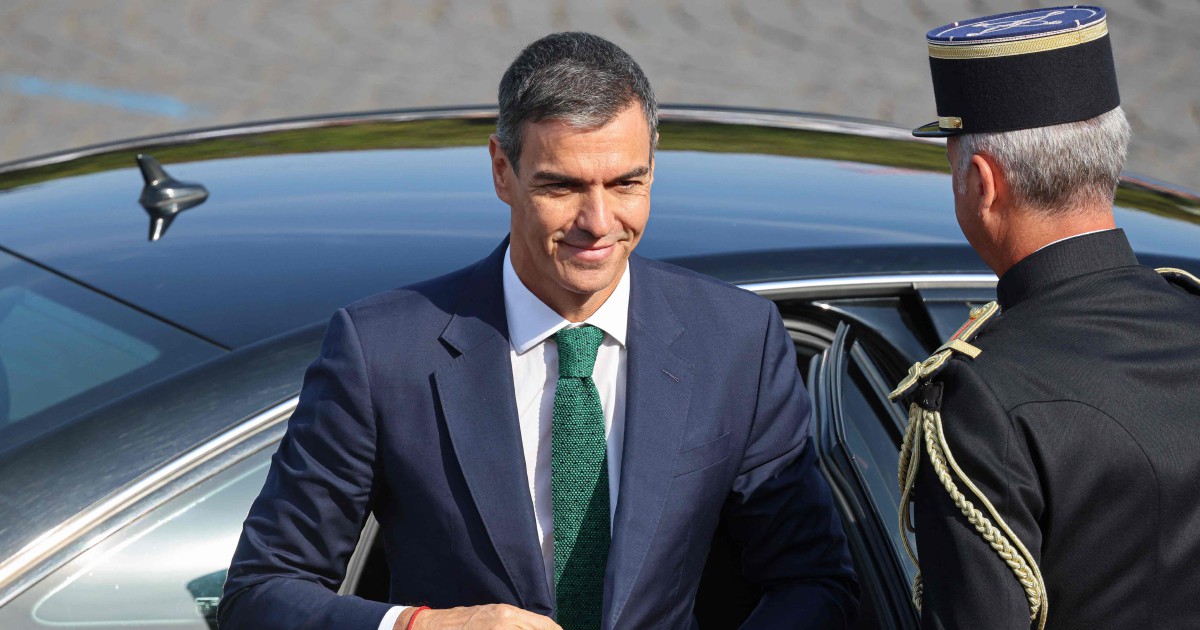
Spain's Prime Minister Pedro Sanchez has used the approaching World Cup final to underscore the unifying potential of national sport, praising the football team's remarkable cohesion ahead of Sunday's decisive match against Argentina. The remarks come at a moment when Sanchez's administration faces considerable domestic challenges, making the symbolic weight of a galvanised national team particularly resonant for the Spanish political establishment.
The timing of Sanchez's endorsement carries particular significance within Spain's current political landscape. Facing multiple corruption allegations that have tested his government's credibility and public standing, the Prime Minister appears conscious of the transformative power that international sporting success can exercise over national consciousness. By associating his public statements with the team's achievements and character, Sanchez taps into the deep emotional investment Spanish society maintains in its football institutions.
The Spanish national team has demonstrated exceptional organisational discipline and tactical coherence throughout the tournament, qualities that extend beyond mere technical proficiency on the pitch. Sanchez's characterisation of the squad as "unique" reflects not simply their playing ability but their capacity to function as a unified collective entity, a distinction that resonates powerfully within the broader Spanish context where regional identities and political divisions frequently generate public discourse.
Spain's path to the World Cup final has consolidated the team's reputation for sophisticated, possession-based football that emphasises collective movement over individual brilliance. This stylistic approach mirrors certain philosophical principles about national identity and cooperation that political leaders naturally find valuable in their public communications. The team's ability to maintain tactical discipline under pressure demonstrates the kind of institutional strength and organised coordination that governments typically seek to project.
The Argentina matchup presents Spain with an opponent of formidable pedigree, led by Lionel Messi in what many observers anticipate may be the legendary forward's final opportunity to win football's most prestigious trophy. This narrative dimension—experienced South American excellence confronting European tactical sophistication—has captivated global audiences and invested the final with exceptional cultural significance extending well beyond sporting competition itself.
For Malaysian and Southeast Asian audiences, the World Cup final holds particular relevance given the region's substantial football-following population and the tournament's role as a genuinely universal spectacle transcending geographical and cultural boundaries. The match represents not merely sporting competition but a moment when diverse nations unite in shared passion for the game, a phenomenon that transcends the political complications affecting individual countries' domestic situations.
Sanchez's public comments demonstrate how political figures strategically leverage sporting events to generate positive national sentiment and redirect public discourse toward unifying themes. By highlighting the team's exceptional character and unity, the Prime Minister effectively constructs a narrative wherein Spain's collective identity finds expression through football excellence, temporarily overshadowing more contentious political conversations dominating domestic media coverage.
The Spanish football administration has invested substantially in developing systematic approaches to talent identification and player development, producing the cohesive, tactically disciplined squad now preparing for the final. This institutional sophistication reflects decades of commitment to building sustainable competitive frameworks rather than relying upon isolated individual talents, an approach that has positioned Spain among international football's elite despite the nation's relatively modest playing population compared to larger nations.
Argentina's presence in the final, meanwhile, carries its own symbolic weight, representing South American football's continued vitality and competitiveness at the tournament's highest level. The continent's rich football tradition, sustained through powerful domestic leagues and passionate supporter cultures, ensures that the final will resonate across hemispheres with genuinely profound emotional intensity.
For Spanish society, Sunday's match offers an opportunity to transcend the immediate political complications affecting governmental credibility, at least temporarily channelling national emotion toward a shared sporting endeavour. Whether such moments of collective unity generate lasting impact on political dynamics remains uncertain, but the psychological value of international sporting triumph for national morale remains consistently significant across all societies.
The final itself promises to showcase contrasting footballing philosophies and tactical approaches, with Spain's possession-oriented, methodical style confronting Argentina's more dynamic, creative expression of South American football culture. This philosophical divergence, rendered visible through ninety minutes of competitive intensity, will ultimately determine which nation's vision of football excellence prevails at this moment in the sport's continuing evolution.

