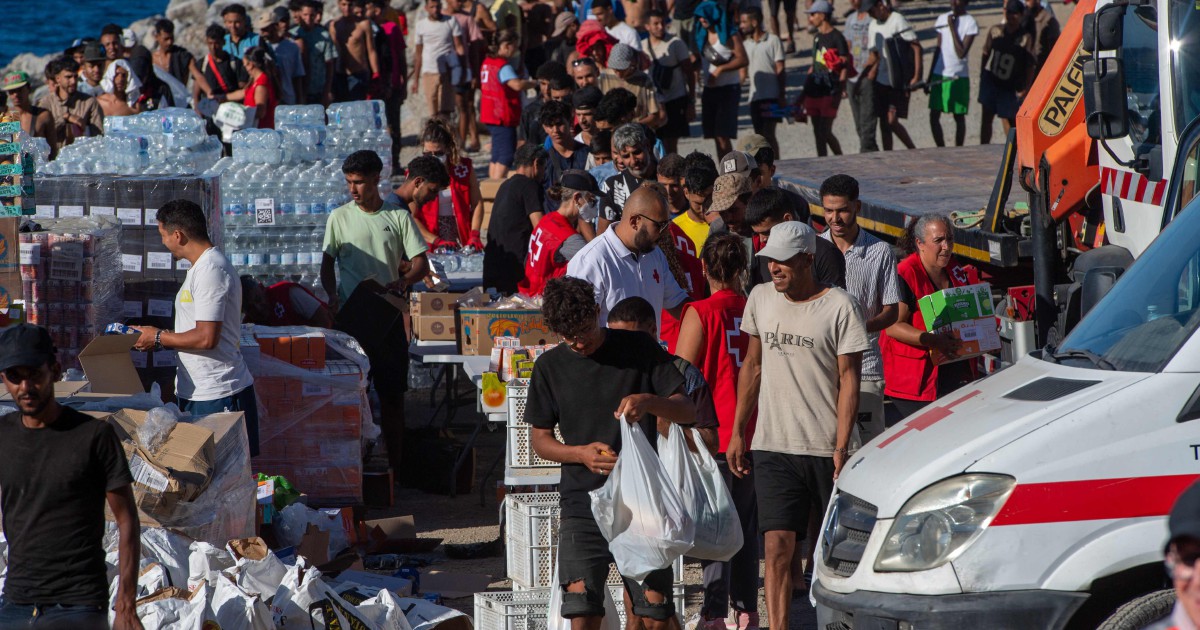
Spanish Prime Minister Pedro Sanchez on Monday attributed the rapid influx of migrants into the enclave of Ceuta last month to a coordinated disinformation campaign orchestrated by Russia and Israel, marking a significant escalation in Spain's analysis of what triggered the border crisis. The prime minister's assertion introduces a geopolitical dimension to what initially appeared as a localized migration surge, suggesting that external actors deliberately weaponized false narratives about Spain's migration stance to destabilize the country's borders and relations with North Africa.
Sanchez presented his government's preliminary findings as evidence accumulated during investigations into the circumstances surrounding the migrant wave, though he acknowledged that conclusions remained preliminary pending comprehensive review. His statement pointedly excluded Morocco from culpability, a carefully calibrated message designed to preserve diplomatic relations with Spain's southern neighbour and key partner in managing Mediterranean migration flows. This distinction matters considerably in the context of European migration politics, where Spain has historically maintained that Morocco bears responsibility for controlling departures from its territory.
The timing of Sanchez's accusation suggests growing concern within the Spanish government about hybrid threats and information warfare beyond traditional cybersecurity concerns. Rather than viewing the crisis solely through the lens of irregular migration and border control, Madrid now frames the episode as part of broader disinformation strategies employed by adversaries to exploit European vulnerabilities. This perspective aligns with broader NATO and EU assessments regarding Russian operations designed to amplify social divisions and undermine European stability, particularly around sensitive issues like immigration that resonate with voters across the political spectrum.
Ceuta and Melilla, Spain's North African enclaves surrounded by Moroccan territory, remain strategically significant flashpoints in Mediterranean migration dynamics. The recent migrant surge, involving thousands of individuals crossing into Ceuta within a brief timeframe, exposed vulnerabilities in Europe's external border management and prompted questions about how such a coordinated movement materialised without prior warning. Spanish authorities' subsequent investigation into the mechanics and messaging around these arrivals revealed patterns suggesting deliberate amplification of inflammatory rhetoric about Spain's migration policies through coordinated social media and disinformation channels.
The involvement of both Russian and Israeli actors in spreading false narratives represents an unusual coordination pattern, given the distinct strategic interests typically pursued by each nation. Russia's historical disinformation campaigns targeting Europe frequently aim to deepen political polarization and undermine institutional confidence, making migration an ideal vector for such operations. The inclusion of Israel in Sanchez's assessment introduces complexity, though Spain may be referring to coordinated messaging emanating from various sources rather than suggesting direct Israeli government involvement in the disinformation effort itself.
For Malaysia and Southeast Asia, Spain's experience offers instructive lessons about the vulnerabilities modern states face when managing migration and border security in an age of weaponized information. The capacity of distant external actors to influence migration flows through disinformation represents a novel security challenge that transcends traditional border management. ASEAN nations, which themselves navigate complex migration pressures and face potential information warfare from multiple state and non-state actors, should recognise how disinformation campaigns targeting immigration policies can rapidly escalate into humanitarian and security crises requiring coordinated regional responses.
Morocco's exclusion from Sanchez's accusations reflects pragmatic European diplomacy at a moment when cooperation with North African partners remains essential for managing Mediterranean migration. Morocco controls departure points and has gradually strengthened collaboration with Spain and broader European efforts to prevent irregular departures. Public blame directed toward Rabat could have jeopardised these arrangements precisely when European governments struggle with rising migration pressures. Sanchez's careful framing preserves the option for continued partnership while redirecting responsibility toward external geopolitical rivals, a delicate balance reflecting Europe's complicated position between managing migration effectively and maintaining cooperative relationships with transit countries.
The broader implication of Spain's disinformation assessment extends beyond the immediate Ceuta crisis to encompass how authoritarian and revisionist powers leverage information warfare alongside kinetic and diplomatic tools to advance their interests. By flooding social networks with exaggerated claims about Spanish migration policy and its humanitarian implications, coordinated disinformation campaigns can manufacture crises that consume governmental resources and attention. Europe's vulnerability to such operations stems partly from free information environments that permit false narratives to circulate unchecked, creating asymmetric advantages for actors willing to operate without regard for factual accuracy.
Investigations into the disinformation campaign remain ongoing, with Spanish authorities presumably working to identify specific channels, actors, and messaging patterns involved in amplifying narratives about Ceuta. This forensic work, if successfully completed and documented, could contribute to broader international understanding of hybrid threat operations and inform responses from European institutions and intelligence agencies. The Spanish example may also prompt other European governments to examine recent border incidents and migration surges with greater attention to potential disinformation components that facilitated or accelerated demographic changes across their territories.
Looking forward, Sanchez's public attribution of blame to Russia and Israel serves multiple functions simultaneously: it provides a politically convenient explanation for a potentially embarrassing security breach, it appeals to European alliance solidarity by framing the crisis as an external threat rather than internal policy failure, and it establishes a foundation for coordinated European responses to disinformation targeting migration policy specifically. Whether such responses prove effective in countering future disinformation campaigns or merely redirect attention from underlying European migration governance challenges remains to be determined. What appears clear is that Spain views the Ceuta crisis as symptomatic of evolving security threats that demand attention beyond conventional border enforcement.

