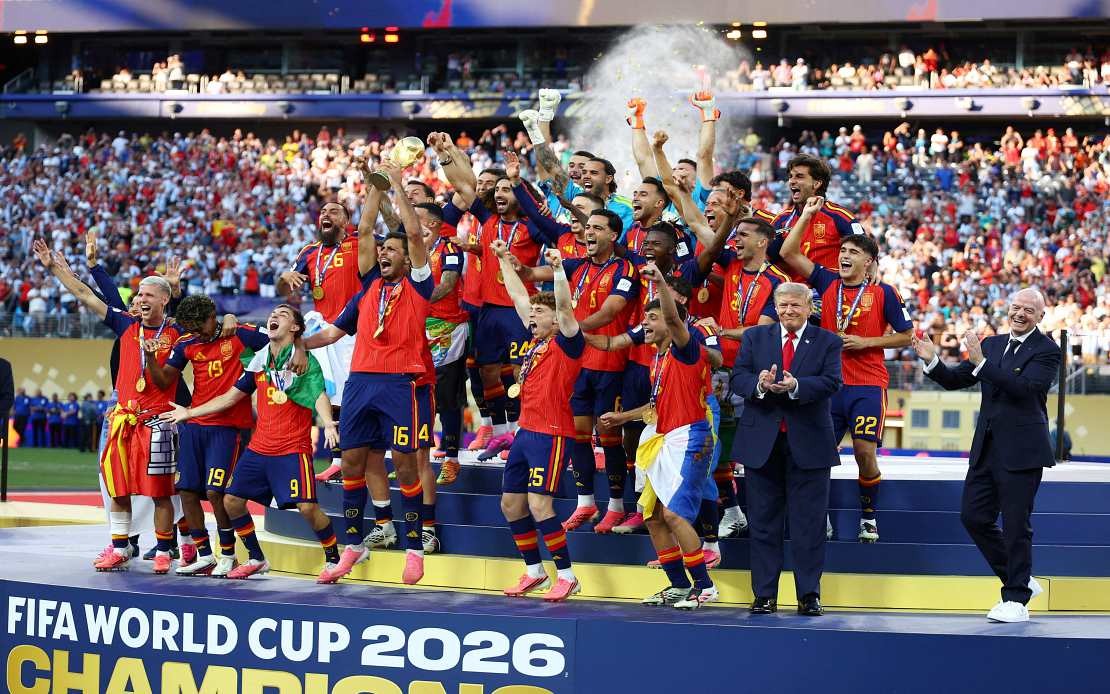
Spain's football team touched down in Madrid on Monday afternoon to a hero's welcome after claiming the nation's second men's World Cup title in the United States. The squad, captained by Rodri, landed at Madrid airport at 12.50 pm local time, marking the beginning of extensive celebrations planned throughout the evening to honour their remarkable achievement on the international stage.
The victory came on Sunday when Ferran Torres scored a decisive extra-time goal against Argentina in the championship match. The dramatic finish sealed Spain's position as one of football's elite nations and delivered the country's second World Cup trophy, a moment of profound national pride that transcended sport to become a significant cultural event for Spaniards across all walks of life.
King Felipe VI hosted an official reception at the Royal Palace in the afternoon, underscoring the importance the Spanish state places on sporting excellence and national achievement. The presence of royalty at such ceremonies reflects how deeply football success resonates within Spanish society and governance. Prime Minister Pedro Sánchez attended the final match in New Jersey alongside the royal family, further emphasising the symbolic weight attached to the team's performance.
Following the palace reception, the celebrations shifted to a more public spectacle with an open-top bus parade through Madrid's streets. Organisers anticipated that hundreds of thousands of supporters would line the routes, transforming the capital into a sea of Spanish flags and jubilant crowds. Such parades have historically become defining moments in Spanish popular culture, allowing citizens from all regions and backgrounds to participate collectively in national celebration.
The evening's festivities culminated at Cibales Square, where a major show commenced at 6 pm. The team was scheduled to arrive at the square at 9 pm to address the assembled masses. The decision to host the final gathering at this iconic central Madrid location ensured maximum visibility and accessibility for ordinary supporters who could not secure spots along the parade route.
Player sentiment reflected the magnitude of the achievement and desire to share it broadly with their nation. Defender Marc Cucurella expressed the squad's enthusiasm about returning home, acknowledging that many supporters were unable to attend matches in the United States. His comments highlighted how international tournaments create geographical barriers for ordinary fans, making homecoming celebrations particularly significant as they provide inclusive opportunities for entire populations to engage with their heroes and participate in collective joy.
Spain's World Cup victory carries particular significance within European and global football contexts. The country has established itself as a powerhouse in international competition, combining tactical sophistication with skilled player development. The win reinforces Spain's position as a consistent competitor on the world stage and provides validation for its football infrastructure and coaching philosophy.
For Malaysian readers and Southeast Asian football enthusiasts, Spain's success offers instructive lessons about long-term development strategies and institutional commitment to excellence. The Spanish model emphasises youth academy systems, technical coaching education, and cultural investment in the sport at grassroots levels—approaches increasingly relevant as Southeast Asian nations seek to elevate their international standing.
The scale of Madrid's celebrations also demonstrates how football transcends traditional sporting boundaries to become a vehicle for national expression and collective identity. In multicultural societies like Malaysia, where football commands passionate support across different communities, Spain's inclusive celebration model provides a template for how nations can harness sporting success to strengthen social cohesion and shared national pride.
Politically, the timing of Prime Minister Sánchez's prominent participation and his celebratory social media posts underscore how governments strategically align themselves with sporting achievements. Such associations can temporarily elevate political popularity and project images of national competence and success. However, the authenticity of these gestures depends on genuine government investment in grassroots sports programmes and sustained infrastructure development rather than opportunistic engagement.
The international dimensions of Spain's victory also reflect broader European football dynamics and the competitive structure of global tournaments. Spain's success adds another chapter to the continent's dominance in World Cup competitions and represents the culmination of decades of strategic investment in player development and tactical innovation.
Looking forward, Spain's triumph will likely inspire a new generation of young Spanish footballers while providing benchmarks against which other nations measure their own programmes. For developing football nations, understanding the pathways Spain created for sustained excellence offers valuable insights into translating natural talent into consistent international performance.

