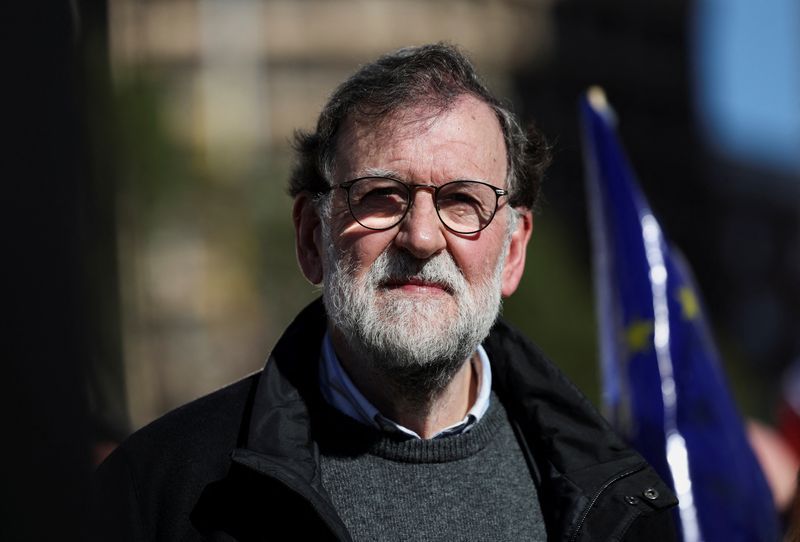
Spain's government moved swiftly to distance itself from a controversial opinion piece by conservative former Prime Minister Mariano Rajoy, who cast doubt on the national credentials of France's men's football squad ahead of their World Cup semi-final clash. Foreign Minister Jose Manuel Albares conveyed an official apology to his French counterpart on Tuesday, characterising Rajoy's remarks as carrying "the poison of racism and xenophobia" and assuring France that such views do not represent mainstream Spanish opinion.
Rajoy, who served as Spain's premier from 2011 to 2018, published the contentious column in online publication El Debate on Friday, employing what appeared to be a sarcastic jab at France's composition. Despite acknowledging the visiting squad's exceptional quality, he questioned its "Frenchness" in language many interpreted as a pointed reference to the African and Afro-Caribbean heritage of several team members. His statement—"France has a squad of the very highest calibre. Mind you, there are no French players in it"—struck a raw nerve across both nations at a particularly sensitive moment in international football discourse.
Albares' rebuke was uncompromising in its substance and timing. Speaking to Cadena SER radio hours before the semi-final encounter, Spain's top diplomat emphasised the fundamental problem with Rajoy's approach: using physical appearance as a criterion for citizenship. This intervention represented an unusually forceful statement from a government minister against a fellow politician from the main opposition party, signalling the severity with which Madrid viewed the transgression. The official apology underscored Spain's commitment to distancing itself from xenophobic rhetoric just as the nation prepared for high-stakes competition.
Spanish Prime Minister Pedro Sanchez, present in Paris to commemorate France's National Day, added his voice to the criticism with particular emphasis on the link between nationality and personal characteristics. His social media post condemned those who measure citizenship through surnames, birthplaces, or skin colour, explicitly labelling Rajoy's words as "shamefully xenophobic." This dual condemnation from both the Foreign Minister and Prime Minister demonstrated rare coordination on a matter of diplomatic sensitivity, reflecting how seriously Spain's leadership treated potential damage to bilateral relations.
Rajoy himself did not immediately respond to requests for comment, leaving the field open for his party to attempt damage control. Borja Semper, spokesperson for the People's Party, sought to reframe the column as satirical commentary delivered without malicious intent. This characterisation as sarcasm—a common defensive maneuver when controversial statements draw scrutiny—contrasted sharply with the measured and serious responses from government officials who treated the matter as a substantive breach rather than a rhetorical misfire.
The incident occurred within a broader context of racial tensions that had already surfaced during the tournament. Just days earlier, Paraguay's Senator Celeste Amarilla had launched a racist attack on French captain Kylian Mbappe following her nation's elimination, describing him in deeply offensive terms as a "colonised Cameroonian, desperately trying to pass himself off as French." Mbappe's dignified response showed remarkable restraint, as he defended not only himself but also the honour of the Paraguayan players themselves, characterising Amarilla as unfit for office. Paraguay's government subsequently disowned Amarilla's commentary, acknowledging it contradicted national values, and the French Football Federation filed a criminal complaint.
France's response to Rajoy's column demonstrated unusual political consensus despite deep ideological divides. Foreign Minister Jean-Noël Barrot minced no words in dismissing the remarks as "pathetic," delivering a forceful counter-statement that France contains no predetermined skin colour and that suggesting otherwise amounted to idiocy, racism, or both. His intervention set an official government tone that was neither diplomatic nor circumspect. Meanwhile, Julien Odoul of the far-right National Rally—a party typically at odds with centrist positions—joined the condemnation, calling the comments "scandalous, shameful, deplorable" and directly labelling Rajoy as racist.
This rare alignment reflected how football and nationality intersect with deeper questions about belonging in contemporary Europe. The composition of France's squad, built substantially from talent drawn from the nation's diverse diaspora communities and former colonial territories, has long generated discussion about what constitutes national identity. For many observers, Rajoy's column tapped into an older, ethnically-bounded conception of nationality that modern democracies have largely moved beyond, even as such views persist in pockets of political discourse.
The incident carries particular resonance for Southeast Asian observers watching how European nations handle questions of national identity within increasingly diverse societies. Spain's swift institutional response—with both government ministers and the Prime Minister condemning the remarks—suggests that mainstream European politics has largely established boundaries around what constitutes acceptable commentary on race and citizenship. Yet the fact that a former head of government could publish such remarks indicates that these boundaries remain contested and that vigilance is required to maintain them.
For Malaysian readers, the episode illustrates how football tournaments serve as focal points for broader societal conversations about inclusion and national identity. The willingness of Spain's government to issue a formal apology despite diplomatic costs reflects a commitment to certain standards of public discourse. The convergence of criticism from across France's political spectrum similarly underscores how certain positions—particularly those invoking race as a measure of national belonging—have become genuinely beyond the pale in mainstream European politics, even when residual xenophobic sentiment persists at the margins.
The World Cup semi-final between Spain and France proceeded against this backdrop of diplomatic tension and moral censure. Beyond the sporting contest, the incident demonstrated that modern international football matches occur within complex frameworks of national identity, historical memory, and contemporary politics. For teams drawn from diverse populations, each match carries significance beyond the pitch, with composition and representation becoming subjects of ongoing debate about what national belonging means in an interconnected world.

