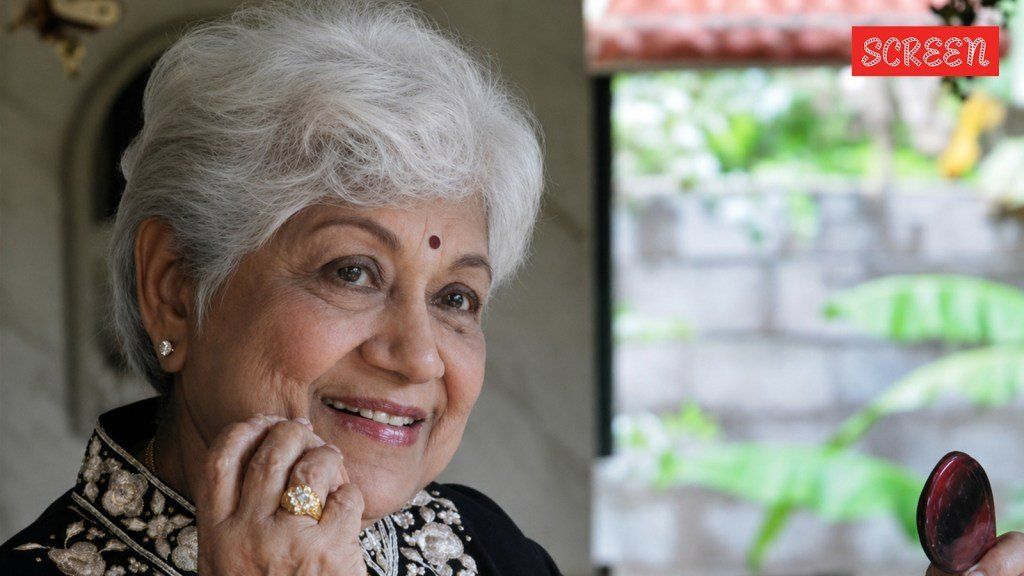
Sowcar Janaki, one of South Indian cinema's most prolific and respected actresses, has died at the age of 94 following a short stint in hospital. The veteran performer, whose real name was Sankaramanchi Janaki, breathed her last on Friday (August 21) at a private medical facility in Chennai after succumbing to age-related ailments. The South Indian Artistes' Association confirmed her passing through its president, actor Nassar, who announced that her mortal remains would be displayed at Cenotaph Road in Teynampet from 5 pm onwards.
Janaki's seven-decade journey through cinema represented a remarkable testament to longevity and artistic excellence in an industry that has seen countless stars rise and fade. Her filmography encompasses nearly 400 productions, an extraordinary achievement that speaks to her status as one of the most sought-after performers across the South Indian film industry. She commenced her acting career in 1950, a period when the film industries of Tamil Nadu, Andhra Pradesh, Karnataka, and Kerala were in their formative years, and her presence helped shape the cultural landscape of South Indian cinema during its golden era.
The recognition garnered by Janaki throughout her career underscored the profound impact she left on regional cinema. Among her numerous accolades was the prestigious Padma Shri, India's fourth-highest civilian honour, alongside a Filmfare Lifetime Achievement Award that acknowledged her sustained contributions to cinema. She received two Nandi Awards and the Kalaimamani Award, honours that demonstrated respect from both the Indian government and the cultural establishment. These distinctions were not merely ceremonial; they reflected her genuine influence on the medium and her peers' regard for her craft.
Tamil Nadu Chief Minister C. Joseph Vijay expressed profound sorrow upon learning of Janaki's death, acknowledging the immensity of her loss to the film fraternity. In a statement posted on social media, Vijay described her as someone who had secured "an indelible place in the hearts of fans across generations" through her distinctive approach to acting. He emphasised that her seventy-year artistic journey, encompassing countless memorable performances, constituted an irreplaceable contribution to cinema. Vijay noted her remarkable versatility in working across five different language industries—Tamil, Telugu, Malayalam, Kannada, and Hindi—a linguistic and cultural fluency that was uncommon among performers of her era and reflected both her adaptability and the pan-Indian nature of South Indian cinema during its expansion.
Among the tributes pouring in from across the cinema world was an especially poignant message from Kamal Haasan, who shared decades of professional history with Janaki. Haasan recounted that their collaboration spanning forty years began with the film Paarthaal Pasi Theerum, during which she played maternal roles opposite his younger characters. He characterised her as "an indispensable acting talent of South Indian cinema" whose range allowed her to work alongside virtually all the leading male heroes of her generation. Notably, Haasan mentioned that she was a favoured performer of K. Balachander, one of Tamil cinema's most celebrated and demanding directors, a detail that underscores her standing among creative figures who shaped the industry's artistic standards. Haasan's deeply emotional tribute, written in Tamil, conveyed the personal impact of her passing on those who worked alongside her.
Other prominent South Indian actors rushed to pay their respects, reflecting the broad affection in which Janaki was held across multiple film industries. Radhika Sarathkumar described her as a "strong and independent, strong willed path breaker," emphasising that she was not merely an accomplished performer but a pioneering figure who operated according to her own convictions. Sarathkumar noted that Janaki had been a close friend of her father, actor M.R. Radha, with the two maintaining mutual admiration. Prabhudeva and Vishnu Manchu similarly shared tributes that highlighted her grace, dignity, and enduring legacy. Telugu cinema stalwarts Jr NTR and Chiranjeevi, who worked in overlapping periods and across industries where Janaki was equally revered, penned elaborate tributes acknowledging her indelible mark on their respective film cultures and the broader Indian cinema landscape.
Janaki's career trajectory illuminates the structural differences between regional film industries and the larger Hindi cinema ecosystem that often dominates national discourse. While Bollywood tends to concentrate stardom within a relatively narrow circle, South Indian cinema—particularly Tamil and Telugu industries—has historically offered sustained, long-term opportunities for performers who demonstrated consistent quality. Janaki's ability to work continuously across nearly seven decades reflects not only her own talent but also the inclusive production systems that characterised these industries. Her versatility in playing maternal figures, particularly opposite younger male leads, carved out a specific niche that remained in demand throughout her active career, unlike the more limited shelf life often experienced by performers in other film industries.
The timeline of her final film appearances demonstrates her continued presence in cinema well into her advanced years. Her last Tamil film, Biskoth, arrived in 2020, while her most recent Telugu project, Anni Manchi Sakunamule, was released in 2023 when she was in her early nineties. This continued engagement with cinema, even as an octogenarian, was unusual and testified to the respect in which she was held and the ongoing demand for her services. Her willingness to accept roles and continue working suggested a deep commitment to her craft that transcended financial necessity or the pursuit of accolades.
For Malaysian and Southeast Asian audiences, Janaki's passing represents the end of an era in South Indian cinema that shaped regional entertainment across the broader Asian region. Her films circulated widely throughout Malaysia, Singapore, and other Southeast Asian nations where Tamil, Telugu, and other South Indian languages have significant diaspora communities. Many Malaysians of South Indian heritage grew up watching Janaki's films, and her performances formed part of the cultural fabric that maintained connections between diaspora communities and their ancestral homelands. The influence of South Indian cinema extends far beyond India's borders, and Janaki was among the figures who helped establish and sustain that regional cultural reach.
Sowcar Janaki's death marks not only the loss of an individual performer but the closing of a chapter in cinema history. She represented a generation of actors who built their craft before the advent of modern acting methods, technology, and industry infrastructure as they currently exist. Her longevity, productivity, and consistent quality across multiple languages and cultures established her as perhaps the most prolific female performer in South Indian cinema's history. The outpouring of tributes from across the film industries she graced, from government officials, and from fellow artists testifies to the profound respect and affection she commanded. Her legacy will endure through the nearly 400 films she left behind, each one a repository of her distinctive talent and the cinematic traditions she helped establish and perpetuate across South India and beyond.

