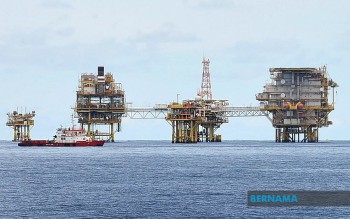
Southeast Asia's offshore energy sector is set for substantial expansion, with greenfield capital expenditure projected to climb 12 per cent beyond the US$100 billion mark, according to analysis from Hong Leong Investment Bank. The forecasted growth underscores accelerating momentum in new project development across the region, even as geopolitical risks in the Middle East continue to reverberate through global energy markets. This investment surge reflects regional confidence that energy infrastructure development remains strategically essential, particularly as countries navigate shifting supply dynamics and seek to bolster domestic reserves.
While the United States and Iran reached a ceasefire agreement backed by a 14-point memorandum of understanding, stability in West Asian geopolitical tensions remains uncertain. Nevertheless, Hong Leong Investment Bank believes the trajectory points toward de-escalation rather than further conflict intensification. The fragility of the arrangement underscores why Southeast Asian governments and energy companies remain focused on diversifying supply chains and reducing dependency on any single energy corridor. Traffic patterns through the strategically vital Strait of Hormuz have begun recovering following the accord, though satellite imagery reveals a complicating factor: an unusually high number of vessels are transiting with their automatic identification system transponders disabled, suggesting actual throughput volumes may be considerably higher than official records indicate.
The investment bank's outlook hinges on two interconnected investment themes that will shape the sector's direction. First is the question of whether sustained political accommodation ultimately translates into genuine energy security improvements and whether strategic oil reserves worldwide will be replenished to historically comfortable levels. Such an outcome would particularly benefit pipeline operators and terminal facilities throughout Southeast Asia, which serve as crucial transshipment hubs for global energy flows. The second theme centres on the possibility of a significant Petronas capital expenditure cycle beginning around 2027, which would inject substantial activity into Malaysia's domestic oil and gas services and equipment sector.
The potential Petronas investment wave carries particular importance for Malaysian and regional service providers specialising in upstream development, hook-up and commissioning operations, maintenance activities, marine logistics, fabrication capabilities, and pipeline-related infrastructure. A coordinated expansion cycle would create multiplier effects across engineering firms, fabrication yards, and marine support companies concentrated in Peninsular Malaysia and Sabah. The timing of such a cycle would align well with the broader regional offshore spending increase, potentially creating employment opportunities and technology transfer across Southeast Asia's energy workforce.
Hong Leong Investment Bank has adjusted its Brent crude forecast downward to US$80 per barrel for 2026, down from the previous US$90 estimate, while holding its 2025 projection at US$75 per barrel. This recalibration reflects cautious optimism about supply normalisation and reduced geopolitical risk premiums embedded in crude prices. The revision carries significant implications for regional economies heavily dependent on energy imports, as lower crude valuations reduce inflationary pressures transmitted through fuel costs and transportation expenses. However, the bank's analysts point to a critical wildcard: global commercial oil inventories are undergoing sharp drawdown, particularly within Organisation for Economic Cooperation and Development member nations.
According to data from the United States Energy Information Administration's June Short-Term Energy Outlook, days of petroleum supply held in OECD commercial reserves are projected to contract to 50 days by late 2026, substantially below the pre-conflict benchmark of above 60 days. This inventory compression creates structural support for oil prices at elevated levels, even should geopolitical tensions ease further. Hong Leong Investment Bank anticipates Brent will remain buoyed around the US$80 per barrel level until global production flows return to normal patterns and worldwide inventory positions rebuild. Should inventory replenishment extend beyond the 60-day supply threshold into early 2027, reflecting heightened energy security consciousness, prices could remain supported above US$75 per barrel throughout that period.
The production recovery timeline itself presents another upside factor for crude prices. Total production shut-ins in the Strait of Hormuz region climbed to 45 per cent in May 2026 from 35 per cent three months prior, indicating that supply disruptions persist at elevated levels despite the ceasefire agreement. This slower-than-anticipated recovery in production capacity suggests that crude inventories will take longer to normalise, prolonging the period of relatively constrained supply. Each month of delayed production restart perpetuates tight market conditions that tend to support prices at higher floors than would exist under more balanced supply-demand conditions.
Analysts from IPPFA Sdn Bhd observe that both Brent and West Texas Intermediate crude have retreated significantly from recent cyclical peaks, with both benchmarks now hovering within the US$70 to US$75 per barrel trading range. Should this price band prove durable over coming months, it would create substantially more manageable operating conditions for manufacturers and transport operators throughout Southeast Asia who face energy-intensive production processes. The price stability would allow businesses to implement more accurate cost forecasting and planning, reducing the premium risk adjustment companies typically embed into contract pricing when petroleum costs remain volatile. Improved cost predictability translates directly into enhanced competitiveness for export-oriented industries and greater confidence in undertaking long-term capital investment commitments.
Broader macroeconomic implications flow from sustained crude pricing within the US$70-75 per barrel corridor, according to IPPFA assessment. Moderating energy costs help counteract cost-push inflation that has persisted across multiple economies, thereby reducing the total inflationary burden central banks must address through restrictive monetary policy. When energy prices stabilise at more moderate levels, central banks gain additional policy flexibility to maintain accommodative monetary stances that support business investment growth and strengthen consumer purchasing capacity. This dynamic becomes particularly salient for Southeast Asian economies where energy imports represent significant budget items and where reduced cost pressures could allow resources to be redirected toward productive investment rather than simply covering elevated fuel bills.
At the time of latest market quotations, Brent crude had risen 0.90 per cent to US$69.17 per barrel, whilst West Texas Intermediate advanced 0.94 per cent to US$72.67 per barrel. These price levels sit comfortably within the stabilisation range analysts anticipate, suggesting markets are pricing in expectations of sustained equilibrium rather than fresh supply disruptions. For Malaysian and Southeast Asian policymakers and business leaders, the convergence of moderating crude prices, expected regional offshore investment growth, and geopolitical de-escalation creates an opportune window for advancing energy infrastructure projects, upgrading service sector capabilities, and positioning domestic companies to capture outsourcing opportunities from multinational energy corporations operating throughout the region.

