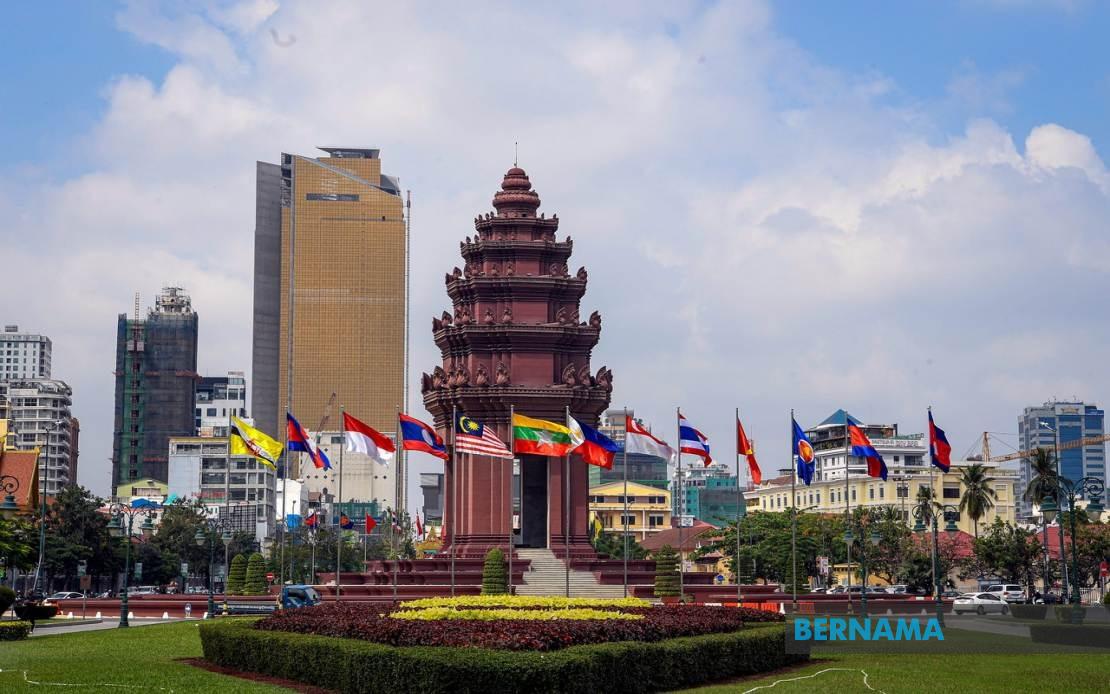
Southeast Asia's political landscape continues to shift as regional capitals accelerate development priorities spanning rural infrastructure, air transport modernisation, and renewable energy transitions. The multilayered agenda reflects how governments across the region are balancing economic growth with institutional reform and security challenges, offering important lessons for how emerging markets navigate concurrent pressures in an increasingly competitive region.
Cambodia's commitment to rural development partnerships with India signals deepening ties within the Mekong-Ganga Cooperation framework, focusing on tangible projects that address longstanding development gaps in provinces such as Kratie. These arrangements underscore how Southeast Asian nations are diversifying their international partnerships beyond traditional alignments, leveraging cooperation mechanisms to channel resources toward disadvantaged communities. For Malaysian observers, Cambodia's approach demonstrates how bilateral frameworks can translate into measurable rural benefits—a consideration relevant as Malaysia itself seeks to balance urban-rural development disparities.
Parallel to external partnerships, Cambodia's Civil Service Ministry has embarked on comprehensive administrative modernisation. The shift toward professional human capital development and digitalisation reflects a recognition that institutional effectiveness depends on modernising internal structures rather than relying solely on external investment. This bureaucratic transformation effort is particularly significant for Southeast Asian readers, as similar civil service reform challenges affect multiple countries in the region seeking to enhance service delivery whilst managing budget constraints.
Indonesia's transportation sector is undergoing significant expansion to address capacity pressures. Transportation Minister Dudy Purwagandhi's backing for Lt. Col. Wisnu Airfield expansion in Buleleng District aims to relieve congestion at Bali's primary airport, Ngurah Rai International Airport, by creating a secondary hub for northern Bali traffic. This distributed infrastructure approach addresses the reality that single-point aviation bottlenecks hinder economic productivity and tourist movement across island economies like Indonesia and, by extension, the broader Southeast Asian tourism ecosystem that rivals Malaysian destinations.
Indonesia's law enforcement apparatus has simultaneously moved against high-level corruption, with the National Police formally naming former Junior Attorney General for Special Crimes Febrie Adriansyah as a corruption and money laundering suspect. This prosecution reflects broader regional patterns where officials previously responsible for investigating financial crimes become targets themselves, highlighting how governance challenges permeate multiple state institutions. For Malaysia, where anti-corruption credibility remains central to institutional confidence, Indonesia's visible pursuit of elite suspects carries both reassuring and cautionary implications.
Myanmar's infrastructure investments demonstrate renewed emphasis on distributed economic development. The inauguration of Anisakan Airport in Mandalay Region signals intent to expand domestic connectivity beyond Yangon, facilitating agricultural product distribution and investor access to secondary regions. Simultaneously, the launch of the 15-megawatt Shwemyoh solar power plant, with plans for 25-megawatt and 30-megawatt expansions, reflects Myanmar's renewable energy ambitions despite ongoing political complexities. These initiatives suggest that Myanmar's leadership perceives infrastructure modernisation as foundational to economic stabilisation, even amid internal challenges.
The Philippines faces compound pressure from climate and political fronts. Tropical Storm Inday's passage and the continuing southwest monsoon's effects on Luzon and the Visayas regions exemplify how Southeast Asian nations must simultaneously manage immediate weather hazards whilst pursuing longer-term climate adaptation. The concurrent impeachment proceedings against Vice President Sara Z. Duterte add institutional strain during a period when governance stability would facilitate coordinated disaster response and climate strategy execution.
Singapore's regulatory approach to digital platforms reveals how affluent Southeast Asian economies leverage emerging technologies whilst protecting citizen privacy and preventing misuse by bad actors. WhatsApp's username reservation for public figures and government entities ahead of its privacy feature rollout demonstrates how platform governance intersects with state interests. Singapore's proactive engagement with technology companies contrasts with less developed administrative capacities elsewhere in the region, offering a model of how centralized governance systems can respond rapidly to digital innovation.
Singapore's Housing and Development Board's disclosure that 845 income ceiling waivers were approved for executive condominium applicants over five years reflects ongoing tensions between property market dynamics and affordability mandates. This pattern—where roughly one-sixth of appeals succeeded—suggests persistent pressure on the income thresholds, relevant for Malaysia where property affordability remains a contentious political issue affecting younger voters and middle-income households.
Thailand's law enforcement focus on transnational drug networks demonstrates how organised crime increasingly operates across Southeast Asian borders using sophisticated concealment methods and human trafficking mechanisms. Police issuing arrest warrants for alleged ringleaders of heroin-smuggling operations that recruited air hostesses indicates how criminal networks exploit legitimate transportation infrastructure and employment pathways. For the wider region, Thailand's visible crackdown signals both capability and determination to disrupt supply chains, though the persistence of such networks suggests fundamental supply-demand dynamics that enforcement alone cannot resolve.
Thailand's simultaneous investigation of nominee networks across island properties on Koh Samui and Koh Phangan exposes how foreign capital circumvents restrictions through legal intermediaries. The discovery that a single registered address served more than 100 companies suggests systematic structural exploitation rather than isolated violations, pointing toward requirements for more sophisticated regulatory detection mechanisms. This pattern affects Malaysia too, where foreign property ownership regulations face similar circumvention pressures.
Across these diverse developments, a consistent theme emerges: Southeast Asian governments are expanding enforcement capacity, modernising infrastructure, and pursuing renewable energy transitions simultaneously. Success across all three fronts remains uncertain, as political complexity, funding constraints, and institutional capacity limitations create competing pressures. Malaysia's policymakers monitoring regional developments will recognise both comparable challenges and divergent policy responses that merit closer study for potential adaptation.

