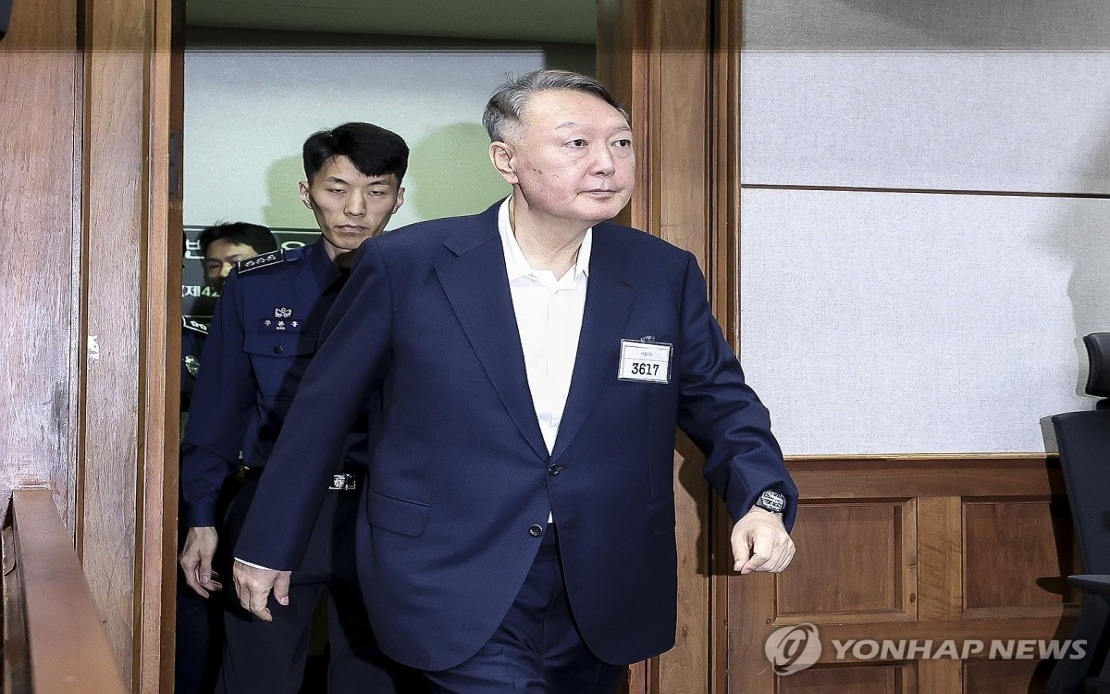
South Korea's highest court has decided to allow live television coverage of its verdict delivery in the case against former President Yoon Suk Yeol on obstruction of justice charges, representing a significant moment of judicial transparency in the country's ongoing political crisis. The Supreme Court announced its decision on Tuesday, overruling objections from Yoon's defence team who had argued that broadcasting would damage his prospects for a fair hearing and harm his personal reputation. The ruling marks a watershed moment as South Korean courts increasingly embrace public access to high-profile proceedings involving the nation's political elite.
The judgement is scheduled for delivery at 2 pm Thursday, signalling the beginning of the Supreme Court's review of Yoon's case following lower court convictions. This represents the first ruling from the country's top court specifically addressing the obstruction of justice allegations, distinct from the separate and more serious insurrection charges also pending against the former president. Special counsel Cho Eun-suk's office had formally requested permission for live broadcasting only last Friday, demonstrating the accelerated pace at which these sensitive cases are progressing through the judiciary.
Yoon's legal representatives mounted a vigorous challenge to the broadcast proposal, contending that televising proceedings would create what they termed "irreparable harm" to his constitutional rights and personal standing. Their strategy reflected traditional defence tactics aimed at limiting public exposure during politically charged trials. However, the Supreme Court's rejection of these arguments signals a judicial commitment to transparency that supersedes privacy concerns in matters of paramount public interest. The court will control all broadcast footage using its own camera equipment rather than allowing independent media production, establishing parameters for what the public will witness.
The case centres on Yoon's alleged interference with investigators attempting to execute an arrest warrant against him in January 2025. The former president faces accusations of ordering his security personnel to physically prevent law enforcement officers from carrying out their legal mandate. This obstruction allegation emerged as authorities sought to question Yoon regarding his shock declaration of martial law on December 3, 2024, a move that triggered constitutional and political upheaval across the nation.
Beyond the obstruction charges, the indictment encompasses multiple serious allegations that paint a picture of widespread abuse of executive authority. Prosecutors contend that Yoon violated the constitutional rights of nine Cabinet members by unilaterally implementing martial law without convening a preliminary meeting to review the proposal with his senior ministers. Additionally, he faces charges related to document falsification, specifically that he altered the martial law proclamation after it was rescinded to conceal procedural irregularities in how the decree was issued. Evidence suggests the original document was subsequently destroyed, raising questions about whether Yoon deliberately destroyed evidence.
An appellate court previously handed down a seven-year prison sentence against Yoon in April after finding him guilty on the obstruction and related charges. Notably, this represented an increase of two years from the lower court's initial determination but fell significantly short of the ten-year term that special counsel Cho's team had advocated for during proceedings. The appellate ruling demonstrated judicial complexity in assessing Yoon's culpability, with judges apparently wrestling with the gravity of his conduct while declining to impose the maximum penalties sought by prosecutors.
Separately and more consequentially, Yoon faces prosecution on insurrection charges directly tied to his martial law declaration itself. An appellate court previously convicted him on these graver charges and imposed a life sentence, positioning Yoon among the most severely punished former leaders in South Korean history. That trial continues at the appellate level, meaning his legal jeopardy extends across multiple proceeding tracks simultaneously, each addressing distinct dimensions of the constitutional crisis his actions triggered.
The decision to broadcast Thursday's Supreme Court verdict reflects evolving norms in South Korean jurisprudence regarding judicial accountability and public participation in high-stakes cases involving national leadership. Comparable democracies have increasingly opted for transparency in politically sensitive trials, recognising that public understanding of judicial reasoning strengthens institutional legitimacy even when verdicts prove controversial. For Malaysian observers, the case illustrates how even established democracies experience institutional stress when political leaders transgress constitutional boundaries, and how judicial systems must balance procedural fairness with democratic accountability.
The implications for regional governance extend beyond South Korea's borders. Southeast Asian nations, including Malaysia, wrestle with similar tensions between judicial independence and political accountability when former office-holders face legal proceedings. Yoon's prosecution demonstrates how constitutional democracies handle chief executive misconduct through courts rather than extrajudicial means, establishing rule-of-law precedents that observers across Asia scrutinise carefully. The broadcast decision specifically underscores how transparency can coexist with fair trial protections, offering a model for other jurisdictions navigating comparable challenges to institutional integrity.

