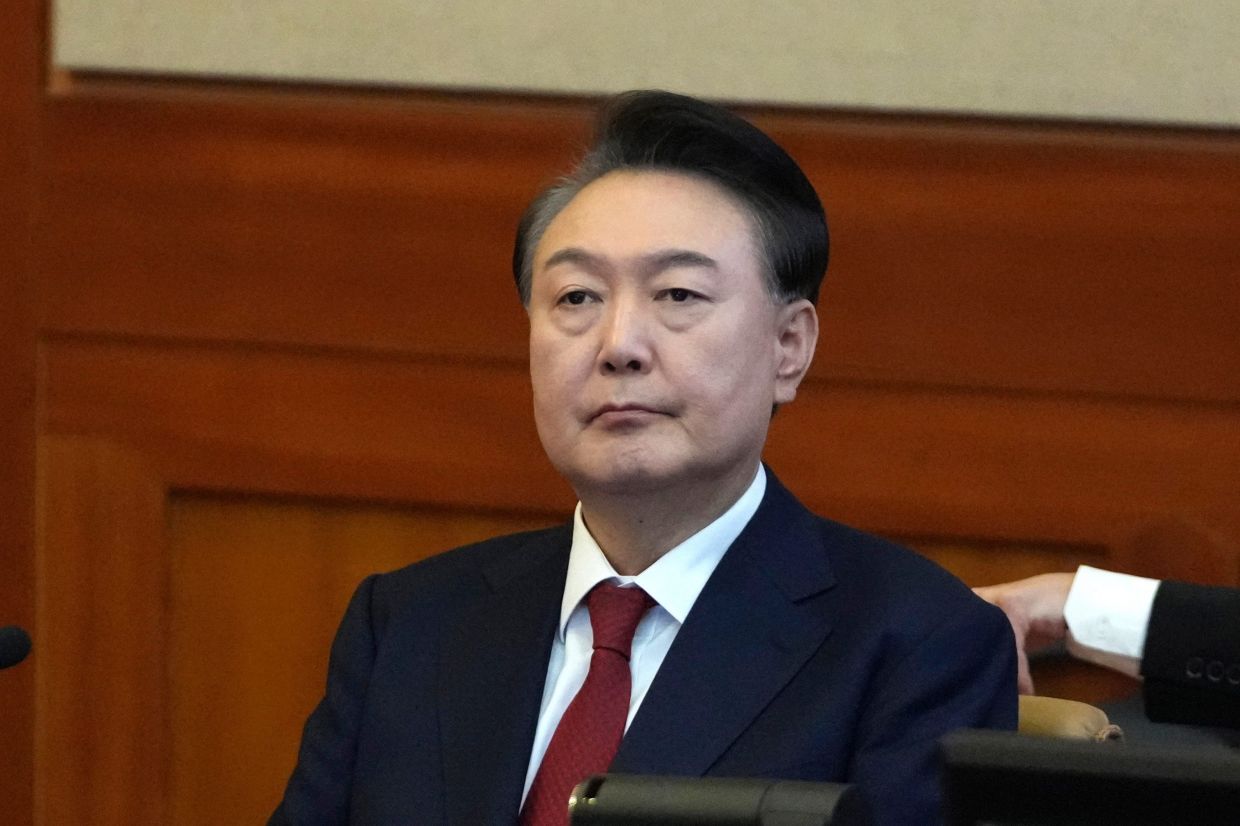
South Korea's highest court has delivered its final verdict on ex-president Yoon Suk Yeol's conviction stemming from his abortive martial law declaration in December 2024, upholding a seven-year prison sentence that represents a watershed moment in the nation's contemporary political history. The Supreme Court's decision on Thursday confirmed the findings of lower courts and effectively closes the chapter on one of the most serious charges against the disgraced leader, though substantial legal battles remain as Yoon faces separate convictions that collectively could result in decades behind bars.
The charges underlying this particular conviction paint a picture of systemic dysfunction at the highest levels of government. Prosecutors alleged that Yoon circumvented standard cabinet procedures by convening only a select group of ministers before announcing the martial law declaration, thereby obstructing the deliberative process that South Korean law demands. More seriously, the former president stands accused of orchestrating an elaborate deception involving forged documentation purportedly bearing the signature of the prime minister, a falsification intended to provide legal cover for the controversial order. The case also encompassed allegations that Yoon directed presidential security personnel to physically obstruct his arrest after lawmakers had voted to nullify the martial law declaration, and that he ordered military officials to destroy records stored on secure communications systems.
The Supreme Court's televised ruling rejected arguments from both the prosecution and Yoon's defence team, each of whom had appealed the judgment reached by lower courts. Prosecutors had initially sought a more severe ten-year sentence, believing the misconduct warranted harsher punishment, while Yoon's legal representatives contested the conviction itself. The Supreme Court judge delivering the verdict stated unequivocally that "all appeals are dismissed" and asserted that the lower court's judgment "contained no errors," leaving no ambiguity about the finality of the decision. This represents the court's view that due process had been properly observed and that the evidence adequately supported the guilty verdict.
Yoon's legal team responded with a statement expressing "deep regret" and levelling accusations that the Supreme Court had reached its conclusion "without sufficient deliberation." The defence indicated plans to challenge the ruling on constitutional grounds and announced their intention to file a formal complaint, though such further proceedings are unlikely to overturn the Supreme Court's final judgment. The ex-president remains incarcerated while pursuing appeals related to more severe convictions, including a separate thirty-year sentence for his alleged role in directing drones into North Korean airspace under circumstances prosecutors contend were designed to manufacture a security crisis preceding his martial law attempt.
The December 2024 midnight address in which Yoon suspended civilian rule shocked the nation and stunned international observers, including Washington. The declaration lasted merely six hours before the National Assembly convened in emergency session and voted to nullify it, preventing the constitutional dissolution of democratic institutions that Yoon's order had threatened. The episode triggered widespread public demonstrations, sent the Korean stock market into sharp decline, and caught geopolitical allies unprepared for such an unprecedented domestic upheaval. The shock waves reverberated through Southeast Asia and beyond, as regional governments recognised the fragility of democratic processes even in ostensibly stable democracies.
Throughout his legal proceedings, Yoon has consistently maintained that his extraordinary actions were undertaken "solely for the sake of the nation," a framing that fundamentally contests the prosecution's characterisation of his conduct as an assault on democratic governance. He has justified the martial law declaration as necessary to combat what he described as "anti-state forces" operating within South Korean society and contended that it represented a legitimate response to security threats emanating from North Korea. This defence strategy appeals to nationalist sentiment and frames his actions within a context of existential threat, though courts have systematically rejected these arguments as insufficient justification for his conduct.
The conviction process itself unfolded across multiple judicial levels, each adding elements to the case against Yoon. A lower court initially sentenced him to five years in January after convicting him on most charges but declining to find guilt on the misleading press release allegation. An appellate court reviewed that decision in April and took a more expansive view of culpability, adding a guilty verdict regarding the foreign media press release matter while simultaneously increasing the sentence to seven years. This escalation across the judicial hierarchy reflects a pattern of courts finding more serious misconduct as they examined the evidence in greater depth, suggesting that Yoon's actions represented a more systemic abuse of presidential authority than perhaps initially apparent.
The implications of this conviction extend beyond Yoon's personal fate to encompass broader questions about democratic accountability and the limits of executive power in South Korea. The case demonstrates that even a sitting president can be held legally answerable for extraordinary actions that transgress constitutional boundaries, a principle that many observers view as essential to the health of democratic institutions. However, it also highlights the contentious nature of interpreting what constitutes illegitimate use of emergency powers, particularly in a nation that shares a border with a hostile nuclear-armed state and has experienced genuine security threats throughout its modern history.
Yoon's downfall represents a dramatic reversal for a leader who won the presidency in 2022 on a platform emphasizing strong executive action and tough policies toward North Korea. His removal from office in April 2025, following the martial law crisis, triggered presidential elections that elevated Lee Jae Myung of the centre-left Democratic Party to the presidency, marking a significant swing in South Korean electoral preferences and reflecting public dissatisfaction with the direction Yoon's government had pursued. The transition in leadership underscores how thoroughly the martial law episode discredited the conservative political agenda that Yoon represented and reshaped the nation's political landscape.
For Malaysian and Southeast Asian observers, the Yoon case offers instructive lessons about democratic fragility and institutional resilience. While South Korea's courts ultimately upheld the rule of law by convicting a former president of serious crimes, the episode demonstrated how quickly institutional safeguards can be tested when a leader with sufficient authority attempts to bypass established procedures. The case underscores the importance of independent judiciaries capable of checking executive overreach and suggests that constitutional protections remain meaningful only to the extent that courts are willing to enforce them vigorously, even against powerful political figures. As regional democracies navigate their own governance challenges, the Yoon precedent provides both cautionary example and encouragement regarding the potential for judicial systems to enforce democratic boundaries.

