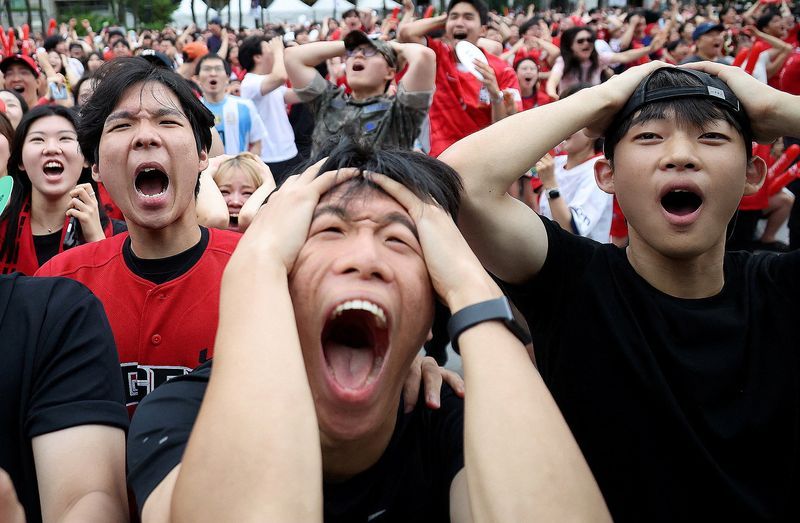
South Korea's unexpected elimination from the World Cup has triggered an extraordinary political storm, with President Lee Jae Myung on Sunday launching a scathing attack on the national team's management and demanding a formal investigation by the sports ministry into what he described as a catastrophic failure of leadership and organisational competence. The president's unusually candid criticism, posted on social media platform X, reflects the depth of public dismay in a nation that had been widely tipped to navigate what observers considered a straightforward group stage.
The South Korean team's demise came after successive defeats to Mexico and South Africa, results that left the country languishing in third place within Group A and missing out on the eight best third-placed finishers who advance to the knockout stages. Such a failure to progress from the group phase represented a humiliation for a footballing nation with considerable pedigree on the Asian stage and significant investment in its national programme. The margin of underperformance only heightened the sense of wasted opportunity and mismanagement, prompting unusually sharp recriminations from the highest levels of government.
President Lee's statement went beyond typical diplomatic disappointment, framing the result as symptomatic of a broader systemic dysfunction in how appointment decisions are made within Korean sports administration. He accused decision-makers of prioritising loyalty and factional loyalty over merit and capability, a loaded charge in South Korean political culture where such allegations carry resonance beyond football. The president argued that when organisational positions go to individuals selected through networks rather than genuine competitive assessment of ability, institutional failure inevitably follows.
The roots of the current crisis extend back to Hong Myung-bo's reappointment as national team manager in 2024, a decision that immediately sparked controversy within Korean media circles. Critics questioned the transparency and rigour of the hiring process, with persistent allegations that Hong's selection reflected connections and factional preferences rather than a comprehensive evaluation of alternative candidates and their credentials. Hong has consistently denied these suggestions, but the appointment's legitimacy appears to have remained contested within Korean football circles and among sections of the public.
President Lee's intervention brings intense political pressure to bear on the sporting governance structures that made these decisions. He directly attributed the team's organisational failures to the absence of adequate mechanisms to monitor, scrutinise, and hold accountable those with power over personnel appointments. This systemic critique suggests that the problem extends beyond Hong's individual performance, implicating the broader institutional framework that enabled his selection despite the controversy surrounding it.
The political temperature has been further elevated by grassroots expressions of public anger. A petition calling for Hong's dismissal posted on the national assembly website rapidly accumulated sufficient signatures to trigger an initial formal review, demonstrating the depth of public frustration with the situation. More dramatically, social media has circulated images of South Korean shop owners posting signs explicitly banning Hong from their establishments, a striking manifestation of social disapprobation that extends beyond typical sports disappointment into something resembling a civic rejection of the coach.
President Lee has now ordered the Ministry of Culture, Sports and Tourism to undertake a comprehensive investigation into the circumstances surrounding the team's failure. This instruction requires the ministry to conduct detailed analysis of what went wrong, identify the underlying causes, and develop mechanisms to prevent similar outcomes in future. Such an investigation potentially exposes not just Hong's tactical and team management decisions, but the appointment processes that brought him into the role in the first instance, potentially creating significant political and administrative consequences for those involved in that selection.
The intensity of presidential involvement in what might typically remain a sporting matter reflects several intersecting factors specific to South Korean politics and culture. Football carries substantial symbolic weight as a national enterprise, with international success functioning as a marker of national competence and prestige. The early World Cup exit therefore resonates beyond the sports sphere, touching on broader questions about institutional quality and decision-making standards in Korean public life. For President Lee, articulating anger at systemic dysfunction in sports administration also provides political positioning around wider governance themes.
This episode carries broader implications for how sports organisations across East Asia approach senior appointments and accountability. The South Korean case demonstrates how decisions that fail to maintain adequate transparency and merit-based selection can trigger not just sporting consequences but political crises that ultimately undermine public confidence in institutional processes. For Malaysia and other regional nations with similar governance challenges, the Korean experience offers a cautionary illustration of how failures in administrative rigour within sports bodies can escalate into national controversies that demand ministerial intervention and formal investigation.
The investigation ordered by President Lee will likely intensify scrutiny of Hong's decision-making during the World Cup campaign, but it appears positioned to examine more systematically the appointment decision itself. This dual focus potentially exposes fundamental questions about how South Korea's sports governance structures operate, who holds decision-making authority, and what checks exist to ensure such authority serves the public interest rather than private networks. For Hong and the Korean Football Association, the weeks ahead promise to be extraordinarily challenging as multiple inquiries proceed simultaneously.

