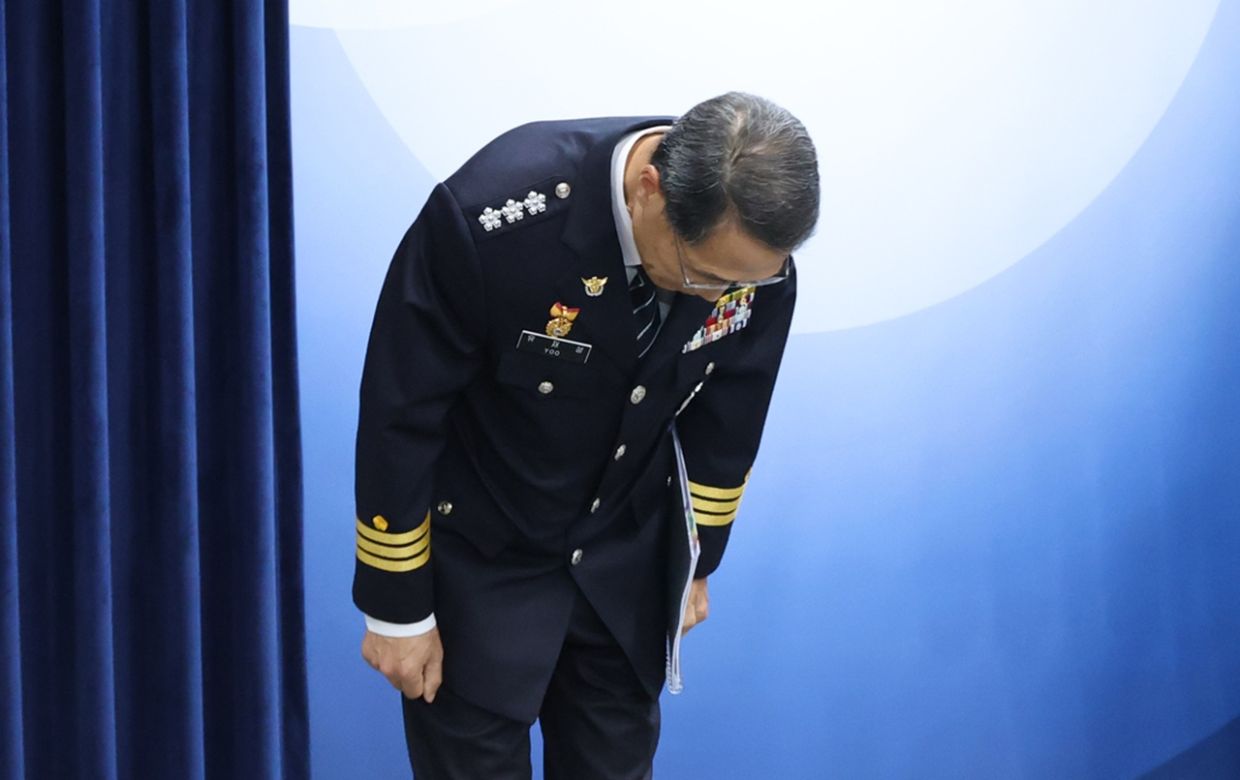
South Korea's police leadership is attempting a dramatic institutional reset after a damaging collusion scandal exposed serious lapses in criminal investigation procedures and officer accountability. Acting National Police Agency Commissioner General Yoo Jae-sung unveiled a comprehensive reform package at a Government Complex Seoul press briefing on Monday, July 20, positioning the restructuring as essential to restoring public trust that has been eroded by allegations of improper conduct in the case of suspect Jang Yoon-gi, arrested for allegedly murdering a teenage girl in Gwangju in May.
The scandal centres on allegations that police investigators leaked sensitive investigation details to Jang's father, a serving police officer, while simultaneously failing to properly secure crucial evidence in the case. These failures have triggered widespread public outcry and intensified scrutiny of whether systemic problems within the police force enabled officers to shield a colleague's family member from proper investigation procedures. The incident crystallised longstanding concerns about conflicts of interest when police investigate cases involving their own personnel and their families.
Yoo's commitment to comprehensive institutional overhaul signals recognition that piecemeal responses would be insufficient to address the depth of public criticism. He framed the scandal as an inflection point, stating that "the police will take this case as an opportunity to overhaul their investigative practices with a deep sense of urgency and do their utmost to regain public trust." This language, while carefully diplomatic, acknowledges that the incident has exposed systemic vulnerabilities rather than isolated individual failures. Notably, Yoo added that he would continue "faithfully carry out his duties without clinging to his position," an implicit acknowledgment of mounting pressure for senior officials to resign.
The centrepiece of the reform initiative is an investigative reform task force to be launched by month's end, comprising seven to ten members with outside experts forming the majority of the panel. This deliberate composition reflects an attempt to embed independent oversight into institutional reform design, rather than relying solely on internal police deliberations. The task force will examine personnel structures designed to prevent improper relationships between officers and their local communities, a direct response to the nepotism allegations at the heart of the current scandal. It will also review procedures for handling cases involving socially vulnerable individuals, recognising that investigative quality failures often compound existing vulnerabilities among marginalized populations.
Parallel to this task force, police authorities are establishing an internal affairs investigation unit under the National Office of Investigation that will investigate serious duty-related crimes allegedly committed by police personnel irrespective of rank. This mechanism addresses a critical accountability gap: historically, investigations into senior officers have faced institutional resistance and informal interference. By creating a dedicated unit with explicit authority to investigate any rank, authorities hope to signal that accountability applies uniformly across the hierarchy.
Beyond internal mechanisms, the reform package proposes creating an oversight body under the Korean National Police Commission comprising approximately one hundred civilian investigators tasked with examining alleged human rights violations and misconduct in police investigations. This external civilian component represents a significant structural innovation, embedding non-police accountability mechanisms directly into the police commission's operations. Yoo acknowledged that implementing such a body requires amendments to the Police Act, and he confirmed that relevant legislative proposals have already been submitted to the National Assembly. He pledged that police would actively engage during the legislative process to ensure the oversight body possesses sufficient authority to generate meaningful recommendations for personnel action and disciplinary measures.
The police chief also addressed a contentious Interior Ministry proposal to expand mandatory rotation policies across all police ranks. Currently, superintendent-level officers and some senior inspectors undergo nationwide rotations when transferred, but expanding this system to all ranks faces practical and political resistance. Yoo signalled that the agency would solicit frontline officer input before implementing any expansion, acknowledging that mandatory rotation creates "significant burden on officers in the field." The rotation system currently provides official residences to superintendent-level officers and above, and extending this benefit to lower-ranking officers would impose substantial budgetary demands and fairness questions. This cautious approach suggests recognition that reform momentum could stall without securing buy-in from the rank-and-file officers who would bear implementation burdens.
Regarding Jang's father specifically, Yoo indicated the police would suspend their internal inspection until a special investigation team concludes its inquiry, suggesting coordination with external oversight authorities. This deferential approach differs markedly from the original handling of the case and underscores how scandal exposure has shifted institutional dynamics, forcing police to accommodate external scrutiny rather than manage investigations autonomously.
These developments carry implications extending beyond South Korea's borders. The scandal illustrates institutional vulnerabilities common across East Asian law enforcement systems where family connections and hierarchical relationships can compromise investigative integrity. Malaysia and other Southeast Asian nations grappling with police reform face similar challenges: balancing officer welfare concerns with public accountability demands, establishing meaningful civilian oversight, and preventing corruption through relationships and favouritism. The South Korean response, emphasising external civilian accountability mechanisms alongside internal structural changes, provides a potential model for jurisdictions redesigning their own police governance frameworks. However, the ultimate test will be whether bureaucratic restructuring translates into changed investigative practices, or whether institutional culture ultimately circumvents formal reforms. The coming months will reveal whether the reform package represents genuine institutional change or merely absorbs public pressure while maintaining substantive operational patterns unchanged.

