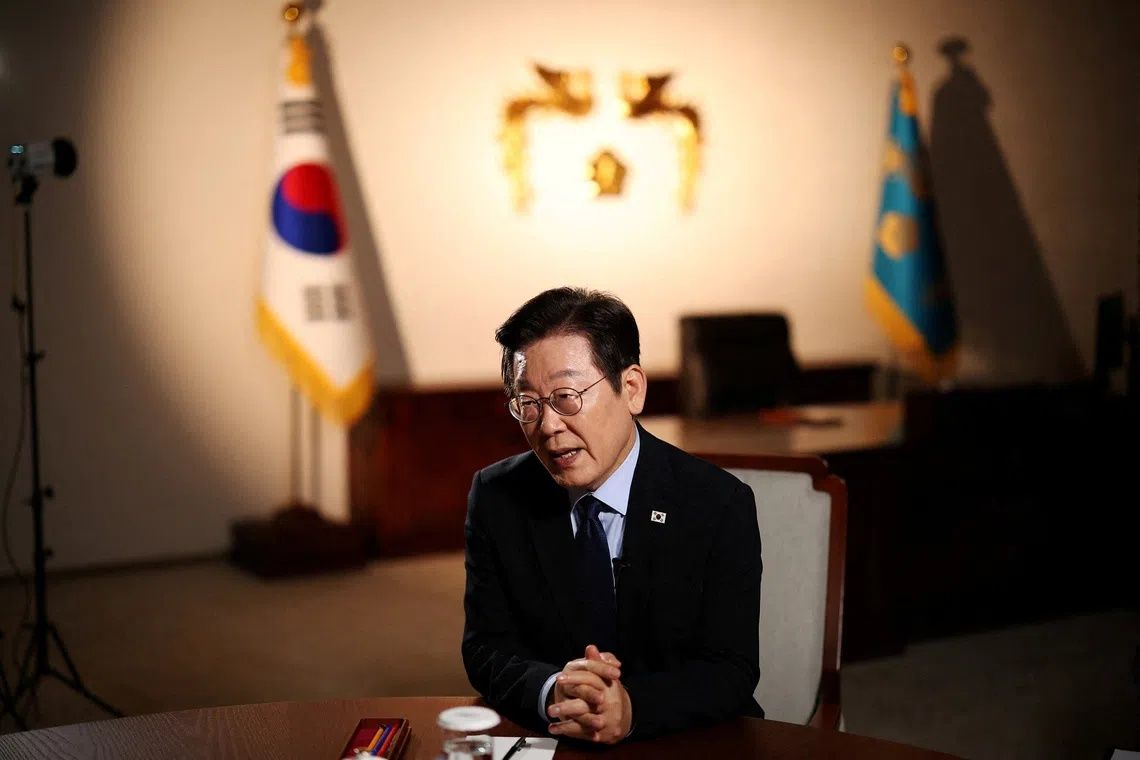
South Korean President Lee Jae Myung has emerged as an advocate for reshaping the nation's constitutional framework, endorsing a shift toward a four-year presidential term that would permit successive re-election, according to a presidential Blue House official cited by Yonhap news agency on Friday. The proposed reform represents a significant departure from the country's existing single five-year presidential cycle, which has defined South Korea's political landscape for decades. This constitutional proposal carries particular weight given Lee's standing as a sitting president and reflects growing momentum behind structural political reform in one of Asia's largest democracies.
The officials representing Lee's administration have characterised the four-year renewable term model as enjoying the strongest consensus among the South Korean public. This positioning suggests that proponents view the proposal as pragmatic and broadly appealing rather than a narrowly self-serving initiative. The emphasis on public acceptance signals an awareness that constitutional changes require not merely parliamentary approval but also legitimacy grounded in popular opinion—a critical consideration in a nation with deep institutional trust deficits and a politically engaged citizenry.
Central to the reform agenda is a rebalancing of institutional power dynamics that have long characterised South Korean governance. Lee's administration has acknowledged legitimate concerns surrounding what critics widely term the country's "imperial presidency"—a system that concentrates vast executive authority in the hands of a single individual elected for an extended but non-renewable mandate. The concern reflects genuine institutional tensions that have accumulated across multiple administrations, with successive presidents wielding considerable discretion over judicial appointments, prosecutorial authority, and legislative affairs.
The proposed constitutional amendments would not merely recalibrate presidential tenure but would simultaneously strengthen parliamentary powers as a counterweight to executive dominance. This dual approach addresses longstanding structural imbalances within South Korea's Fifth Republic institutional framework. By distributing authority more evenly between the presidency and the National Assembly, the reformers argue that the system would reduce vulnerability to executive overreach while creating clearer institutional checks on presidential conduct. Such institutional rebalancing remains particularly salient given South Korea's history of presidential prosecution after leaving office, a pattern that has generated concerns about the weaponisation of legal institutions.
Implementing such constitutional changes presents formidable procedural hurdles that underscore the gravity of the undertaking. The Blue House official emphasised that amendments require the affirmative votes of at least two hundred lawmakers within the National Assembly—a supermajority threshold that demands cross-partisan cooperation. This requirement effectively mandates that constitutional reform cannot proceed as a partisan project but instead demands sustained political consensus. The official's public acknowledgment of this procedural reality suggests that Lee's administration recognises the necessity of building broad legislative coalitions to advance the agenda.
The timing of this constitutional proposal carries strategic implications within South Korea's broader political trajectory. As a sitting president, Lee's endorsement of presidential term limits accompanied by re-election rights positions him distinctly within ongoing debates about executive power. The proposal demonstrates cognisance of public concerns regarding executive concentration while simultaneously creating possibilities for extended presidential influence. For Malaysian observers and Southeast Asian policymakers, this development illustrates tensions common across the region regarding presidential authority, term limits, and institutional balance that remain salient in countries with analogous constitutional structures.
The emphasis on achieving political consensus rather than pursuing unilateral executive action reflects evolving norms within South Korean governance, though scepticism about motives for constitutional reform remains widespread. Opposition parties and civic groups have historically scrutinised presidential constitutional proposals with considerable suspicion, given the potential for self-serving amendments. Lee's administration must therefore navigate substantial credibility challenges in positioning reform as institutional improvement rather than executive self-interest. The requirement for supermajority support theoretically provides protection against partisan manipulation, though the political dynamics surrounding constitutional reform remain volatile.
Regional observers note that South Korea's constitutional reform debates occur within broader Asian conversations regarding presidential systems, executive accountability, and institutional design. Countries throughout Southeast Asia, including Malaysia with its own evolving institutional structures, maintain heightened interest in alternative constitutional architectures that might recalibrate executive-legislative relations. South Korea's experience with presidential concentration, prosecutorial vulnerability, and institutional dysfunction under single-term extended presidencies offers instructive precedents for comparative constitutional studies.
The path toward potential constitutional amendment remains uncertain, contingent upon sustained cross-partisan negotiation and public acceptance. South Korean lawmakers from both governing and opposition camps must engage substantive debates regarding not merely presidential tenure but the underlying distribution of institutional power. These negotiations will ultimately determine whether Lee's proposal advances or whether political divisions preclude amendment passage. The outcome carries implications extending beyond South Korean borders, potentially influencing constitutional conversations throughout East and Southeast Asia regarding optimal presidential systems and institutional balance.

