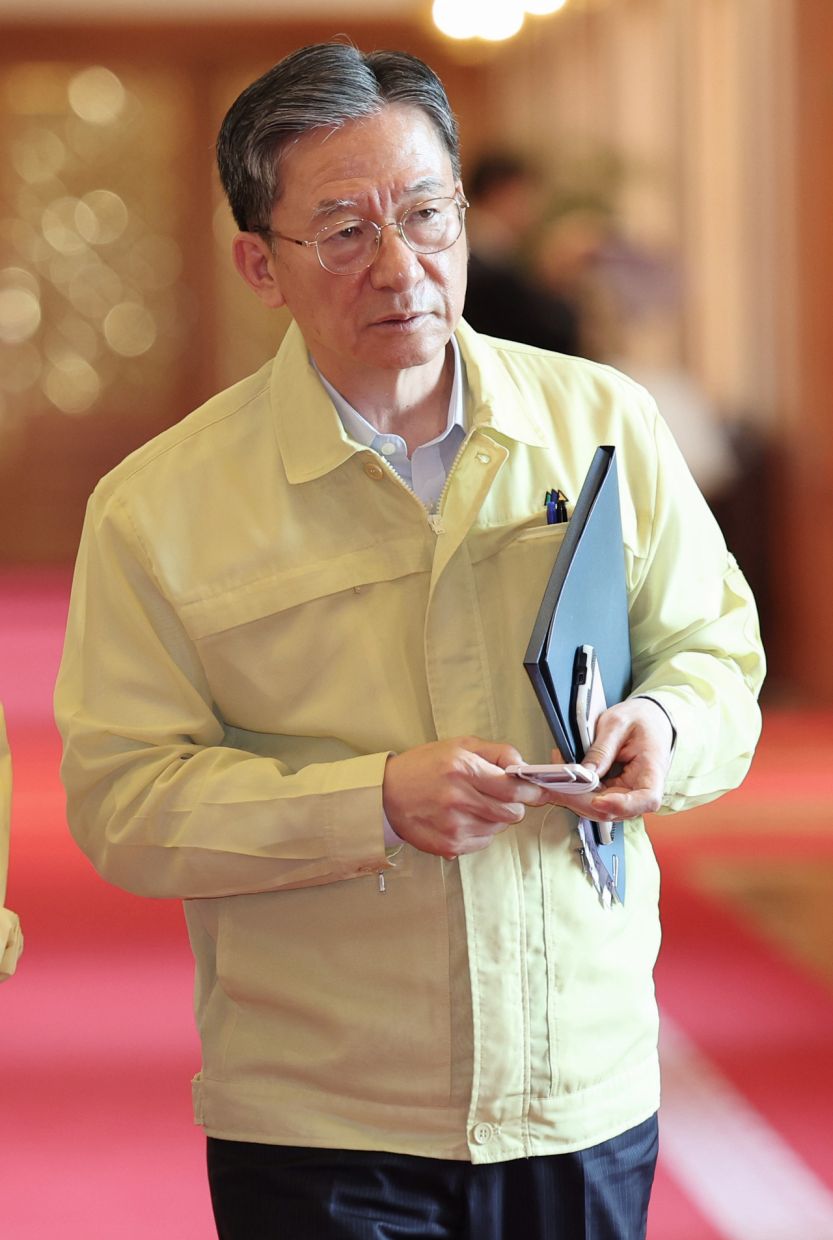
Justice Minister Jung Sung-ho has stepped down from his position following a protracted disagreement with South Korea's ruling Democratic Party over the scope of prosecutorial authority in criminal investigations. The resignation, submitted on Tuesday afternoon, marks another chapter in the nation's ongoing struggle to redefine the balance of power within its criminal justice system, an issue that has periodically surfaced as a contentious political matter throughout the government's tenure.
At the heart of the dispute lies a fundamental philosophical question about how investigative and prosecutorial functions should be separated to prevent the accumulation of excessive power within prosecuting authorities. Jung expressed reservations about a legislative initiative championed by the Democratic Party that would substantially curtail prosecutors' ability to conduct supplementary investigations—a practice that has long been standard procedure within South Korea's legal framework.
Under current law, prosecutors retain the authority to initiate their own investigations when they determine that police investigations are inadequate or incomplete following case submission. This discretionary power has historically allowed the prosecution to probe deeper into matters where initial police work may have missed critical evidence or failed to pursue certain investigative angles. The ability to conduct these supplementary investigations has served as a check on investigative limitations and provided prosecutors with a tool to ensure thorough case preparation before deciding on charges.
However, the Democratic Party has grown increasingly concerned that this arrangement concentrates too much authority in prosecutorial hands, potentially creating opportunities for abuse or political manipulation. The party's proposed criminal justice overhaul aims to create a cleaner separation between investigative and prosecutorial roles, viewing this as a mechanism to enhance fairness and reduce the risk of prosecutorial overreach in a system where the prosecution wields considerable influence.
The disagreement between Jung and his party came to a head as South Korea prepares for implementation of a revised Criminal Procedure Act scheduled to take effect on October 2. Once this reform becomes operational, prosecutors will lose their standing authority to independently conduct supplementary investigations. Instead, their role will shift toward a more limited but arguably more focused function: evaluating investigative findings compiled by police, determining whether sufficient grounds exist to bring charges, and litigating cases in court proceedings.
This restructuring represents a significant architectural change to South Korea's investigative and prosecutorial system, positioning the prosecution as reviewers and deciders rather than independent investigators. Proponents argue this model prevents the kind of prosecutorial dominance that has occasionally surfaced in South Korean legal history, while critics contend it may handicap the prosecution's ability to pursue complex cases requiring investigative sophistication.
In announcing his departure, Jung cited personal health concerns as the primary motivation for his decision. However, accompanying statements carried additional weight, suggesting that the timing and nature of the leadership transition held strategic significance. According to reporting by Yonhap News Agency and other local media outlets, Jung's resignation statement included the observation that "it would be desirable for the new criminal justice system to be completed under new leadership." This phrasing appeared to acknowledge both the practical difficulty of implementing sweeping legal reforms during a period of internal disagreement and the symbolic importance of having leadership that could champion the changes without reservation.
For Malaysian observers and those tracking criminal justice reform across Southeast Asia, South Korea's experience illustrates the persistent tension between prosecutorial efficiency and institutional safeguards against abuse. Many nations in the region wrestle with similar questions about how to structure investigative and prosecutorial authority, and South Korea's approach—with its explicit effort to separate functions—may offer cautionary or instructive lessons as other jurisdictions consider their own reforms.
The resignation also reflects a broader pattern in South Korean governance where disagreements over policy fundamentals sometimes lead to ministerial exits rather than protracted internal battles. This approach, while potentially disruptive to governmental continuity, can accelerate policy implementation and signal to the ruling coalition that compromises on core legislative objectives will be few.
Vice Justice Minister Lee Jin-soo will assume the acting role while the government navigates the succession process. Lee's leadership during this transitional period will prove consequential, as the ministry must oversee the practical implementation of the revised Criminal Procedure Act while managing the institutional adjustments prosecutors and courts will require to operate under the new framework.
The October 2 implementation date now approaches without the level of internal consensus within government that typically accompanies such significant institutional changes. Whether this particular reform will achieve its intended goals or generate new complications in South Korea's criminal justice operations remains to be seen. For Southeast Asian nations considering comparable reforms, monitoring South Korea's experience will provide valuable data on the real-world consequences of substantially restructuring the relationship between investigation and prosecution.

