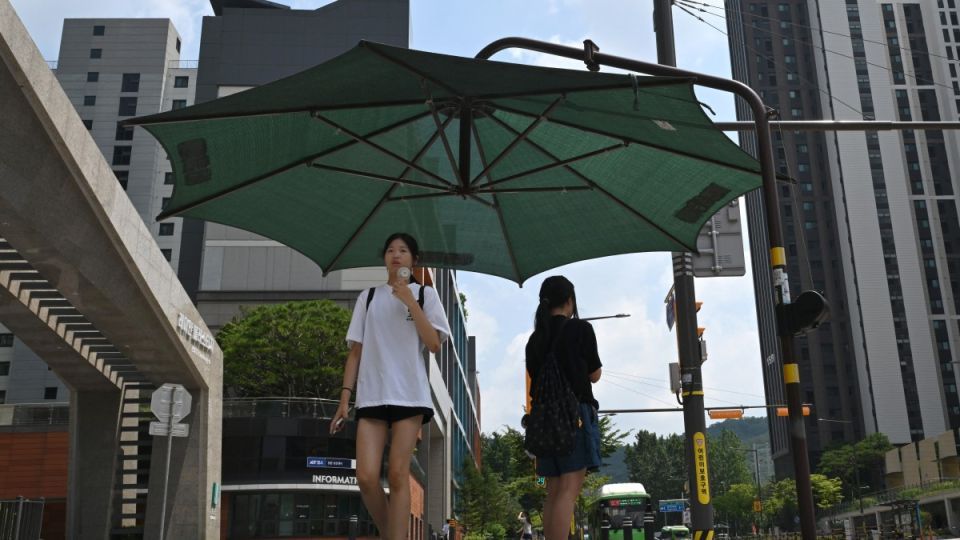
South Korea is grappling with an intensifying occupational safety crisis as extreme temperatures sweep the peninsula, prompting major corporations to fundamentally restructure working conditions. Yet beneath the surface of these well-publicised interventions lies a troubling reality: corporate heat-safety measures reflect and reinforce existing inequality in South Korea's labour market, with protection largely confined to workers at large firms while those in smaller businesses and outdoor roles face mounting danger.
The scale of the heat hazard has become impossible to ignore. Yangsan, South Gyeongsang Province, recorded a national high of 42.5 degrees Celsius, while Seoul endured consecutive days under the highest-level heatwave warning. These are not mere discomforts but life-threatening conditions. Between 2022 and June this year, the Korea Workers' Compensation and Welfare Service recognised 195 heat-related occupational accidents, a grim tally that includes 20 fatalities. Even more alarming, thirteen cases—four of them fatal—had already been documented by the end of June, before the typically deadliest months of July and August arrive.
This occupational health emergency has begun reshaping how South Korea's largest employers manage their operations. The impetus intensified when a district court last year convicted a construction company under the Serious Accidents Punishment Act for a worker's heatstroke death, marking the first such conviction involving heat-related mortality. The legal precedent sent shockwaves through Korean industry, signalling that companies could face criminal liability for inadequate heat protection.
Construction and heavy manufacturing firms have emerged as cautious innovators in workplace climate adaptation. Hyundai Engineering & Construction now compensates workers specifically for resting in designated cool zones, directly incentivising behavioural change. More technologically sophisticated approaches include Lotte E&C's Internet of Things monitoring system, deployed across approximately 80 construction sites, which measures perceived temperatures at five-minute intervals and assigns heat risk into five tiers. Daewoo E&C has adopted a worker-centred model permitting labourers experiencing physical distress to stop work without penalty—a seemingly simple measure that signals a cultural shift toward prioritising human welfare over production schedules.
Migrant workers, disproportionately concentrated in agriculture and construction, have become specific targets of protective initiatives. Hyundai E&C distributed emergency reporting guides in 22 languages and furnished workers with cooling vests fitted with integrated fans alongside oral rehydration solutions. Kumho E&C partnered with Lotte Chilsung Beverage to supply bottled water, sports drinks, cooling towels and portable shelter through September. These gestures recognise a harsh reality: seasonal workers from Thailand, Vietnam and other Southeast Asian nations often lack language capabilities to report emergencies and face social pressure preventing them from requesting relief during shifts.
Industries unable to pause operations during heat peaks have reorganised work-rest cycles based on monitored temperatures. Posco, operating continuously-running blast furnaces, mandates 15-minute rest periods following every 45 minutes of labour when perceived temperature exceeds 35 Celsius, scaling down to 10-minute breaks after 50 minutes of work between 31 and 35 Celsius. Hyundai Steel implements analogous thresholds with minimum ten-minute and 15-minute breaks. Shipbuilders have similarly restructured summer schedules: Hanwha Ocean doubled morning and afternoon breaks from ten to twenty minutes through August and extended lunch periods by 30 minutes above 28 Celsius and one full hour above 31.5 Celsius. HD Hyundai Heavy Industries lengthened lunch breaks from 60 to 90 minutes and operates over 270 cooling facilities across yards, supplementing climate control with cooling vests, ice water and electrolyte supplements.
However, these interventions concentrate overwhelmingly among South Korea's corporate elite. Of 195 recognised heat-related accidents since 2022, more than half occurred at workplaces employing fewer than 50 people, with 42 incidents in businesses with fewer than five workers. Smaller employers typically lack dedicated safety personnel, capital for cooling infrastructure and adequate rest facilities. Labour experts and lawmakers increasingly highlight this dangerous bifurcation in occupational protection, noting how vulnerability correlates directly with company size and economic resource.
Migrant workers in agriculture and outdoor labour remain catastrophically exposed to heat hazards. Last month, a Thai seasonal worker collapsed fatally while working a field in Haenam, South Jeolla Province. Simultaneously, a Vietnamese national died working outdoors on a farm in Goesan, North Chungcheong Province. These deaths underscored how protection mechanisms established by major corporations create only modest spillover benefits for the most precarious segments of South Korea's workforce.
Rep. Kim Wi-sang of the ruling People Power Party has advocated for governmental action transcending the corporate focus on large employers. He has urged strengthened inspections and practical safeguards specifically targeting seasonal migrant workers and employees at small outdoor operations. His position reflects growing recognition that voluntary corporate heat-safety measures, however sophisticated and well-intentioned, cannot substitute for systematic regulatory protection of vulnerable populations. Until South Korean policymakers mandate and enforce baseline heat protections across all workplaces regardless of employer size, occupational heat death will remain concentrated among the nation's least powerful workers—a reality that starkly illustrates how climate crises intersect with labour exploitation in contemporary East Asia.

