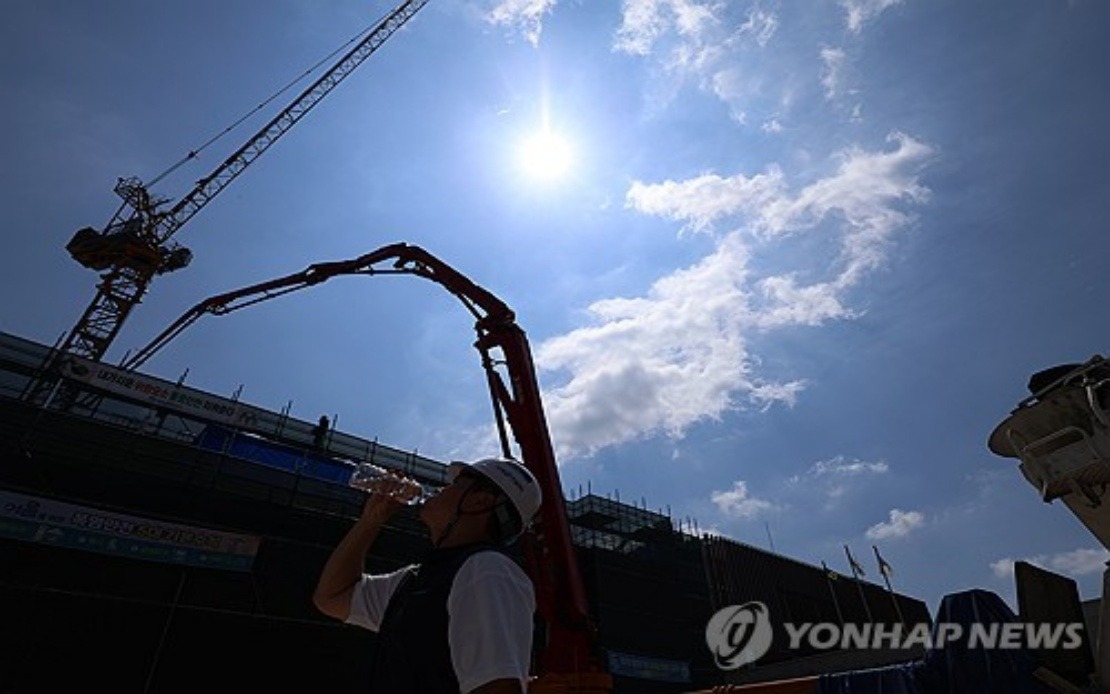
South Korea's meteorological authorities have dramatically expanded emergency heat wave warnings across the densely populated Greater Seoul area, with authorities now placing nearly half of the capital region under the most severe alert classification. The Korea Meteorological Administration issued additional top-tier warnings on Wednesday affecting southern Incheon and nine municipalities within Gyeonggi Province, including Gwangmyeong, Yeoncheon and Hwaseong, bringing the total number of affected weather advisory zones to 20 out of 46 districts in the capital region. This represents a significant escalation in an already critical situation that has gripped the Korean peninsula throughout August.
The expansion of the highest-level alert underscores the unprecedented nature of the current heat crisis. Tuesday marked a historic moment when all of Seoul itself fell under the most stringent heat warning for the first time since the KMA introduced its comprehensive heat wave alert system on June 1. The subsequent widening of the warning zone on Wednesday signals that conditions continue deteriorating across the broader metropolitan area rather than remaining localized to the capital. Officials have also extended warnings to Cheongyang in South Chungcheong Province, marking the first instance of such severe heat alerts being activated in the central Chungcheong region, suggesting that extreme temperatures are spreading well beyond the traditionally vulnerable Greater Seoul conurbation.
Understanding the criteria for these warnings provides perspective on how extraordinary current conditions have become. The KMA triggers its most serious heat wave alert when apparent temperature—a measurement combining actual air temperature with humidity and wind factors to reflect how the heat actually feels on the human body—reaches 38°C or higher. Alternatively, warnings activate when daily maximum temperatures hit 39°C or above in areas that have already experienced apparent temperatures of 35°C or higher for at least two consecutive days. These thresholds are deliberately set at levels that public health authorities recognize as genuinely dangerous to human health, making their widespread activation across the capital region a cause for considerable concern.
The intensity of the heat being experienced across South Korea has shattered historical records. The southeastern city of Yangsan has recorded temperatures reaching 42.5°C, establishing the highest reading since modern meteorological observations commenced in 1904. For Malaysian readers accustomed to tropical climates, this temperature may seem familiar, but the critical distinction lies in humidity patterns and infrastructure adaptation. South Korea's continental climate means lower humidity during heat waves compared to monsoon-influenced regions, yet the population has less biological and structural acclimatization to extreme heat than tropical populations. Air conditioning penetration, while high in Seoul, remains less universal than in wealthier areas, and urban design often concentrates heat in ways unfamiliar to more horizontally-sprawling Southeast Asian cities.
The human toll from this extreme weather has proven severe and measurable. Between May 15 and Monday of the reporting week, the Korea Disease Control and Prevention Agency documented 2,221 people requiring hospitalization for heat-related conditions. More grimly, the crisis has claimed 19 lives during this same period, with projections suggesting these figures may only increase as the heat wave persists through the remainder of August. These statistics reveal not merely an inconvenience but a genuine public health emergency that is straining hospital systems and overwhelming emergency medical services across the nation.
The geographic pattern of the heat wave's impact carries important implications for understanding climate change manifestations across East Asia. The concentration of severe conditions in the Greater Seoul area reflects how urban heat island effects amplify natural temperature increases in densely populated metropolitan regions. Seoul, with over 10 million residents in the city proper and nearly 26 million in the greater metropolitan area, experiences significantly higher temperatures than surrounding rural zones due to the concentration of buildings, vehicles, and industrial activity. This phenomenon has particular relevance for Southeast Asian megacities like Bangkok, Jakarta, and the Klang Valley, which face similar dynamics and could expect comparable temperature escalations as climate patterns shift.
The expansion of warnings into previously unaffected regions like South Chungcheong Province suggests that infrastructure and public health systems in those areas may be insufficiently prepared for heat-related emergencies. Regional medical facilities in areas accustomed to more moderate temperatures typically maintain fewer cooling centers and have less experience managing heat-related medical crises. The first-time activation of warnings in central Chungcheong raises questions about whether healthcare providers, social services, and local governments have adequate contingency protocols, training, and resources to respond effectively to heat emergencies at scale.
For regional observers, South Korea's experience offers instructive lessons about heat wave preparedness and response. The structured alert system implemented by the KMA—with clear thresholds, geographic specificity, and tiered response levels—represents a sophisticated approach to communicating risk to the public and triggering coordinated government interventions. However, even this well-developed system appears challenged by the intensity and geographic scope of the current event. Southeast Asian nations with less formalized heat alert infrastructure could benefit from examining South Korea's approach while adapting it to local climatic conditions and healthcare system capacities.
The persistence and intensity of South Korea's current heat wave reflects broader climatic trends affecting the entire region. East Asia has experienced several historically severe heat events over the past decade, with attribution studies increasingly pointing to human-induced climate change as a significant contributing factor. The warming of the Pacific Ocean and changing jet stream patterns have created conditions favoring prolonged heat domes over specific regions. For Malaysia and Southeast Asia, monitoring these broader climatic shifts remains crucial, as patterns that intensify heat in East Asia can eventually affect regional monsoon patterns and precipitation distribution.
Government response mechanisms across South Korea have mobilized significantly, though authorities acknowledge the challenge of managing a crisis of this scale. Heat-related warnings triggering widespread public advisories to limit outdoor activity, increase hydration, and seek air-conditioned refuges represent the standard playbook, but when nearly half of the capital region's weather zones are simultaneously at the highest alert level, the systemic strain becomes evident. Schools have adjusted schedules, outdoor activities have been curtailed, and employers have encouraged flexible arrangements, yet the fundamental challenge remains: when ambient temperatures exceed what the human body can safely tolerate through normal thermoregulation, mortality risk rises substantially regardless of precautions.
Longer-term implications extend beyond immediate public health concerns. Economic impacts include reduced labor productivity, increased healthcare expenditures, strain on electrical grids from unprecedented air conditioning demand, and potential agricultural disruptions. Insurance and disaster management authorities likely face substantial claims and budget pressures. For a developed economy like South Korea, these impacts, while significant, remain manageable through existing institutional mechanisms. For less developed economies in Southeast Asia facing similar climate pressures, comparable heat waves could generate far more severe consequences for public health infrastructure and economic stability.
The South Korean heat crisis ultimately illustrates how even wealthy, technologically advanced nations struggle when confronted with climate extremes that exceed historical parameters on which infrastructure and institutions were originally designed. The 43 per cent of the Greater Seoul area now under the highest heat alert level represents not merely an atmospheric anomaly but a stress test on social systems, healthcare capacity, and the limits of human adaptation to rapidly changing environmental conditions.

