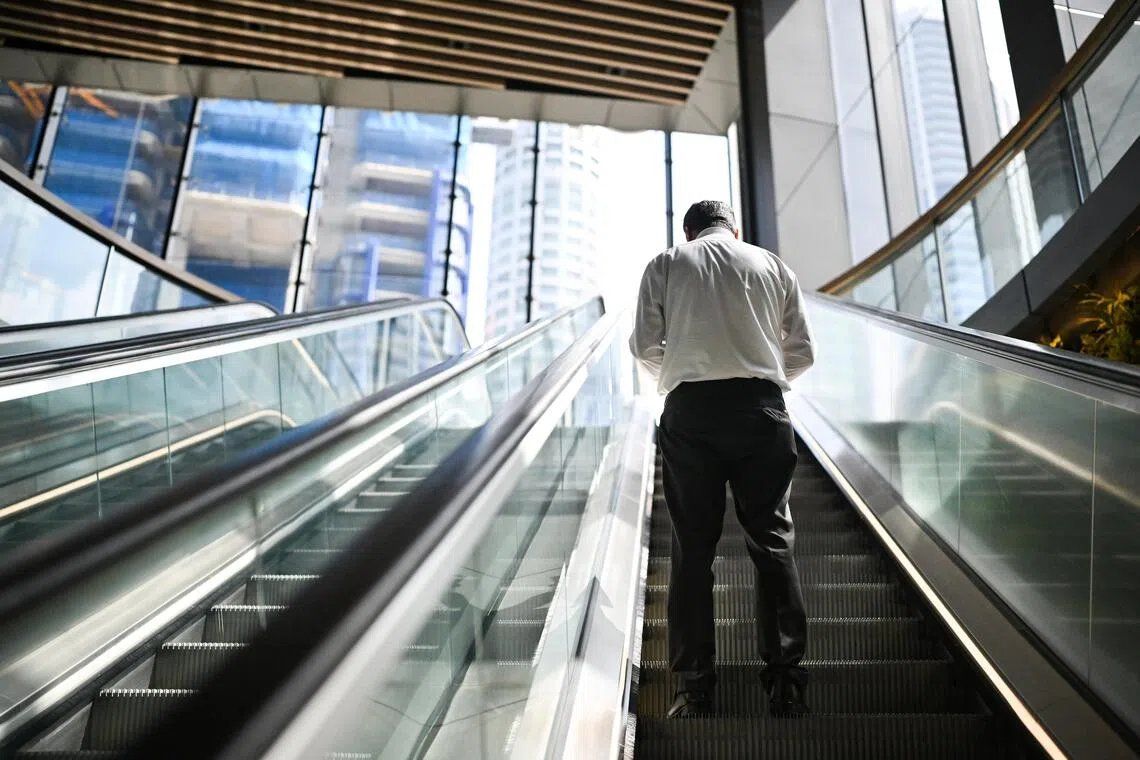
South Korea has stumbled upon an unusually divisive urban question that has little to do with traditional politics yet captures fundamental tensions about public space and personal convenience. A government survey spanning 1,000 adults across seven major cities has revealed that the nation is almost perfectly cleaved in half over escalator behaviour, with 50.1 per cent supporting the practice of standing on one side to leave the other open for those rushing, while 49.9 per cent advocate for passengers to remain stationary in two complete lines. This statistical near-parity has resurrected what experts describe as a decades-old commuter debate, simultaneously challenging long-held assumptions about whether one-sided standing genuinely improves travel efficiency.
The intellectual battleground expanded dramatically during an August 29 government forum in Seoul where approximately 200 citizens and specialists engaged in detailed discussions about escalator safety and capacity. The debate transcended simple preference, becoming a sophisticated examination of competing public values. Jang Gye-ryeon, a public administration researcher at the Korea Institute of Industrial Relations, articulated this complexity by arguing that the discussion cannot be reduced to identifying a single correct answer. Instead, Jang emphasised the necessity of interrogating whose efficiency is being prioritised and within what specific spatial and temporal contexts that efficiency operates. This perspective fundamentally reframes the escalator question from a matter of personal habit into one requiring nuanced consideration of collective welfare across different scenarios.
The efficiency argument presents genuine complexity that defies intuitive resolution. While an individual commuter clearly benefits from walking rather than standing, the aggregate capacity for moving large crowds may work differently. Research at a congested British railway station demonstrated that passenger capacity increased between 25 and 30 per cent when commuters occupied both sides of the escalator rather than leaving one side exclusively for walkers. A limited trial at Guri Station near Seoul produced comparable findings, with 190 people successfully using an escalator during a set period under two-sided standing conditions, compared with only 164 under the one-side arrangement. These experiments suggest that the intuitive advantage of walking may actually impede overall throughput when viewed through a systems-wide lens. Nevertheless, researchers acknowledged significant limitations in their investigations, urging caution before drawing definitive conclusions applicable to all escalator environments across the country.
Beyond efficiency metrics, biomechanical and structural safety considerations inject substantial weight into the debate. Sensor-based testing conducted on escalator mechanisms revealed that downward walking generates impact forces equivalent to approximately 2.01 times a person's body weight, while ascending walking produces forces around 1.54 times body weight. Heo Yun-seop, a professor at Korea Lift College, explained that repeated stress from walking combined with asymmetrical loading from one-sided standing could potentially compromise specific escalator components over extended periods. While definitive causal links between such standing practices and mechanical failures remain inadequately documented, the theoretical risk to equipment longevity and maintenance expenditure presents a legitimate concern for transit authorities managing extensive escalator networks across densely populated metropolitan areas.
South Korea's relationship with this question extends far deeper than current debates suggest, rooted in specific historical policy shifts that created the contemporary confusion. Beginning in 1998, government authorities actively promoted one-sided standing as part of a broader urban modernisation strategy. This initiative gained particular momentum around the 2002 FIFA World Cup, when the practice became institutionalised nationwide as a mechanism for accommodating rushed passengers within crowded transport hubs. However, as accident statistics accumulated and equipment maintenance concerns mounted, officials reversed course between 2009 and 2014, instead promoting two-line standing arrangements. Since 2015, the government has largely withdrawn from prescribing any particular method, instead emphasising three fundamental safety principles: maintaining contact with handrails, refraining from walking or running, and remaining within designated safety zones. This oscillating policy trajectory may substantially explain the contemporary standoff, as citizens experienced contradictory official guidance across their lives.
Accident data underscores why authorities have struggled to arrive at consistent guidance. Between 1993 and 2025, records indicate that user behaviour was responsible for 72.3 per cent of recorded escalator incidents, suggesting that human conduct patterns represent the dominant risk factor. Demographically, individuals aged 60 and older comprised 53.3 per cent of all accident victims, highlighting particular vulnerability among elderly commuters. These statistics demonstrate that escalator safety cannot be treated as a peripheral concern but rather as a significant public health matter requiring evidence-based policy responses. The concentration of incidents among older citizens gains additional relevance within Southeast Asia, where multiple nations including Malaysia face rapidly ageing populations increasingly dependent on public transport infrastructure.
The August 29 forum itself demonstrated that extended deliberation can shift but not resolve underlying divisions. Before discussions commenced, 45.9 per cent of participants supported two-line standing while only 13.4 per cent favoured one-side standing for pedestrians. After extensive expert presentations and citizen dialogue, support for one-sided standing rose substantially to 29.9 per cent, though support for two-line standing declined to 31.4 per cent. Remarkably, the largest constituency that emerged from the discussions—representing 38.1 per cent of participants—favoured context-dependent approaches, advocating that rules should vary according to specific location characteristics and prevailing crowd densities. This outcome suggests that South Korean commuters increasingly recognise the necessity of situational flexibility rather than universal prescriptions.
The forum's inconclusive result reflects a deeper reality about urban transport governance in contemporary societies. Public infrastructure decisions increasingly involve competing legitimate interests that cannot be perfectly reconciled through a single policy approach. Individual speed and convenience inevitably conflict with collective capacity and safety when resources are genuinely limited. Southeast Asian cities, many grappling with explosive urban growth and ageing demographics comparable to South Korea's, will likely encounter similar policy dilemmas as they upgrade and expand escalator installations. The South Korean experience suggests that transparent public dialogue, while potentially uncomfortable and lengthy, may produce more resilient outcomes than top-down mandates that fail to account for citizen preferences and evolving circumstances.
Interior Minister Yun Ho-jung responded to the forum's conclusions by committing the government to incorporate citizen input into future escalator safety enhancement initiatives. This pledge suggests a shift toward more participatory governance models rather than administrative decree, potentially reflecting broader political trends across advanced democracies. For neighbouring Southeast Asian nations, the South Korean case study offers valuable lessons about the complexity of seemingly simple infrastructure questions and the importance of engaging diverse stakeholder perspectives before implementing transport policies. The escalator debate, while superficially trivial, ultimately illuminates fundamental questions about how cities balance individual convenience against collective efficiency, and how governments can develop policies that remain responsive to both technical evidence and democratic preferences.

