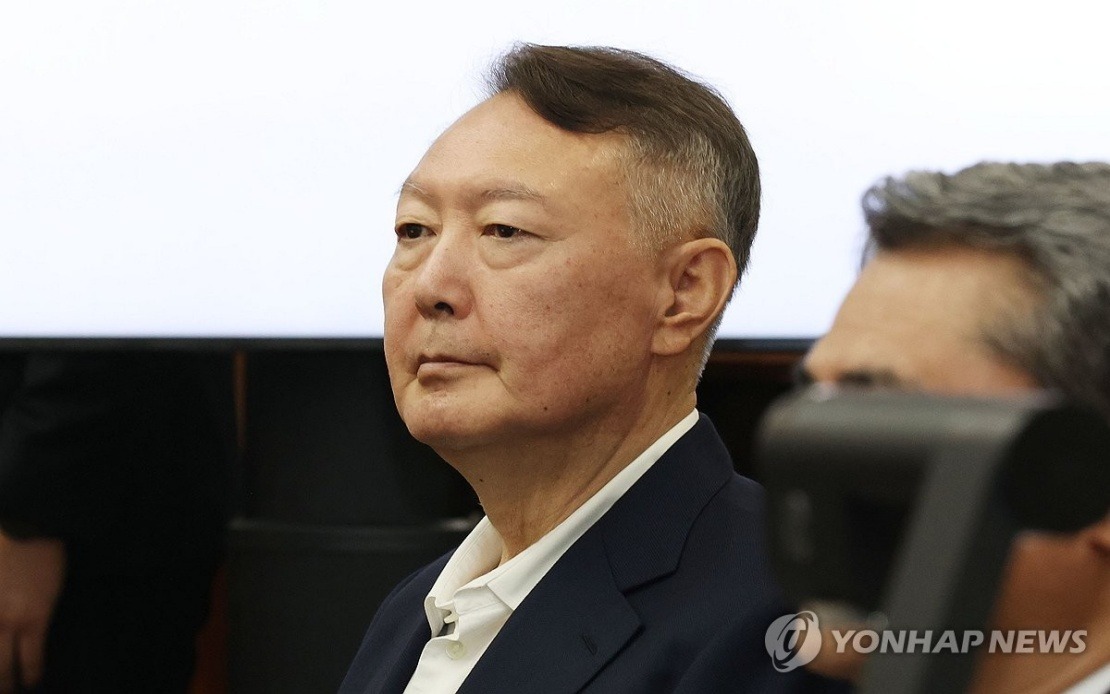
South Korea's former President Yoon Suk Yeol has been convicted and sentenced to two years imprisonment by the Seoul Central District Court following his acceptance of undisclosed political support in the form of complimentary opinion polls, marking another significant legal setback for the politically embattled ex-leader. The conviction on Monday represents the latest in a cascade of criminal charges that have unfolded since his dramatic 2024 martial law declaration collapsed, demonstrating the precarious legal position of former heads of state even after leaving office.
The court determined that between April 2021 and March 2022, Yoon received at least 14 opinion polls valued at approximately 270 million won (US$180,100) without payment from Myung Tae-kyun, a political operative with significant influence in conservative circles. Rather than treating these polling services as innocent gifts, judicial authorities characterised them as unlawful political contributions that contravened South Korea's stringent campaign finance regulations. The court simultaneously ordered the confiscation of 13.96 million won in illicit gains, underscoring the financial dimension of the wrongdoing.
The underlying transaction involved a straightforward political quid pro quo arrangement, according to the court's factual findings. Prosecutors demonstrated that Yoon pledged support for former Representative Kim Young-sun's nomination as a conservative People Power Party parliamentary candidate in June 2022 by-elections directly in exchange for Myung's ongoing provision of polling data. This arrangement violated the fundamental principle that politicians cannot accept valuable goods or services in return for political favours, a cornerstone of democratic campaign finance integrity that South Korean lawmakers have reinforced through legislation.
Myung Tae-kyun, the power broker who supplied the polling materials, received an 18-month sentence on parallel charges. The special counsel's office had pursued more aggressive sentencing recommendations, seeking four years imprisonment for Yoon and three years for Myung, suggesting prosecutors viewed the misconduct as particularly serious. However, the court settled on substantially reduced terms, possibly reflecting judicial discretion regarding the severity of the underlying breach and Yoon's overall culpability compared to other pending allegations.
This conviction creates a striking judicial divergence within the same family, as Yoon's wife, former First Lady Kim Keon Hee, was acquitted on identical charges in April by the Seoul High Court. That appellate panel reasoned that because Myung distributed identical polling services to multiple recipients, the ex-president's household could not be characterised as profiting from the arrangement in the manner the law prohibits. The appellate court's logic emphasised that widespread distribution undermined any claim of exclusive, personally-tailored benefit. Prosecutors have already appealed that acquittal, seeking to reverse the exoneration.
The legal proceedings expose significant tensions in how South Korean courts interpret political finance violations when multiple beneficiaries receive identical services. The different outcomes for Yoon and his wife highlight interpretive complexity: one court found personal enrichment despite broad distribution, while another denied it for the same reason. This disagreement may ultimately require resolution by higher appellate authority to establish consistent jurisprudence guiding future campaign finance cases.
Yoon's mounting legal jeopardy extends far beyond this narrow opinion poll case. In February, he was sentenced to life imprisonment following conviction on insurrection charges related to his brief imposition of martial law in December 2024, an extraordinary penalty reflecting judicial assessment of that action as a fundamental threat to democratic governance. The opinion poll conviction represents a secondary front in his legal battles, rooted in conduct predating his presidency but prosecuted only after he left office, consistent with South Korean practice of subjecting ex-presidents to intensive post-tenure scrutiny.
The case reflects broader regional patterns regarding presidential accountability in East Asia. Unlike some neighbouring democracies where former leaders have negotiated immunity or been pardoned, South Korea maintains robust mechanisms for pursuing high-level officials through courts. This approach generates both legitimacy for rule-of-law principles and significant political polarisation, as supporters characterise prosecutions as weaponised justice while critics defend them as essential accountability measures. For Malaysian observers, the contrast with regional norms illustrates how different democracies calibrate executive accountability and popular expectations regarding elite privilege.
The special counsel team's aggressive prosecution strategy signals that South Korea's political establishment maintains strong institutional resistance to campaign finance violations among senior leaders. By pursuing multiple distinct charges across different prosecutorial cases, authorities have created cumulative jeopardy that substantially limits Yoon's prospects for avoiding significant punishment. The staggered trials also extend political uncertainty, as each conviction potentially influences public perception and jury sentiment regarding outstanding charges.
Looking ahead, the opinion poll verdict will likely influence sentencing calculations in other Yoon prosecutions, as courts weigh patterns of alleged misconduct and assess overall character and conduct. The case also signals to South Korea's political elite that post-presidential vulnerabilities extend to campaign-era behaviour previously considered routine, potentially reshaping future campaign practices as politicians calculate expanded legal risk. For a region watching South Korea's democratic consolidation, these proceedings demonstrate how judicial independence can operate even against powerful former executives, though questions persist about whether accountability applies equally across the political spectrum.

