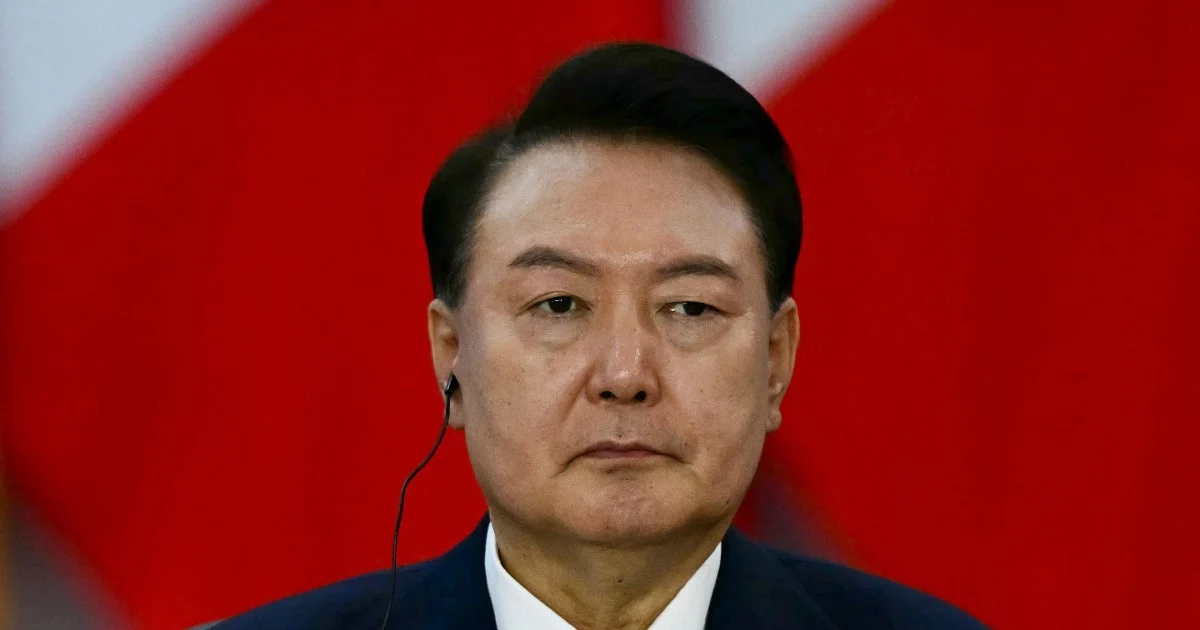
South Korea's Constitutional Court will deliver its judgment on Wednesday in the consequential impeachment trial of former president Yoon Suk Yeol, who faces serious allegations stemming from his unsuccessful attempt to impose martial law and the governmental turmoil that ensued. The ruling carries profound implications for South Korea's constitutional democracy and legal precedent, with the nine-judge panel expected to determine whether Yoon's actions breached the constitution and warrant his removal from power or exoneration.
The case represents one of the most significant constitutional challenges in recent South Korean history. Yoon's December 2024 declaration of martial law triggered a nationwide political crisis, sparking urgent parliamentary sessions and mass public demonstrations. Within hours, legislators voted to block the measure, forcing Yoon to rescind the declaration. However, the brief period of military mobilisation and its swift reversal exposed fundamental fault lines within South Korea's political system and raised urgent questions about presidential authority and institutional checks and balances.
The Constitutional Court's investigation has scrutinised whether Yoon exceeded his constitutional powers by declaring martial law without parliamentary consent and whether his actions endangered democratic governance. Legal experts have divided sharply over whether the declaration constitutes an impeachable offence or represents overreach by prosecutors seeking to politically criminalise a controversial but potentially lawful decision. The court's interpretation will establish precedent for what actions sitting presidents may face criminal liability for, particularly regarding emergency powers.
The political ramifications extend beyond Yoon himself. His conservative party faces internal fracturing over the crisis, whilst the opposition Democratic Party has pressed for accountability. Public opinion remains fractured, with supporters viewing Yoon as the victim of partisan prosecution and detractors seeing his actions as an assault on constitutional order. The verdict will likely either stabilise South Korea's institutional framework or intensify polarisation depending on the court's reasoning and outcome.
International observers have monitored the case closely, as it tests whether mature democracies can hold former executives accountable through independent judicial processes. South Korea's Constitutional Court has previously dissolved political parties and removed officials through impeachment proceedings, establishing its role as a critical guardian of constitutional limits. The court's independence and credibility rest heavily on its handling of Yoon's case, particularly given the unprecedented nature of the martial law attempt.
The trial has consumed South Korea's political landscape for weeks, with prosecutors and Yoon's legal team submitting extensive arguments about the legality and proportionality of his declaration. Yoon's supporters have contended that national security concerns justified emergency measures, whilst critics argue that he weaponised presidential powers to suppress parliamentary opposition. The court must navigate this constitutional minefield whilst interpreting the precise boundaries of emergency governance under South Korea's 1987 democratic constitution.
For Malaysia and the wider Southeast Asian region, the case offers instructive lessons about institutional resilience during political upheaval. Malaysia has experienced multiple constitutional crises and changes of government, making South Korea's experience relevant to understanding how courts balance executive power against legislative oversight. The verdict will provide insights into how developed democracies manage presidential overreach and whether judicial institutions can maintain legitimacy whilst policing elected executives.
South Korea's economic stability has been largely shielded from the political turbulence, though prolonged uncertainty poses risks to investor confidence and governance. The Constitutional Court's decision represents an opportunity to restore institutional clarity and rebuild trust in South Korea's democratic processes. A swift, reasoned verdict addressing the core constitutional questions could help the nation move forward, whilst ambiguous or divisive reasoning might perpetuate political tensions.
The outcome will also influence how Yoon faces potential criminal prosecution beyond the Constitutional Court's domain. Depending on whether he is convicted or acquitted in this impeachment trial, prosecutors may pursue separate charges related to insurrection or abuse of power in civilian courts. Multiple legal forums and proceedings stretch South Korea's judicial system and prolong the country's political paralysis.
Regional analysts note that South Korea's constitutional crisis occurs amid heightened security tensions on the Korean Peninsula, with North Korea conducting weapons tests and regional powers monitoring stability. The uncertainty surrounding Yoon's political fate could affect policy consistency on defence and international relations, though the Constitutional Court's verdict should bring sufficient closure to enable governmental normalcy.
As the Constitutional Court prepares to announce its decision, South Korea awaits a judgment that will define not only Yoon's personal legal fate but also the bounds of presidential authority in one of Asia's most developed democracies. The ruling will resonate across Southeast Asia and beyond, serving as a bellwether for how constitutional courts navigate the intersection of emergency governance, political polarisation, and democratic accountability in the twenty-first century.

