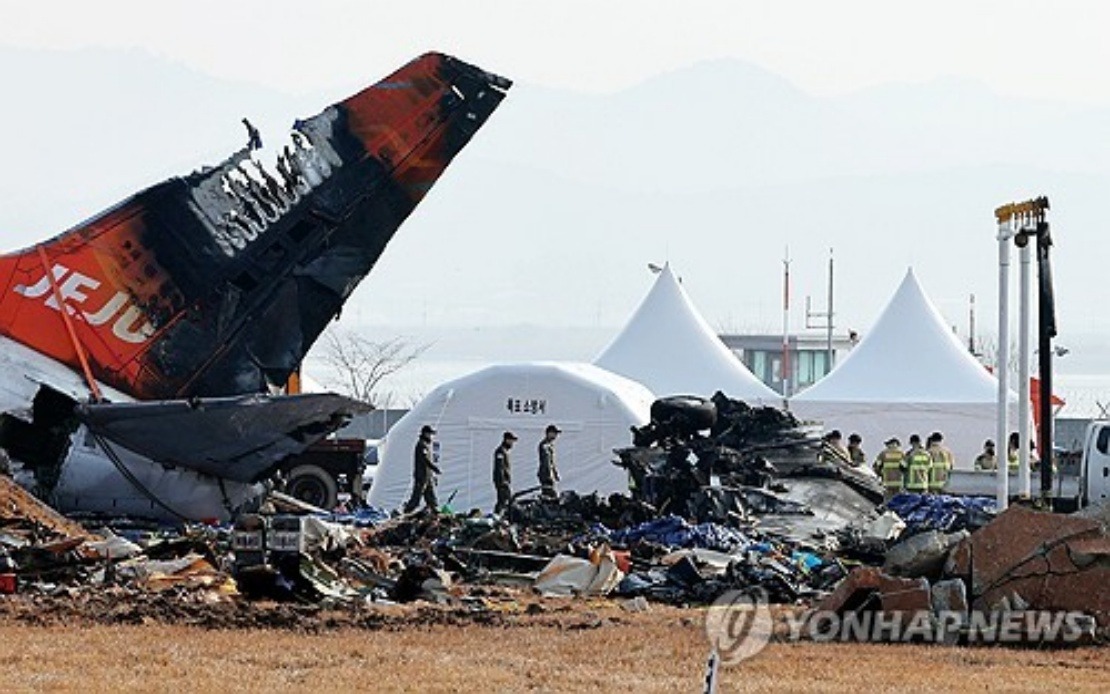
South Korean police have moved to prosecute seven transport ministry officials accused of orchestrating a cover-up following the catastrophic Jeju Air crash of December 29, 2024. The referral came on Tuesday as a special police investigation team concluded that the officials had deliberately misrepresented the safety status of critical aircraft navigation equipment in their public communications. The crash, which claimed 179 lives when a passenger aircraft made an emergency landing at Muan International Airport in South Korea's southwestern region, remains one of the nation's deadliest aviation disasters, and investigators have now turned their focus toward potential misconduct by state officials in the aftermath.
The investigation centres on allegations that the seven officials drafted and distributed press releases containing false statements about a localiser—a sophisticated navigation system that guides aircraft during landing procedures. According to police findings, the officials claimed in these public communications that the equipment had been installed in full compliance with international and domestic safety regulations, even though they possessed knowledge that it did not meet all required standards. This discrepancy between official statements and actual conditions suggests a deliberate effort to shield the transport ministry from potential liability and public scrutiny in the immediate aftermath of the disaster.
The Jeju Air incident unfolded on December 29, 2024, when Korean Air Flight 2216 struck a concrete structure at Muan International Airport during an emergency landing approximately 290 kilometres south of Seoul. The concrete mound housed the localiser system, and investigators have focused considerable attention on whether the placement and condition of this navigation equipment exacerbated the severity of the accident. The aircraft's attempt to land without landing gear deployed had already created an extraordinarily dangerous situation, but the presence of the obstruction transformed what might have been a survivable emergency into a tragedy of historic proportions within South Korea's aviation history.
For Malaysian and regional observers, this case carries significant implications regarding airport safety standards and regulatory oversight. The Jeju Air incident highlights how navigation systems—critical infrastructure that guides aircraft operations—can become liabilities when their installation or maintenance does not strictly adhere to international safety protocols. Muan International Airport, like many major regional hubs across Southeast Asia, relies on these localiser systems as essential components of instrument landing systems that enable safe operations in poor visibility conditions. The South Korean investigation reveals that bureaucratic corners may be cut or cover-ups attempted when accidents occur, raising questions about transparency and accountability in aviation authorities across the region.
The localiser's unconventional placement within a concrete structure rather than in open terrain appears to have been a significant contributing factor to the high casualty count. Had the aircraft impacted open ground or water during its belly landing, survival rates would likely have been substantially higher. This positioning raises fundamental questions about whether airport infrastructure modifications are adequately reviewed by independent safety bodies or whether cost considerations and construction practicalities sometimes override safety engineering principles. The referral of officials to prosecution suggests that senior figures in South Korea's transport bureaucracy may have been aware of these concerns yet chose to minimize them publicly.
The special police investigation team's determination that officials knowingly distributed false information represents a serious breach of public trust during a national tragedy. When an aviation disaster occurs, transparency and honest assessment of contributing factors become paramount not only for grieving families but also for identifying systemic weaknesses that could be replicated at other airports. The alleged cover-up prevented a complete public understanding of the accident's causes during the critical period immediately following the crash, potentially delaying necessary corrective measures that could protect future passengers at Muan or similar airports elsewhere.
For regional aviation regulators and airport operators, this Korean development underscores the importance of maintaining robust, independent oversight mechanisms that are insulated from political and bureaucratic pressure to downplay safety deficiencies. Many Southeast Asian airports have modernized their navigation systems in recent years, and the Jeju Air case offers cautionary lessons about how to handle safety issues transparently rather than defensively. The involvement of transport ministry officials at a senior level in allegedly crafting misleading communications demonstrates how institutional cultures can prioritize reputation management over public safety, a risk that exists regardless of whether an airport is in developed or developing nations.
The referral to prosecutors marks a significant escalation in the accountability process surrounding the Jeju Air crash. While criminal charges against aircraft operators and maintenance personnel might be expected following major accidents, prosecution of government officials for misrepresenting safety conditions is less common and signals serious institutional failures. The investigation suggests that multiple officials at potentially different levels of the ministry hierarchy were involved in coordinating the false narrative, indicating this was not an isolated mistake but rather a deliberate, systematic effort to conceal information from the public and potentially from other investigating authorities.
As South Korea's criminal justice system proceeds with these prosecutions, the outcomes could have profound effects on how other nations approach accountability following aviation disasters. If the courts determine that high-ranking bureaucrats bear criminal responsibility for misrepresenting safety conditions, this could establish important precedent regarding official liability during public health and safety crises. The case also demonstrates how democratic accountability mechanisms, independent investigative journalism, and institutional checks and balances can eventually surface uncomfortable truths even when powerful government agencies attempt to control narratives around major incidents.

