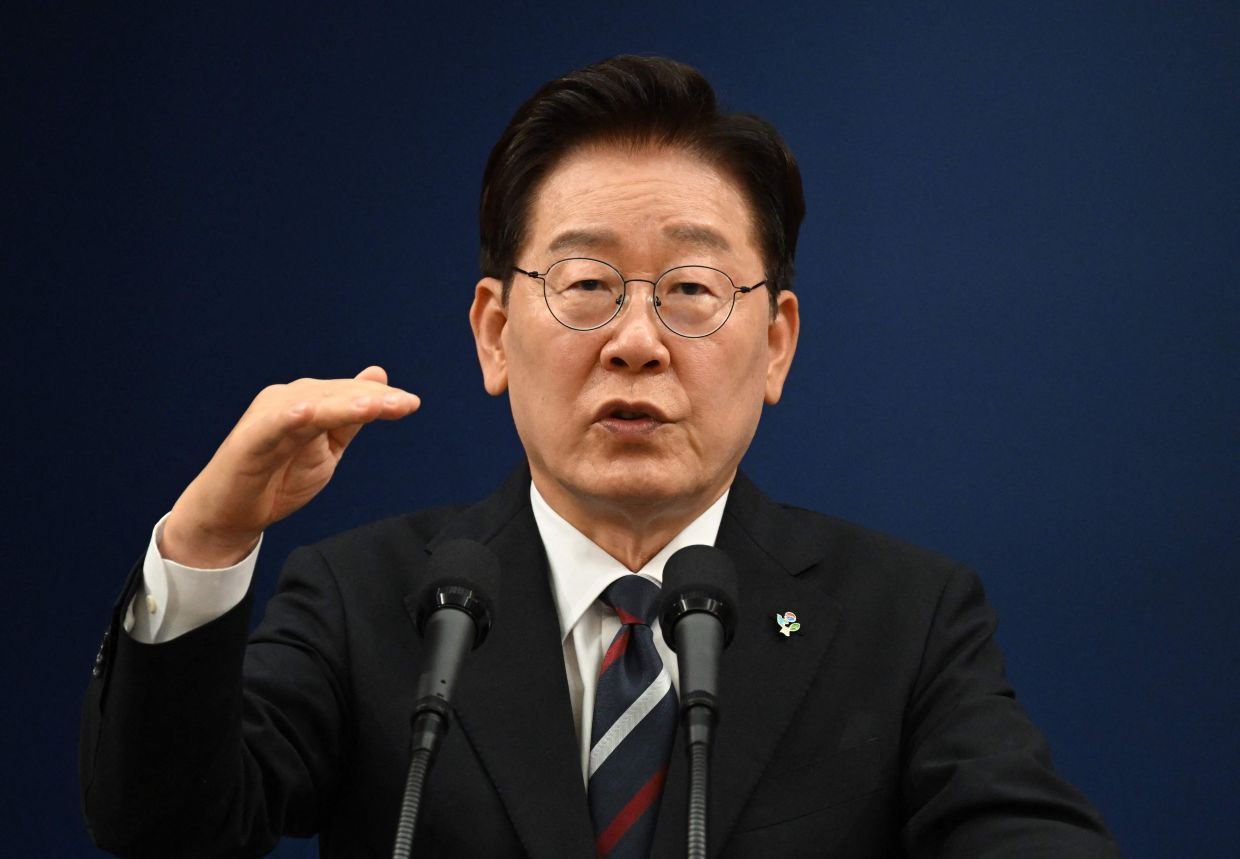
South Korean President Lee Jae Myung faces a significant political milestone as his approval rating slipped below the 50 per cent threshold for the first time since assuming office, according to polling data released on June 22. The Realmeter survey recorded his approval at 46.7 per cent, representing a sharp decline of 4.8 percentage points in just one week and marking five consecutive weeks of erosion in public support. This crossover into negative territory signals mounting public discontent barely three weeks into his presidency and raises questions about whether the momentum from his electoral victory can be recovered.
The trajectory of Lee's approval has been distinctly downward over the past six weeks. Beginning at a respectable 60.5 per cent in mid-May, his ratings have slid steadily through 59.3 per cent, 59.1 per cent, and 55.2 per cent before arriving at the current 46.7 per cent. Meanwhile, disapproval has climbed to 49.7 per cent, technically ahead of approval ratings for the first time, though the margin remains within the survey's margin of error of plus or minus 2 percentage points. The remaining 3.6 per cent of respondents expressed uncertainty about their assessment. This pattern reveals not merely a weekly fluctuation but a sustained loss of confidence among the electorate.
Comparative analysis with Lee's predecessors shows his situation, while concerning, developing somewhat faster than historical norms. Former President Yoon Suk Yeol experienced a similar approval-to-disapproval crossover in June 2022, just six weeks into his term. However, former presidents Park Geun-hye and Moon Jae-in took longer to reach this point, with the crossover occurring approximately 16 months and 19 months into their respective presidencies. While Lee's rapid descent appears steeper than his immediate predecessor Yoon, the broader pattern suggests that Korean voters have become quicker to register dissatisfaction with executive performance in recent political cycles.
Two distinct issues have combined to drive the decline. The June 3 local elections, which occurred just days before the latest polling period, were marred by significant ballot shortages that prompted widespread criticism of the government's election management capabilities. Simultaneously, the ruling Democratic Party of Korea has been consumed by internal disputes over its leadership structure, with a convention scheduled for August 17 to elect a new party chair. Realmeter explicitly linked both factors to the erosion, noting that demands for accountability regarding the election administration failures have coincided with escalating factional tensions that undermine party cohesion and thus the government's broader political credibility.
Yet the polling context includes some counterbalancing positive developments. Lee's recent European tour appears to have generated favourable international perception, and the Korean composite stock index broke through the 9,000-point barrier, reflecting improved market sentiment. Despite these achievements, the pollster determined that the election management crisis and internal party divisions have overshadowed such accomplishments in shaping public opinion. This suggests that administrative competence in executing core government functions—such as organising elections—carries greater weight with voters than diplomatic successes or stock market performance in determining overall satisfaction.
Geographic analysis reveals significant regional variation in approval decline, with the steepest drops occurring in constituencies where Lee should theoretically enjoy strongest support. The conservative strongholds of Daegu and North Gyeongsang Province experienced a 9.9 percentage point plunge to just 34.6 per cent approval, indicating that even traditional conservative voters are withdrawing confidence. In Greater Seoul—comprising Incheon, Gyeonggi Province, and the capital itself—approval fell 7.6 percentage points in both Incheon and Gyeonggi to 44.8 per cent, and similarly declined 7.6 percentage points in Seoul to 39.8 per cent. These declines in the country's economic heartland and political centre carry particular significance for Lee's ability to govern effectively.
Demographic fractures within Lee's coalition illuminate deeper structural vulnerabilities. Among moderate voters, positive assessments dropped 4.9 percentage points to 47.5 per cent, a category traditionally considered pivotal in determining electoral outcomes in South Korea. Support from liberal voters remained substantially higher at 80.4 per cent but still declined 3.2 percentage points from the previous week. Conservative voters, Lee's nominal base, showed minimal further erosion, declining just 0.7 percentage points to 19.8 per cent, suggesting they have already largely abandoned him. The collapse of moderate support is particularly concerning because these swing voters typically determine competitive elections and policy feasibility.
The presidential office responded to the polling data with statements emphasising humility and renewed attentiveness to public concerns. Cheong Wa Dae acknowledged that approval fluctuations reflect public assessment of both economic conditions and broader governance conduct, committing to take results seriously and strengthen focus on citizens' preoccupations and aspirations. This measured response attempted to reframe the decline as valuable feedback rather than political crisis, though such messaging cannot directly reverse underlying sentiment without substantive policy adjustments addressing the identified grievances.
Parallel party-level polling reveals a marginally brighter picture for the ruling Democratic Party, though with caveats. Support for the Democratic Party rose 2.1 percentage points to 40.1 per cent, while the opposition People Power Party slipped 2 percentage points to 42.3 per cent. The Democratic Party's modest recovery has been attributed to a crisis-management phase following bipartisan agreement to launch a National Assembly investigation into the election administration failures. However, the opposition People Power Party faces mounting pressure from younger voters, with support among those in their twenties dropping 10.5 percentage points to 48.6 per cent and falling 5.1 percentage points among those in their thirties to 47.4 per cent. This exodus of youth support from the conservative camp suggests longer-term demographic realignment.
The Realmeter survey methodology involved 2,517 nationwide voters aged 18 and above, conducted between June 15 and 19 using an automated response system, providing a reasonably robust sample across the polling period. The separate party preference survey encompassed 1,001 voters aged 18 and older on June 18 and 19. These methodologies allow for confidence in the directional findings, though individual week-to-week fluctuations require contextualisation within broader trends rather than overinterpretation as sudden shifts in underlying political alignment.
For Malaysian observers monitoring regional political developments, Lee's sliding approval ratings offer instructive lessons about the volatility of contemporary electoral mandates and the enduring sensitivity of East Asian voters to administrative competence as a legitimacy measure. The rapid erosion despite positive economic indicators and foreign policy achievements suggests that technical execution of core state functions—particularly election management—remains foundational to maintaining democratic legitimacy. Additionally, the dominance of factional disputes within the ruling coalition as a continuing source of voter disaffection parallels patterns seen in other multiparty democracies, including within Malaysian politics, where internal party cohesion directly influences public confidence in government. The coming weeks will clarify whether Lee can stabilise his position through addressing the election management crisis and party reform ahead of the August leadership convention, or whether the downward trajectory will persist.