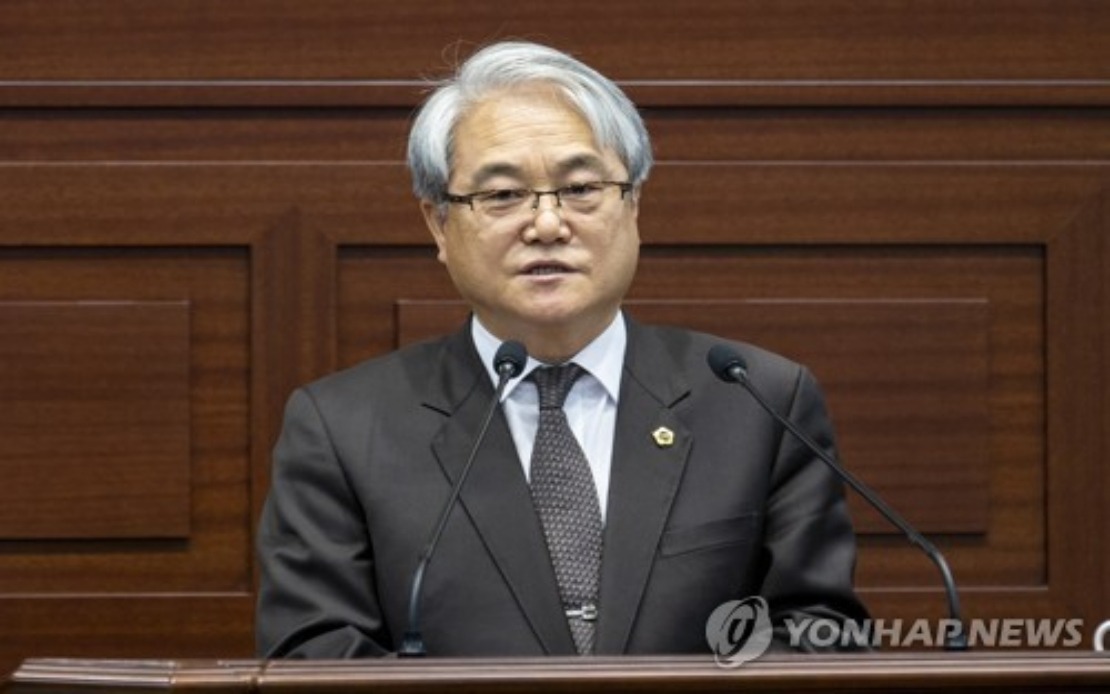
The discovery of Kim Ha-soo's body on a mountainside in Cheongdo, a southeastern county in South Korea, on Monday morning marks a dramatic conclusion to an escalating corruption scandal that had begun unravelling his political career. Rescue personnel located the deceased former county administrator around 7 a.m. on July 13, alongside what appeared to be a handwritten note, according to police statements relayed through Yonhap News Agency. The circumstances surrounding the discovery have raised significant questions about the intersection of legal accountability and personal crisis in South Korea's provincial administration.
Kim's tenure as county chief, spanning from 2022 to early 2024, had recently come under intense scrutiny following allegations of widespread misconduct. The primary charge levelled against him involved the receipt of illicit payments from a government employee in exchange for facilitating a work promotion—a textbook case of quid pro quo corruption that strikes at the heart of merit-based civil service principles. This accusation represented only one strand of the broader investigative net that had been cast around his administrative record.
The bribery investigation took on additional complexity when the man suspected of orchestrating and delivering the corrupt payments was himself found dead previously, according to police records. This earlier death within the investigation chain has added layers of intrigue to an already sensitive case, suggesting deeper entanglement in what may have constituted a wider network of corrupt transactions rather than isolated incidents. Such developments often signal more systematic breaches of administrative integrity within local government structures.
Beyond the financial improprieties, Kim faced separate criminal proceedings initiated by prosecutors for an alleged breaking and entering incident in January. This charge involved an unauthorized intrusion into the residence of a nursing home director—a seemingly distinct violation from the corruption allegations, yet one that paints a picture of an official increasingly disconnected from legal boundaries. The multiplicity of allegations across different spheres of conduct suggests a pattern of behaviour that extended well beyond conventional white-collar crime.
For Malaysian observers, this case illuminates how anti-corruption frameworks operate across different governance systems. South Korea has invested heavily in transparency mechanisms and investigative capacity over the past two decades, following its own historical struggles with endemic corruption. The fact that such detailed investigations proceed even at the county level demonstrates institutional commitment to accountability, though the tragic endpoint raises difficult questions about the psychological toll of legal processes on individuals facing comprehensive investigation.
The discovery of an apparent suicide note alongside Kim's body introduces the tragic human dimension often obscured in discussions of corruption scandals. While corruption itself represents a betrayal of public trust and causes demonstrable harm to citizens relying on equitable governance, the personal desperation that may have driven an individual toward taking their own life complicates any straightforward moral assessment. South Korea, like several developed nations, grapples with high suicide rates, and high-profile cases involving legal pressure sometimes intersect with mental health crises.
From a regional governance perspective, this incident underscores persistent vulnerabilities in local administration across East and Southeast Asia. County and district-level officials often operate with less oversight than national-level counterparts, and the incentive structures in some jurisdictions can create environments where corrupt transactions appear manageable risks. The investigation into Kim's conduct suggests that South Korean authorities maintained sufficient scrutiny to identify and prosecute such breaches, even if the ultimate resolution proved tragic.
The broader implications for civil service integrity in the region merit consideration. Countries throughout Southeast Asia have invested in anti-corruption agencies and training programmes, yet local government corruption remains a persistent challenge. Cases like Kim's demonstrate that legal consequences exist and are pursued, potentially serving as deterrents—though clearly not sufficiently in all circumstances. The contrast between institutional capacity and individual compliance remains a crucial gap in governance reform.
Kim's earlier life as county chief from 2022 until his recent suspension would have provided multiple opportunities for colleagues and supervisors to observe warning signs of ethical breaches. The convergence of bribery charges, the separate breaking-and-entering allegation, and ultimately the fatal outcome suggests either systematic overlooking of red flags or a rapid deterioration in professional conduct that escaped earlier notice. Understanding how such situations develop could inform better preventive mechanisms in other jurisdictions.
The incident also raises questions about the adequacy of support systems for officials facing serious allegations. While accountability measures are essential, some governance reformers argue that alternative accountability pathways—including early intervention when ethical lapses emerge, rehabilitation programmes, and mental health support—might prevent some tragic outcomes while still maintaining public integrity standards. This remains contested terrain in policy debates across the region.
As South Korean authorities continue their investigation into all circumstances surrounding Kim's death, regional governments will likely review their own oversight mechanisms at local administrative levels. The case serves as a sobering reminder that corruption investigations, whatever their necessity, intersect with human vulnerability in ways that require careful institutional attention beyond purely punitive measures.

