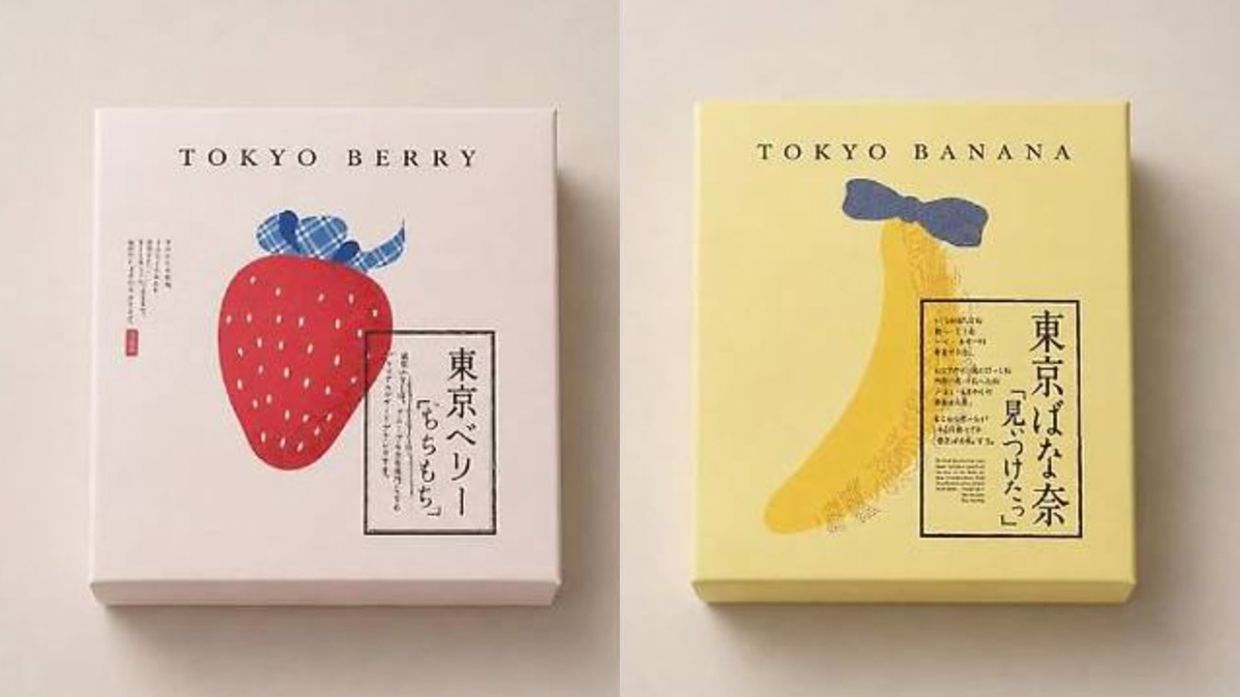
A newly launched South Korean dessert brand has found itself embroiled in an intellectual property dispute after consumers accused it of closely imitating the design and marketing of Tokyo Banana, a popular Japanese confectionery produced by Grapestone. The controversy centres on Tokyo Berry, which has been operating pop-up stores across major South Korean department stores including Lotte and Shinsegae, drawing sizeable crowds despite—or perhaps because of—the alleged resemblance to its Japanese counterpart.
The dispute gained traction when social media users began posting side-by-side comparisons of the two brands' packaging, prompting wider public scrutiny. Tokyo Banana, a banana-shaped sponge cake that has become iconic in Japan's confectionery market, appears to have inspired Tokyo Berry's product design and overall branding approach. What began as grassroots consumer observation has snowballed into a significant public relations crisis for the South Korean brand, with department store officials now confirming that all future Tokyo Berry pop-up store events have been cancelled.
Tokyo Berry's marketing strategy appears to have inadvertently—or deliberately—capitalised on the Japanese brand's reputation. The company promoted its products using language emphasising "capturing the flavours of seasonal fruits and the essence of Tokyo," phrasing that many consumers interpreted as suggesting a Japanese origin or affiliation. This marketing approach proved particularly effective in attracting customers in South Korea, where Japanese food brands often command premium positioning and consumer loyalty. However, this same strategy backfired once consumers discovered that Tokyo Berry was in fact a domestically created brand.
The revelation has triggered broader criticism beyond mere packaging concerns. Online commentators, particularly in South Korea, have characterised the episode as a "national embarrassment," reflecting heightened sensitivities around intellectual property protection and national pride in the region. Such sentiments underscore the complex dynamics between South Korea and Japan regarding consumer culture, product innovation, and branding authenticity. The controversy taps into deeper anxieties about South Korean brands' international standing and the importance of establishing genuine market differentiation.
Furthermore, accusations have extended to Tokyo Berry's internal packaging materials, with consumers alleging that the brand has also mimicked design elements from Hanjungsun, a premium Korean dessert manufacturer known for utilising hanji—traditional Korean paper—to wrap its chapssaltteok rice cakes. This dual allegation complicates the narrative, suggesting that Tokyo Berry may have drawn inspiration from multiple established brands rather than innovating independently. The involvement of a respected Korean brand in the controversy adds another layer of concern, as it raises questions about the boundaries between legitimate inspiration and problematic imitation within the industry.
In response to mounting public pressure, Tokyo Berry has attempted damage control by removing promotional posts from its Instagram account and disabling comments on remaining content. These defensive measures, while common in digital crisis management, often serve to amplify rather than mitigate public concern, as they signal acknowledgment of wrongdoing without providing substantive explanation or remediation. The brand's silence has left consumers and observers to speculate about the intentionality behind the design similarities and marketing choices.
Grapestone, the Japanese operator of Tokyo Banana, has confirmed that it is examining the matter formally. The company issued a carefully worded statement indicating that the issue had been escalated to relevant departments and that a detailed review was underway. This measured response suggests that Grapestone is considering potential legal action or formal complaints, though the practical mechanisms for pursuing intellectual property claims across borders in food and beverage markets can be complex and costly.
For the broader Southeast Asian region, this incident offers instructive lessons about brand protection and the reputational risks associated with perceived imitation. As Asian consumer brands increasingly compete on global stages, establishing authentic identities and respecting existing intellectual property becomes commercially and strategically essential. The case also highlights the power of social media in rapidly mobilising consumer sentiment and holding brands accountable for practices that might once have escaped widespread notice.
The controversy reflects evolving consumer expectations regarding transparency and originality. South Korean shoppers, like their counterparts across East and Southeast Asia, are increasingly discerning about product authenticity and brand heritage. The Tokyo Berry incident demonstrates that even sophisticated urban consumers, attracted by novelty and quality, will mobilise quickly to criticise perceived deception. This shift places greater pressure on emerging brands to establish genuine market positions rather than relying on borrowed equity from established names.
Looking ahead, the Tokyo Berry case may influence how South Korean food and beverage companies approach international branding and product development. The reputational damage incurred suggests that short-term commercial gains from design imitation are vastly outweighed by long-term brand equity destruction. For consumers across the region, the incident underscores the importance of scrutinising product origins and marketing claims, particularly when purchasing premium or novelty food items at department stores or through limited-time pop-up retail experiences.

