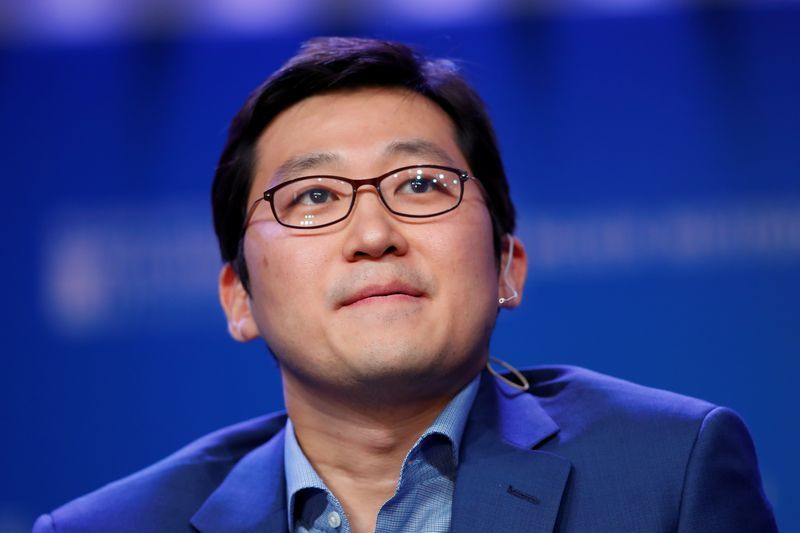
The Seoul High Court intervened on Tuesday to block enforcement of a controversial Fair Trade Commission ruling that would reshape governance at Coupang, one of South Korea's most prominent technology exports. The injunction, granted at the request of both the company and founder Kim Bom, effectively freezes the FTC's April designation of the Korean-American entrepreneur as the group's "controlling person" under national fair trade law. This temporary halt represents a significant reprieve for the e-commerce giant as it fights to preserve its current corporate structure against mounting regulatory pressure from Seoul's watchdogs.
The court's decision to suspend implementation of the FTC order rested on a finding that continuing with the designation would inflict serious, irreversible damage to Coupang and Kim's interests. Judges concluded that no countervailing public interest would be harmed by pausing the measure while the underlying legal challenge proceeds through the court system. This threshold assessment—balancing immediate hardship against broader societal concerns—proved decisive in the interim ruling, though it carries no bearing on the eventual merits of whether the FTC designation was legally justified.
Under the suspended ruling, Kim would have been reclassified as Coupang's controlling shareholder, replacing the corporation itself as the relevant entity subject to heightened disclosure and governance requirements under South Korean law. This bureaucratic shift carries practical consequences, effectively imposing stricter regulatory obligations and scrutiny on how the company operates. The FTC's action in April represented a technical but meaningful escalation in regulatory oversight, particularly relevant given Coupang's significance as a listed company on the U.S. Nasdaq exchange and its status as a major employer and services provider across South Korea.
The temporary injunction will remain in place until 30 days following the court's final judgment in the main case, according to the court filing. This timeline means Coupang faces an extended period of regulatory limbo, during which it can operate under its previous governance structure while lawyers on both sides prepare comprehensive arguments about the FTC's authority and rationale. The substantive legal question—whether Kim truly exercises controlling influence over Coupang in ways that warrant formal designation—remains unresolved and will be the central focus of coming proceedings.
The FTC's decision to designate Kim had followed an investigation into the involvement of his family members in company operations, a probe that broadened the regulator's traditional focus on shareholding structures to encompass actual influence and control patterns. South Korean fair trade law provides officials with flexibility to look beyond mere ownership percentages and examine practical control arrangements, family dynamics, and decision-making authority. The FTC apparently believed that examining Kim's role was essential to understanding the true governance of Coupang and ensuring appropriate oversight of a major corporate entity.
Coupang's regulatory troubles extend well beyond the FTC designation dispute. In a separate enforcement action, South Korea's Personal Information Protection Commission imposed a record financial penalty on the company following a major customer data breach that exposed sensitive information. That fine, among the largest ever levied by the privacy regulator, underscored broader concerns about Coupang's internal controls and information security practices. The data incident itself had triggered heightened government attention, with multiple agencies scrutinizing whether Coupang's rapid growth had occurred at the expense of adequate protective measures.
The cascade of regulatory actions by different South Korean agencies—the FTC, privacy authorities, labour regulators, and others—has created friction between Seoul and Washington. U.S. officials have expressed concern that the accumulated enforcement measures may reflect disproportionate treatment of a South Korean company listed on American exchanges, raising questions about fair application of regulations and whether nationalism or protectionism influences Korean regulatory decisions. Diplomatic sensitivities have mounted as American investors and officials view these actions through the lens of market access and equal treatment under law.
For regional observers, particularly Malaysian and Southeast Asian business leaders and policymakers, the Coupang saga offers instructive lessons about the intersection of rapid technological disruption, regulatory adaptation, and geopolitical tension. South Korea's aggressive regulatory approach toward one of its most successful tech exports reflects tensions inherent in modern capitalism: the difficulty of applying traditional legal frameworks to complex corporate structures, the importance of data protection and consumer safety, and the challenge of balancing innovation incentives against consumer protection and fair competition.
The court's decision to grant a temporary reprieve does not resolve the underlying tensions. Instead, it creates space for the legal system to conduct a thorough examination of whether the FTC acted within its authority and whether Kim's designation was factually warranted. The coming litigation will test the boundaries of South Korean fair trade law and establish precedents affecting how regulators approach controlling entity designations in the technology sector, where ownership and management structures often diverge from traditional patterns.
Coupang's leadership clearly views the suspension as strategically important, having mobilized legal resources to challenge the FTC designation immediately. The company presumably believes that securing the injunction preserves its operational flexibility and market position while the merits are debated. For employees, investors, and customers, the temporary halt provides continuity, though the lingering uncertainty about Coupang's future governance structure introduces an element of volatility into corporate planning and stakeholder confidence.

