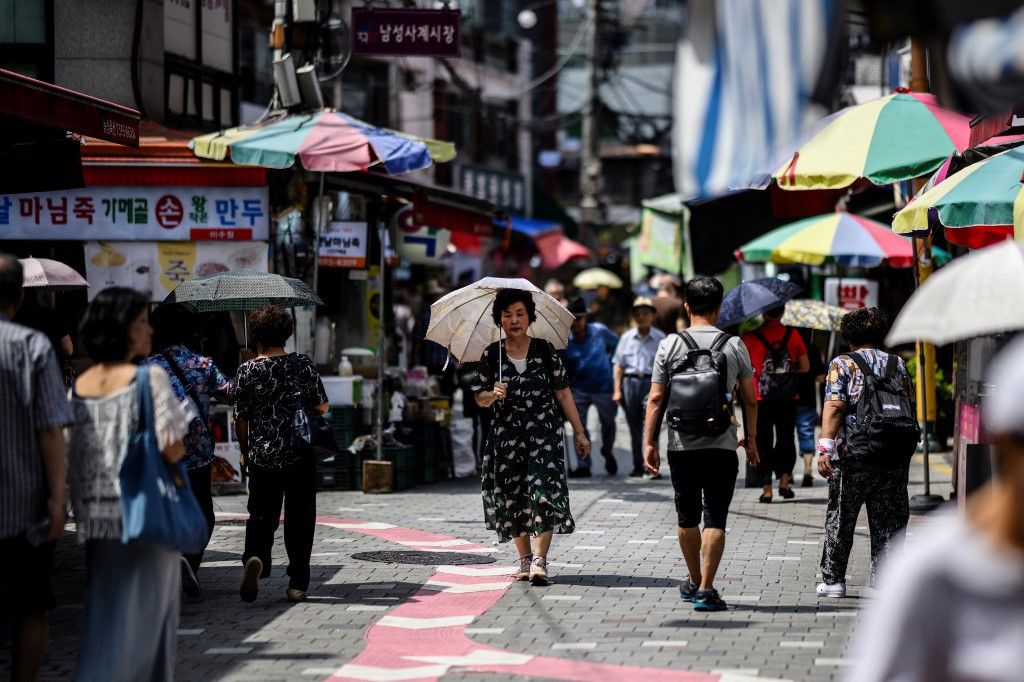
South Korea's weather authorities confirmed a grim new milestone on Friday when the southeastern city of Yangsan recorded a temperature of 41.4 degrees Celsius, making it the highest reading since the country began keeping systematic meteorological records over five decades ago. The measurement, taken at 1:40 p.m. local time, surpassed the previous national benchmark of 41.0 degrees recorded in Hongcheon during August 2018, representing a significant escalation in the intensity of heat events affecting the peninsula.
The Korea Meteorological Administration formally verified that its ASOS observing network, which has been operational since 1973, has never documented temperatures exceeding the figure now established in Yangsan. This development comes amid what meteorologists describe as a prolonged and severe heatwave, with Yangsan itself experiencing three consecutive days of temperatures above the 40-degree threshold. The sustained nature of this heat event distinguishes it from isolated temperature spikes, pointing instead to a more entrenched atmospheric pattern gripping much of the nation.
Weather warnings across South Korea have reached their most serious levels, with the KMA implementing its highest-alert heatwave warning specifically for portions of South Gyeongsang Province where Yangsan is located. Beyond this critical zone, heatwave advisories and warnings remain broadly in effect throughout most of South Korea, reflecting the geographic extent of the phenomenon. The widespread nature of these alerts underscores how the extreme temperatures are not confined to isolated pockets but rather blanket substantial areas of the country.
The meteorological explanation for this unprecedented heat lies in a rare atmospheric confluence occurring over the Korean Peninsula. Two distinct high-pressure systems—the North Pacific High and the Tibetan High—have positioned themselves simultaneously above the region, creating what weather experts describe as a lid-like effect that traps warm air masses directly over the peninsula. This configuration suppresses cloud formation and prevents the natural cooling mechanisms that typically provide relief during summer months. The mechanism essentially creates a sealed chamber of heat with minimal escape routes for thermal energy.
For regional observers and policymakers across Southeast Asia, South Korea's record-breaking temperatures carry particular significance. The peninsula's geographic position and advanced meteorological infrastructure make it an important bellwether for understanding how climate patterns shift and intensify across East and Northeast Asia. When neighbouring countries monitor the KMA's observations, they are essentially tracking early indicators of how atmospheric circulation patterns may subsequently influence their own weather systems over subsequent weeks. This interconnected nature of continental and maritime weather systems means that extreme heat events in Korea can presage similar developments elsewhere in the region.
The specific atmospheric architecture responsible for this heatwave—the dual high-pressure system mechanism—represents a climate pattern that has become increasingly frequent in recent years. Scientists tracking long-term trends have noted that the simultaneous positioning of these two pressure systems, while not unprecedented, occurs with concerning regularity, suggesting shifts in how global atmospheric circulation behaves. The fact that such configurations now produce record-breaking temperatures rather than merely warm weather indicates not just a change in frequency but an intensification in the thermodynamic energy these systems can deliver.
Additionally, forecasters are currently tracking Typhoon Dolphin in the western Pacific Ocean, and preliminary analysis suggests its eventual path could substantially alter weather patterns affecting the Korean Peninsula in the coming week. However, meteorologists have cautioned that the relationship between the distant typhoon and the current heatwave remains speculative at this stage. The trajectory Typhoon Dolphin follows will determine whether it brings moisture and cloud cover that might temporarily disrupt the current heat-trapping atmospheric architecture, or whether it remains distant enough to leave conditions largely unchanged.
For South Korea's population, the practical implications of reaching 41.4 degrees extend well beyond statistical significance. Such extreme temperatures place enormous strain on electrical grids as air-conditioning demand surges, affect workplace safety protocols and productivity, and elevate heat-related health risks, particularly among elderly and vulnerable populations. The sustainability of infrastructure and social systems becomes a pressing question when temperature records are broken regularly rather than occasionally.
The convergence of these meteorological factors illuminates how climate change operates not simply through gradual warming but through the creation of more extreme conditions. As baseline temperatures rise globally, the atmospheric machinery that generates heatwaves operates with increased thermodynamic resources. South Korea's new record therefore represents not merely a weather anomaly but a potential glimpse into the new normal of regional climate patterns as the world continues warming.

