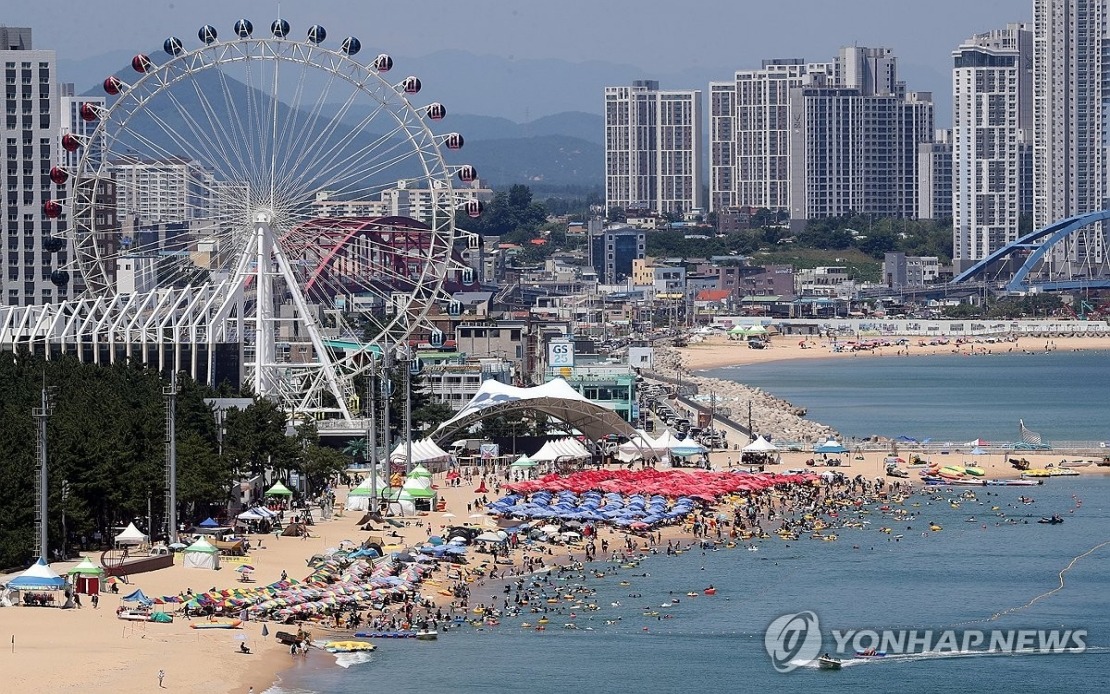
South Korea's southeastern region is experiencing an unprecedented heat crisis, with temperatures climbing to 42.5°C in the city of Yangsan on Sunday afternoon. The Korea Meteorological Administration confirmed this reading marks the highest temperature recorded since systematic weather observations began on the Korean Peninsula in 1904, drawing from data collected across 97 long-term observation stations nationwide. This breakthrough of the historical temperature ceiling underscores the severity of the ongoing heat emergency gripping the country and has prompted authorities to escalate their response measures.
Yangsan, located approximately 310 kilometres southeast of Seoul, witnessed the mercury rise steadily throughout Sunday afternoon. The temperature initially reached 42°C at 1:16 p.m. local time before climbing further to 42.5°C just ten minutes later at 1:26 p.m. according to official measurements. The rapid increase in such a brief timeframe has raised alarm among meteorologists and emergency officials who fear continued atmospheric heating could push temperatures beyond 43°C in the coming days. The acceleration of peak temperature timings—occurring progressively earlier each day—suggests the accumulation of heat in the region may continue to intensify.
The relentless pattern of extreme heat has become the defining characteristic of Yangsan's recent weather. Sunday represented the fifth consecutive day that temperatures in the southeastern city exceeded 40°C, indicating that this is no longer an isolated spike but rather a sustained period of dangerous conditions. For residents and businesses in the region, this prolonged exposure to dangerous heat levels creates compounding health risks and operational challenges that extend far beyond a single day's discomfort.
Other areas across southeastern South Korea are also experiencing record-breaking temperatures. The city of Gyeongju, situated roughly 240 kilometres southeast of Seoul, recorded 40.2°C by mid-afternoon on Sunday. This represents the first time this year that Gyeongju's temperatures have surpassed the 40°C threshold, and marks the highest reading the city has experienced in eight years—significantly exceeding the previous eight-year high of 39.8°C recorded in 2018. The spread of extreme temperatures across multiple cities in the region demonstrates the geographical breadth of the current heat phenomenon.
Recognising the gravity of the situation, South Korea's government activated a Level 2 emergency operation of its disaster response headquarters at 1 p.m. on Sunday. This escalation reflects a decision to mobilise comprehensive government resources and coordination mechanisms to manage the crisis. Prime Minister Han Seong-sook issued emergency directives to all government ministries and provincial administrations, instructing them to prioritise safety interventions for heat-vulnerable populations—a category that includes elderly citizens, young children, outdoor workers, and those with pre-existing health conditions.
The emergency directives encompassed several critical operational priorities beyond simply monitoring temperatures. Authorities were instructed to conduct intensive safety checks on individuals most susceptible to heat-related illness and fatality, including home visits to isolated elderly residents and enhanced medical preparedness at hospitals and clinics. Simultaneously, government agencies were tasked with maintaining uninterrupted supplies of electricity and water across the affected regions, recognising that power failures during extreme heat waves can compound health dangers by eliminating air conditioning and refrigeration capabilities.
Public guidance issued alongside the emergency declaration emphasised personal responsibility in managing heat exposure. Citizens were formally advised to minimise or completely avoid outdoor activities during peak heating hours, with particular warnings directed at workers, athletes, and others whose occupations or activities might require extended time in the open air. The advisory reinforced standard heat safety measures including adequate hydration, wearing light-coloured and loose-fitting clothing, and seeking air-conditioned shelter during the hottest periods of the day.
The context of this heat wave carries particular significance for Southeast Asian observers and policymakers. South Korea's experience demonstrates how rapidly extreme temperatures can intensify in East Asia and serves as a warning about broader climate trends affecting the region. For Malaysia and other Southeast Asian nations, which already experience tropical climates with high baseline temperatures, the escalation pattern visible in South Korea raises questions about whether similar heat-driven crises could emerge or intensify domestically. The governmental response structures implemented in South Korea—rapid escalation of emergency protocols, vulnerable population targeting, and infrastructure protection—provide a template worth studying for regional disaster management preparedness.
The occurrence of successive 40°C+ days in South Korea, a nation with historically milder summers than most of Southeast Asia, underscores how climate patterns are shifting even in temperate regions. Heat waves of this magnitude were extraordinarily rare in Korean weather history; the fact that such temperatures now appear within the realm of possibility suggests that nations across Asia may need to reassess their infrastructure, public health systems, and emergency response capabilities to accommodate a new normal of more extreme temperature events. For Malaysian policymakers and planners, the South Korean heat emergency serves as a sobering reminder that climate adaptation is not a theoretical future concern but an immediate practical necessity requiring sustained attention and resource investment.

